U.S. Economy Slows to Below-Trend Growth as Inflation Pressures Persist
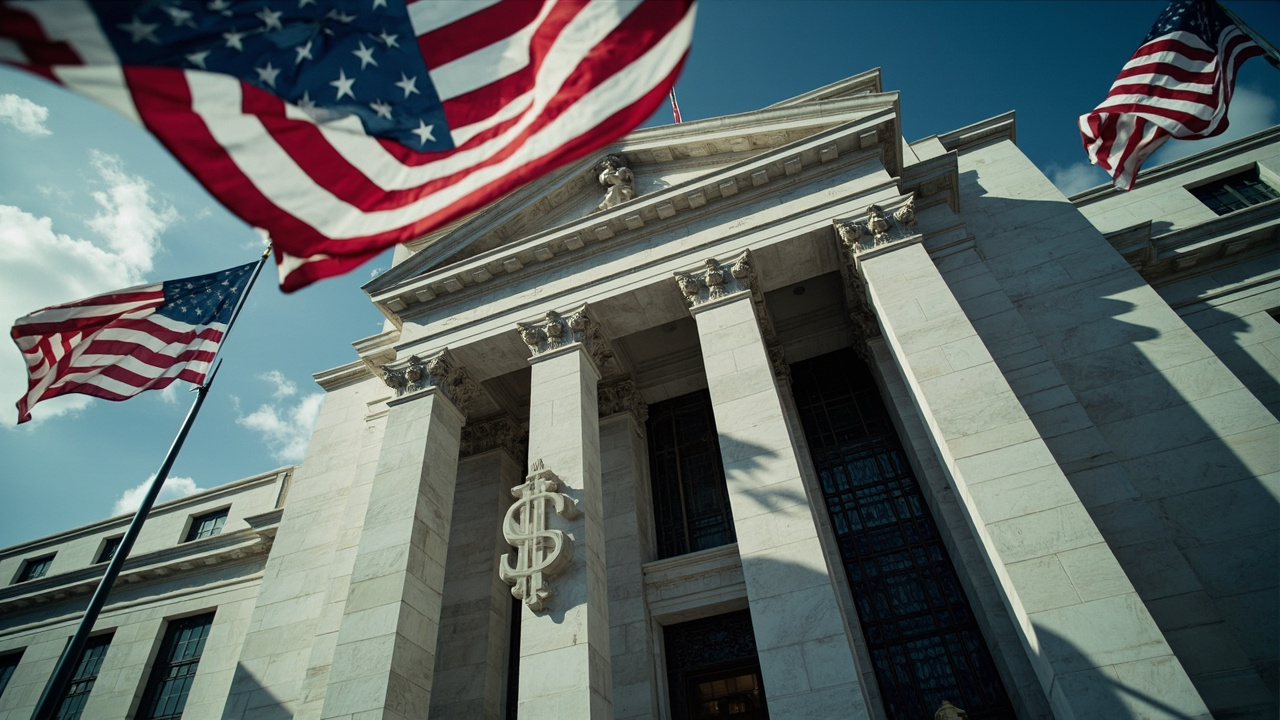
The United States economy is exhibiting a rare and troubling combination of slowing growth and persistent inflationary pressure, leaving policymakers at the Federal Reserve with an increasingly difficult set of trade-offs heading into the second half of 2026. Fresh data released this week showed that gross domestic product expanded at an annualised rate of just 1.4 percent in the first quarter, well below the 2.1 percent trend growth that economists consider normal for an economy operating at full capacity. That miss, combined with a third consecutive monthly increase in the personal consumption expenditures price index — the Fed’s preferred inflation gauge — has unsettled financial markets and prompted a sharp recalibration of interest rate expectations across the yield curve.
Consumer spending, which accounts for roughly 70 percent of all U.S. economic activity, contracted for the first time since the post-pandemic reopening period, falling 0.3 percent in real terms. That decline was concentrated among lower-income households, who have been hit hardest by the cumulative impact of elevated food and energy prices that have never fully receded to their pre-2022 levels. “Lower-income consumers are essentially out of gas,” said Diane Swonk, chief economist at KPMG, in a widely cited commentary. “They spent their excess savings years ago and now they are pulling back on discretionary purchases, which is exactly the part of the economy that is most sensitive to higher interest rates.” Her assessment captures a growing consensus among forecasters that the household sector is running into significant strain despite an unemployment rate that remains a relatively low 4.2 percent.
Federal Reserve Faces Credibility Test Over Dot Plot Divergence
The Federal Open Market Committee held its benchmark interest rate steady at the June meeting, leaving the federal funds rate in a target range of 3.50 to 3.75 percent for the third consecutive gathering. That pause had been widely anticipated by markets, but the accompanying policy statement and the quarterly Summary of Economic Projections — known colloquially as the dot plot — delivered a hawkish surprise. The median projection now shows just one rate cut before the end of 2026, down from the three cuts pencilled in at the March meeting. Three members of the committee went further, projecting no cuts at all this year, a signal that internal debate about the appropriate path for monetary policy has become more contentious than the post-meeting statement would suggest.
Federal Reserve Chair Jerome Powell, in his post-meeting press conference, acknowledged that inflation progress had slowed materially but emphasised that the committee remained committed to returning price growth to its 2 percent target. “We are not satisfied with where inflation is, and we will maintain the current level of restriction for as long as necessary,” Powell told reporters, drawing a sharp distinction between a pause in rate hikes and any suggestion that the tightening cycle had ended. His remarks were interpreted on Wall Street as a clear signal that the Fed is prepared to hold rates at their current 23-year high well into 2027 if the data continue to disappoint. Futures markets, which had been pricing in two cuts by December, rapidly repriced to reflect a scenario of prolonged stagnation, with the two-year Treasury yield surging to its highest level since November 2023.
Global Spillovers: Trade Tensions and Commodity Markets Add Complexity
The domestic picture is being complicated by a deteriorating global trade environment, as retaliatory tariffs imposed over the past 18 months continue to disrupt supply chains and weigh on export-oriented sectors of the economy. The World Bank issued a stark downgrade to its global growth forecast this week, lowering its projection for world output expansion to 2.1 percent for 2026 — the weakest pace since the COVID-19 pandemic disrupted economic activity in 2020. The institution’s chief economist warned that the combination of restricted trade flows and elevated borrowing costs was creating a synchronised slowdown that left few countries insulated from spillover effects.
Commodity markets have reflected the mounting uncertainty, with oil prices oscillating between supply-driven concerns and demand-side fears in a way that has complicated the inflation outlook for major central banks. West Texas Intermediate crude has traded in a 72 to 81 dollar band over the past six weeks, a range wide enough to create meaningful base effects that distort the headline inflation numbers reported each month. The energy component of the consumer price index remains particularly volatile, swinging from a negative contribution in some months to a positive one in others, making it difficult for the Fed to distinguish between temporary noise and a more durable shift in the underlying inflation dynamic. “The Fed is essentially flying blind in real time,” said Alaninder Huang, director of macro research at a major investment bank. “They need several months of clean data to build confidence that inflation is on a sustained downward path, but they may not get that luxury if geopolitical shocks keep distorting the series.”
Outlook and Market Implications for the Second Half of 2026
For equity investors, the combination of slower growth and sticky inflation presents a particularly challenging backdrop. Corporate earnings expectations for the second quarter have been revised downward modestly, with analysts now projecting year-over-year earnings growth for S&P 500 companies of approximately 4.3 percent, down from an initial forecast of 6.8 percent made at the start of the year. Valuation multiples have compressed accordingly, with the benchmark index trading at roughly 18.4 times forward earnings compared to 21.2 times at the beginning of January. The technology sector, which had been a relative outperformer on the strength of artificial intelligence-related capital expenditure plans, has shown increased sensitivity to interest rate moves, as growth companies with heavy exposure to long-duration cash flows tend to be punished more severely when the discount rate rises.
The bond market has been perhaps the most unambiguous in its message, with the yield curve remaining inverted for the ninth consecutive month, a configuration that has historically preceded recessions, albeit with a variable and unreliable lag. Investment-grade credit spreads have widened modestly, suggesting that bond investors are beginning to demand greater compensation for credit risk as the probability of an economic misstep rises. The U.S. dollar has strengthened against most major currencies, reflecting both the relative hawkishness of Fed policy and safe-haven flows in response to global uncertainty, a development that acts as a further headwind for American exporters and multinational corporations with significant overseas revenues.