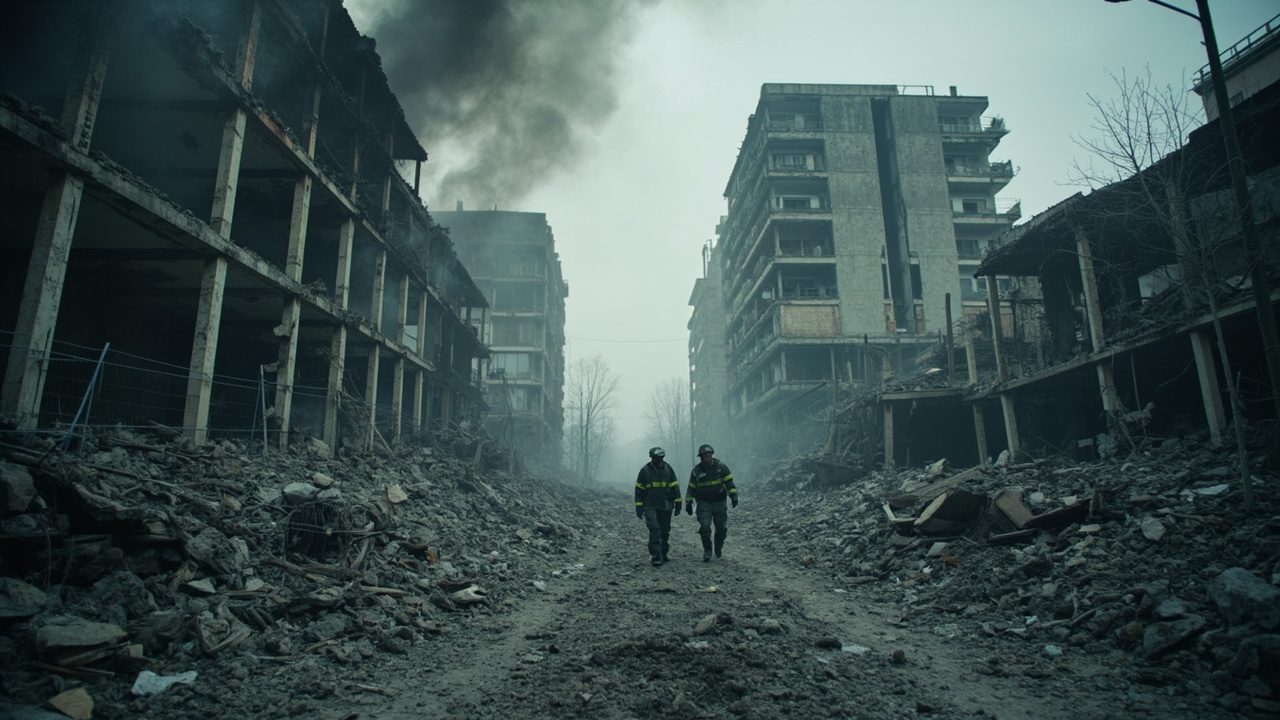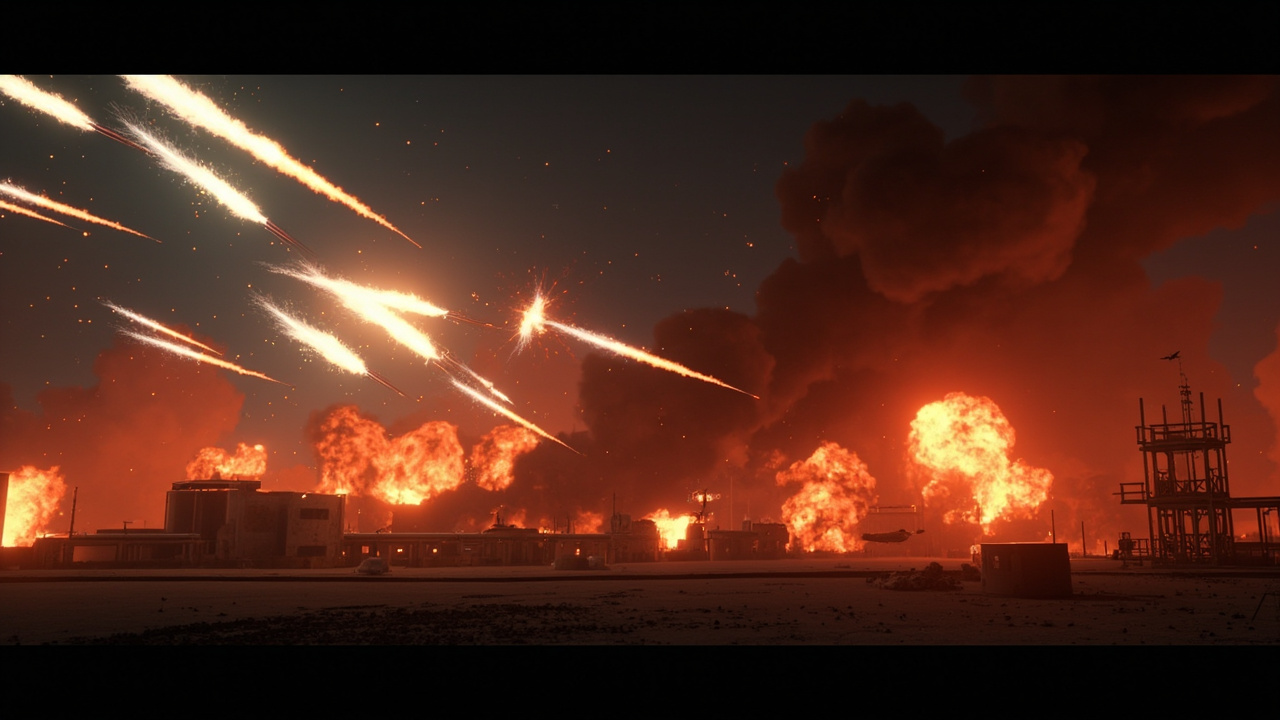
DUBAI — The fragile ceasefire between the United States and Iran fractured dramatically on Monday as the U.S. military sank six Iranian boats in the Strait of Hormuz and Iran launched its first direct missile attack on a Gulf state since the war began, striking the United Arab Emirates with 19 projectiles and sparking a fire at an oil facility.
The twin escalations — confirmed by U.S. Central Command and UAE officials — brought the conflict to the Gulf Arab heartland for the first time since Washington’s naval campaign began. Three Indian nationals were injured in the Fujairah drone strike, the UAE Ministry of Defense said. Emirates authorities scrambled air defenses and ordered schools into distance learning for four days.
U.S. Sinks Six Iranian Boats
Adm. Brad Cooper, head of U.S. Central Command, said Monday that American forces sank six Iranian boats that were “targeting commercial vessels” along the Strait of Hormuz — the world’s most critical oil transit chokepoint. The engagement, one of the most direct U.S.-Iranian confrontations since the war began in February, came as the Pentagon launched an unprecedented effort to escort commercial ships through the waterway Iran has controlled since the conflict’s opening days.
President Trump later confirmed the strikes on social media, writing: “We’ve shot down seven small Boats or, as they like to call them, ‘fast’ Boats. It’s all they have left.” He added that a South Korean bulk carrier near the strait was targeted by Iran, and floated that Seoul should “come and join the mission.”
The commander of a vessel transiting the Hormuz told Al Jazeera that no captain would risk the passage without military assurance. Central Command said two American-flagged vessels passed through the strait Monday — described as a “first step” in the new escort initiative. Iranian officials disputed the claim that U.S. tankers had successfully transited.
UAE Under Attack: 19 Projectiles, Oil Fire
Iran’s simultaneous attack on the UAE marked the first direct missile strike on a Gulf Arab state since the ceasefire took effect nearly a month ago. The UAE Ministry of Defense said air defense systems engaged 12 ballistic missiles, 3 cruise missiles, and 4 drones launched from Iranian territory.
An Iranian drone struck an oil facility in the Fujairah Oil Industries Zone, igniting a blaze that injured three Indian nationals. The port city of Fujairah sits on the Gulf of Oman — beyond the Strait of Hormuz but squarely within Iran’s strike envelope. The UAE ordered distance learning nationwide from May 5–8 as a precautionary measure, with the Education Ministry warning the period could extend if threats persist.
“The Ministry of Defence affirmed that it remains fully prepared and ready to deal with any threats and will firmly confront anything that aims to undermine the security of the country,” the statement read. Brent crude surged past $112 per barrel on the news before settling around $108.
Trump: ‘Call It Whatever You Want’
Trump, meanwhile, dismissed public polling that shows the U.S. war with Iran is deeply unpopular — a Washington Post-ABC News-Ipsos poll released Sunday put approval at just 33 percent. “I don’t like it, I don’t like war at all,” Trump told an East Room audience, before arguing without evidence that the surveys were fabricated. He insisted the conflict was “going very well” and described the ongoing operation as “a military operation, call it whatever you want.”
The president reiterated that the goal was preventing Iran from acquiring a nuclear weapon, acknowledging the U.S. had undertaken “a little detour into Iran” to achieve that aim. Treasury Secretary Scott Bessent said the U.S. had “absolute control” of the Hormuz — a claim the day’s events visibly complicated.
Ceasefire Collapses as Regional War Spreads
The dual strikes effectively ended the informal ceasefire that had held since mid-April. Iranian state media quoted IRGC commanders issuing immediate threats against U.S. naval assets in the Gulf. The UAE, which had maintained formal neutrality throughout the conflict, invoked mutual defense provisions and called an emergency GCC summit. Saudi Arabia and Bahrain both issued statements endorsing UAE’s right to self-defense.
Analysts warn the collision course has now entered a new phase — one in which Gulf Arab states are no longer bystanders but targets. With 1.7 million barrels per day of UAE oil exports routed through Hormuz-adjacent waters, and ADNOC’s alternative pipeline capacity stretched thin, the insurance market has already begun war-risk surcharges for any vessel entering the region.
The Strait of Hormuz carries roughly 20 percent of global oil trade. The U.S. effort to reopen it — Operation Safe Passage, announced Monday — now faces the dual challenge of Iranian small boats and direct missile strikes on Gulf allies, raising questions about whether American protection guarantees extend to non-U.S. flagged vessels and whether Arab populations will accept U.S. forces operating from their soil.
Diplomacy Fractures as Casualties Mount
On the diplomatic front, the collapse of ceasefire talks leaves open no formal channel for de-escalation. Switzerland, which had served as intermediary through back channels since April, confirmed it had “suspended facilitative communications” pending formal request from both parties. European foreign ministers convened an emergency virtual session Monday evening but had no public outcome by press time.
The human cost of Monday’s escalation includes the three injured Indian nationals in Fujairah, an undisclosed number of crew aboard the Iranian boats, and growing casualties on the Ukrainian front, where Russia launched 148 combat engagements in 24 hours and reported 1,120 Russian casualties in the same period. Ukraine’s commander-in-chief said Ukrainian drones had inflicted severe damage on Russian oil infrastructure near Moscow and in Krasnodar Krai.
For Gulf populations watching their skies fill with missiles and their coastlines become battlefields, the question is no longer whether the Iran war affects them — it is whether any diplomatic off-ramp remains before the escalation becomes irreversible.