Tensions across the African continent escalated sharply this week as South Africa descended into xenophobic violence, Nigeria secured the release of hundreds of kidnap victims from Boko Haram, and the Democratic Republic of Congo released a damning Human Rights Watch report detailing atrocities by M23 rebels. The convergence of crises has placed African governments under mounting domestic and international pressure to act.
Xenophobic Violence Engulfs South Africa
South Africa is experiencing its worst wave of anti-immigrant violence in years, with mobs attacking foreign-owned businesses, burning homes and driving thousands of migrants from their communities across Johannesburg, Durban and Cape Town. The crisis intensified when March and March, a Durban-based anti-immigration movement, issued an ultimatum giving all undocumented foreigners until June 30 to leave the country. The group, led by former radio presenter Jacinta Ngobese-Zuma, has organised months of protests where participants chant Zulu phrases meaning “they must go” and claim the right to conduct impromptu immigration checks — without legal authority.
President Cyril Ramaphosa has struggled to contain the fallout, walking a fine line between condemning violence and responding to public frustration over unemployment that officially exceeds 30 percent, with youth joblessness above 60 percent. “We recognize that many communities are frustrated by crime, unemployment and pressure on public services,” he said in a national address. “The roots of these challenges lie primarily in inequality, slow economic growth and weaknesses in service delivery.” He cautioned against “the scapegoating of vulnerable people,” but migrants across the country say government warnings have come too late.
In Jeppestown, a violence-prone suburb east of Johannesburg’s city centre, a 25-year-old Malawian carpenter who asked to be identified only as Guy told NPR he fears for his life. “I came here three years ago for a better life. Now I’m scared they could kill me,” he said, adding that police regularly demand papers and extract bribes when they find migrants without documentation. An 18-year-old Zimbabwean upholstery apprentice at the same workshop, Sandile Mbuyazi, said: “I’m scared because I don’t have a choice. They can kill you. I’m scared of these people.”
Regional Governments Respond as Evacuations Accelerate
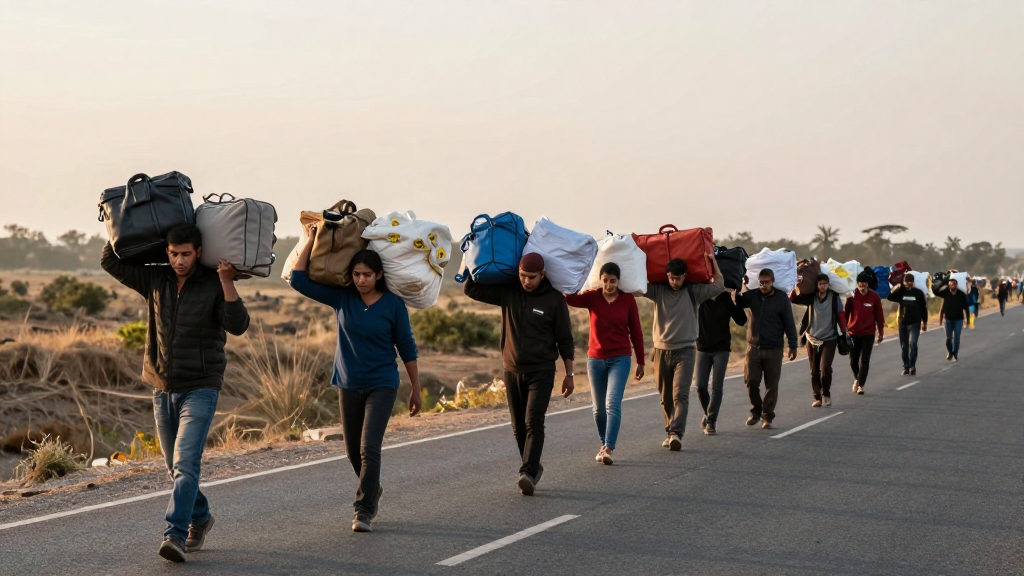
The violence has forced a regional humanitarian response. Nigeria, Ghana and Mozambique have repatriated citizens who wished to leave, while Malawi has deployed buses to bring home thousands of its nationals stranded in Durban. Red Cross spokesperson Siyabonga Hlatshwayo told EL PAÍS that three government-run reception centres in Durban and Pietermaritzburg are sheltering around 20,000 displaced people. “We’re distributing food, blankets, mattresses, clothing, baby food, psychosocial support, free Wi-Fi and phone chargers,” she said. At least 17 babies have been born in the makeshift settlements in recent weeks, according to South African media confirmed by the Red Cross. A 29-year-old Malawian man was stoned to death in Pietermaritzburg during an anti-immigration protest on June 19, and at least five Mozambicans died when their shacks were set ablaze by a mob in Mossel Bay.
Nigeria Rescues 360 Boko Haram Captives
Hundreds of kilometres to the north, the Nigerian army announced it had secured the release of 360 people abducted by Boko Haram in the Mandara mountains of Borno State — though two infants died from exhaustion during the harsh mountain crossing before they could be evacuated. Army spokesperson Major General Haruna Sani said psychological operations were used to sow mistrust within insurgent ranks before the assault phase. “The remaining rescued abductees were successfully evacuated to safe locations for medical care and humanitarian support, marking a major operational success and a significant setback for the terrorist group,” he said. The rescue operation dealt a blow to Boko Haram’s extortion enterprise; the group had demanded millions of Nigerian naira in ransom for the captives. Since 2009, the group’s insurgency has killed tens of thousands and displaced more than two million people across the Lake Chad Basin.
Separately, Human Rights Watch released a report on June 10 documenting arbitrary detentions, killings and forced recruitment carried out by M23 rebels in eastern DRC, where the group has seized large swaths of territory with Rwandan backing. The ADF, a Ugandan-listed terrorist group operating from DRC soil, has also widened its area of operations, according to regional security analysts.
Across three African regions, governments face simultaneous pressures — containing internal violence, repelling armed insurgents and responding to humanitarian emergencies — with international support stretched thin and citizens demanding swift action on multiple fronts.