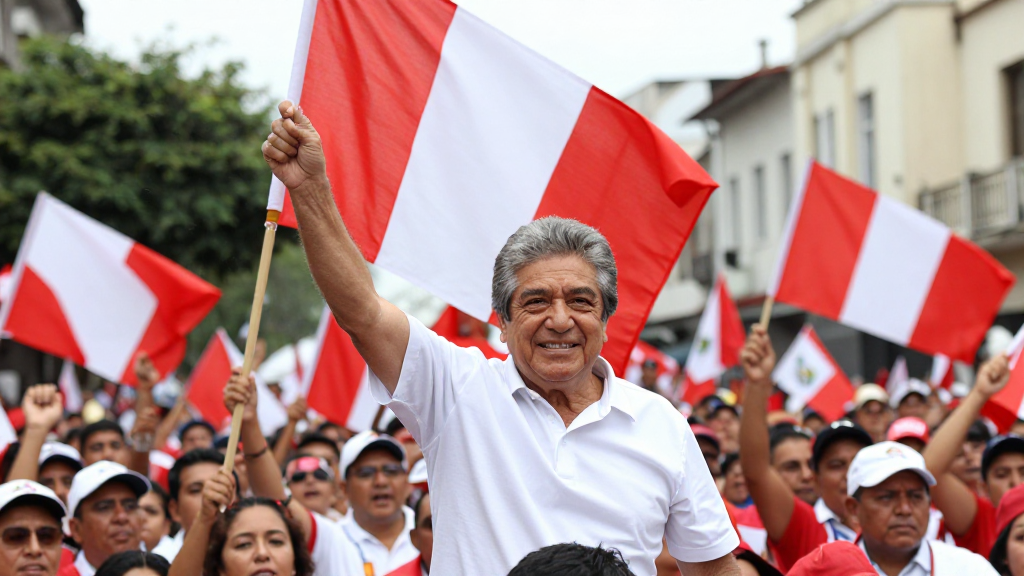
Left-wing presidential candidate Roberto Sanchez conceded Peru’s closely contested election to right-wing rival Keiko Fujimori on Monday, bringing weeks of vote-counting turmoil and fraud allegations to a close just days after the electoral authority certified her razor-thin victory.
The concession from Sanchez, a congressman who built his campaign around rural and indigenous communities, marks the end of a turbulent electoral season that tested Peru’s democratic institutions at a time when the country is also restructuring its government. The announcement came after the National Jury of Elections formally proclaimed the results last week, leaving Sanchez with little legal recourse to challenge the outcome.
A Race Decided by 50,000 Votes
In the final certified count, Fujimori won approximately 9,223,000 votes to Sanchez’s 9,173,000 — a margin of just 50,000 votes out of more than 18 million cast. The count stretched on for weeks after the June 7 run-off, with both campaigns watching precinct-by-precinct totals swing in favour of Fujimori in the final days as rural and remote ballots were processed.
Sanchez and his party issued a formal statement acknowledging the result: “We recognise that the National Elections Board has officially proclaimed the electoral results.” That marked a reversal from June, when Sanchez had declared he would not recognise a Fujimori presidency and would launch “a movement of popular and patriotic resistance” instead. The shift suggests his coalition calculated that continued defiance risked destabilising the country without any realistic path to overturning the certified result.
Who Is Keiko Fujimori
The 51-year-old Fujimori, daughter of former President Alberto Fujimori who died in prison in 2024, becomes Peru’s ninth president in ten years. She ran on a tough-on-crime platform and positioned herself as a stabilising figure who could unite a country long wracked by political upheaval. Her father’s legacy loomed large over the campaign: he dissolved Congress in the 1990s and created a unicameral legislature, a structure critics blame for making presidential impeachments too frequent and too easy.
Peru is set to reconstitute its legislature into a Senate and Chamber of Deputies this month, a structural change that will take effect under the new administration. Fujimori is among several right-wing leaders in Latin America who received backing from US President Donald Trump’s administration, which has pursued an aggressive counter-organised-crime agenda across the region. Her victory consolidates a rightward shift across South America following conservative wins in Argentina, Ecuador, and El Salvador in recent cycles.
Sanchez’s Coalition and What Comes Next
Sanchez cultivated support among Peru’s rural and indigenous communities, often echoing the style and platform of former president Pedro Castillo — himself impeached and arrested in 2022 after attempting to dissolve Congress. Among his promises were overhauling the constitution to grant greater recognition and autonomy to Peru’s varied ethnic groups, placing state oversight on natural resources, and raising taxes on the country’s highest earners.
As vote-count disputes dragged on, Sanchez repeatedly alleged voting irregularities and fraud. International election monitors and Peruvian judicial authorities said no credible evidence of systematic fraud had emerged, though the delayed count and tight margin kept political tension high across the country. Thousands of Sanchez supporters took to the streets of Lima in late June to demand a recount, but the protests faded as the electoral authority moved to certify the result.
Challenges for the New Government
Fujimori is scheduled to be sworn in later this month. Her immediate challenges include addressing Peru’s entrenched political instability, rebuilding investor confidence after years of radical policy swings, and delivering on her crime-fighting promises in a country where gang violence and organised crime networks have gained ground along the Pacific coast. The mining sector, which accounts for a significant share of Peru’s export revenue, has been hit by recurring community protests and blockades that disrupted operations throughout the election period.
She will also need to navigate a divided Congress, where her coalition lacks a clear majority and where the reconstituted bicameral legislature may complicate legislative negotiations. Analysts say the narrow margin of her victory leaves her with limited political capital to push through ambitious reforms, and the strong showing by Sanchez’s movement ensures a formidable opposition bloc in the new legislature.