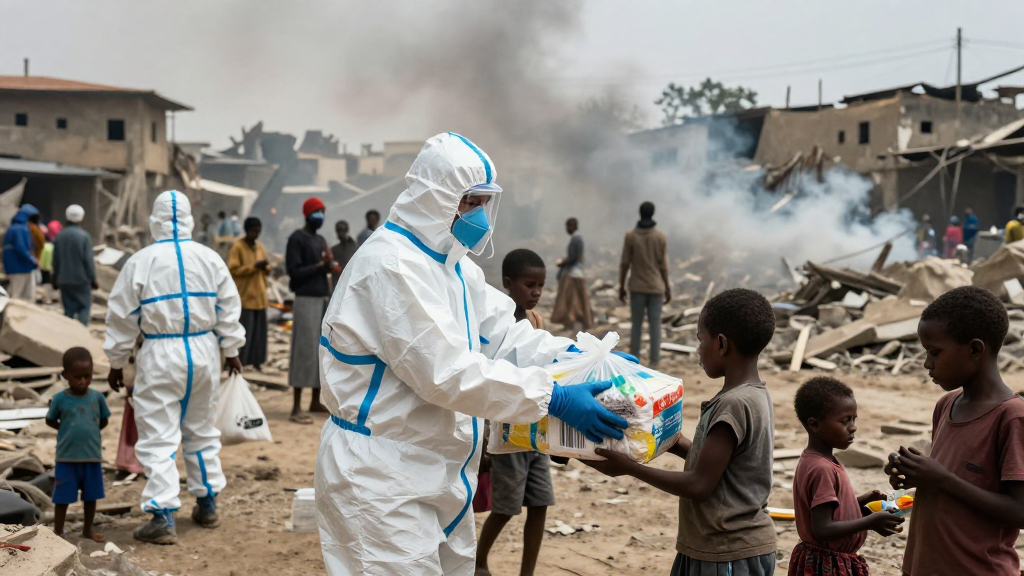
Sudan’s embattled city of El-Obeid is encircled by Rapid Support Forces fighters in what relief workers describe as the most critical urban siege since the fall of Khartoum, with as many as half a million civilians trapped without electricity, clean water, or functioning hospitals.
West Africa: Nigeria Hunger Crisis and South Africa-Ghana Diplomatic Rupture
While Sudan burns in the north, West Africa faces compounding domestic crises. More than 17 million people across nine conflict-affected states in northern Nigeria are facing severe hunger — the highest level in nearly a decade — as violence, displacement, and funding cuts to UN food programs converge. The World Food Programme says the scale of need has outpaced available resources, and aid distributions are reaching only a fraction of those in crisis.
Separately, a diplomatic rift opened between South Africa and Ghana after Ghanaian authorities said one of their citizens, Bashiru Isak, was killed during anti-foreign protests in Cape Town last week. South African police disputed the account, saying they have no record of the incident and are instead investigating the fatal shooting of another Ghanaian in an alleged extortion-related attack. Ghana demanded a full investigation. Nigeria’s foreign ministry said it would seek compensation for Nigerian citizens who fled South Africa during the unrest, with officials documenting businesses and property left behind by returnees.
“We documented everything destroyed. That compensation is not optional,” a Nigerian foreign ministry official said.
Central Africa: Ebola Reaches Uganda as DRC Cases Pass 500
In Central Africa, the Democratic Republic of Congo declared a public health emergency after Ebola cases in North Kivu province crossed the 500 threshold, with at least 312 confirmed deaths since the beginning of June. Health workers in Goma, a lakeside city of two million, report hospitals at capacity. In Uganda, authorities confirmed twelve linked cases in the Kasese border district, all traced to travelers arriving from DRC. Rwanda has begun vaccinating frontline health workers in Rubavu, adjacent to Goma, and the World Health Organization has shipped 12,000 doses of the rVSV-ZEBOV vaccine from Geneva.
“You have two simultaneous level-3 emergencies in adjacent regions, both requiring medevac capacity, cold-chain logistics, and bilingual medical teams,” said Dr. Fatou Sow, a Senegal-based public health specialist. “The system does not have enough of any of those things.”
East Africa: Kenya’s Digital Tax Draws Trade Threats
Kenya’s parliament passed a controversial digital services tax targeting foreign technology companies earning more than $500,000 annually from Kenyan users, drawing immediate protests from the European Union and United States trade representatives who threatened reciprocal measures affecting Kenyan agricultural exports. Kenya’s treasury secretary defended the measure as a matter of fiscal sovereignty, saying Nairobi would not be “blackmailed into abandoning legitimate revenue collection.”
Southern Africa: South Africa Unrest Leaves 25,000 Foreign Nationals Displaced
In South Africa, at least 25,000 foreign nationals have fled the country following a wave of anti-foreign violence that erupted in late June, with roughly 900 people arrested during mass protests. Ghana demanded accountability over the reported killing of its citizen. The South African government deployed additional police to Gauteng and reinstated mandatory online traveler declarations through its new digital customs system. President Cyril Ramaphosa called for calm while acknowledging that economic stagnation was driving resentment.
North Africa: Sudan Siege and Libya Oil Grab
In North Africa, RSF forces completed the encirclement of El-Obeid after weeks of incremental advance. The UN humanitarian affairs office warned a full assault on the city center could kill hundreds within hours. Meanwhile, Libya’s eastern-based Libyan National Army assumed control of the country’s southern oil fields following a breakdown in the UN-brokered power-sharing agreement in Tripoli, triggering clashes at the El Sharara field and drawing concern from oil traders in London and Singapore.
The convergence of military sieges, epidemic spread, and political instability across five distinct African regions underscores the limits of current multilateral response frameworks. As the RSF encircles El-Obeid, Ebola spreads along river corridors into Uganda, and West African governments manage simultaneous food and diplomatic crises, African capitals are being forced to manage compounding emergencies with diminishing international assistance and strained domestic budgets.