When American Secretary of State Marco Rubio arrived in Manila on April 24, 2026, for a three-day visit aimed at shoring up the U.S.-Philippines alliance, he was met not with ceremonial courtesies but with a shopping list. The Philippines wanted more than rhetorical reassurance — it wanted warships, air defence systems, and a timeline for the delivery of the Brunei-hosted Enhanced Defence Cooperation Agreement assets that Manila had long been promised. The message from Southeast Asia was clear: the Indo-Pacific is not waiting for the Atlantic to finish arguing about itself.
The Indo-Pacific — the vast maritime theatre spanning the Indian Ocean from Africa’s eastern coast to the Pacific approaches of the Americas — has become the primary theatre of 21st-century great-power competition. In 2026, the architecture of that competition is being redesigned in real time, with alliances formed, expanded, and reframed at a pace that is leaving strategic planners in Washington, Brussels, and Beijing in a state of perpetual catch-up.
AUKUS at the Centre of the New Architecture
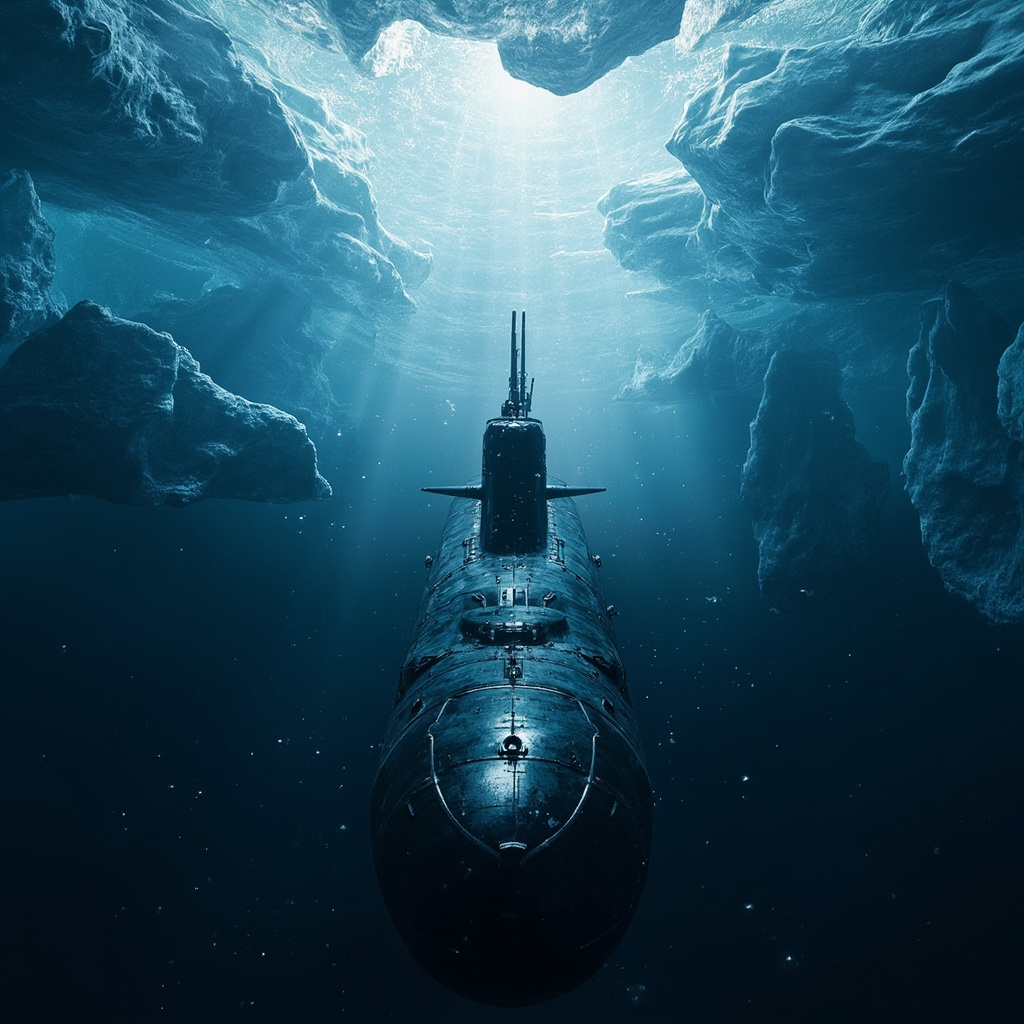
At the strategic core of the Indo-Pacific reordering sits AUKUS — the trilateral security partnership between Australia, the United Kingdom, and the United States, now entering its most consequential operational phase. The Pillar 2 advanced capabilities framework — covering quantum computing, AI, undersea robotics, and hypersonics — has expanded to include Japan as an associate partner, a development that Beijing interpreted immediately as a significant escalation.
The first Australian nuclear-powered submarine, the SSN-AUKUS design being built at the Osborne shipyard near Adelaide, is scheduled for its initial sea trials in 2032 — a timeline critics call dangerously slow. But defence analysts note the SSN-AUKUS class will be among the most capable attack submarines ever built for the Royal Australian Navy. Australia’s Defence Minister Richard Marles frames it differently: “We are not building a fleet for the Indo-Pacific we inherited. We are building one for the Indo-Pacific we will inhabit.”
“The Indo-Pacific is not a theatre of the future. It is the theatre of the present — and it is moving faster than any institutional framework, including NATO, was designed to accommodate.”
The AUKUS rollout coincides with a significant shift in European engagement in the Indo-Pacific. France, which maintains a military presence in the Pacific through New Caledonia and French Polynesia, has deepened its strategic dialogue with Australia under the revamped FRANZ arrangement. Germany, for the first time, deployed a frigate to the South China Sea in March 2026 — a symbolic departure from its historical reluctance to challenge Chinese maritime claims in the theatre.
The Quad’s Quiet Revolution
Alongside AUKUS, the Quadrilateral Security Dialogue — the informal grouping of the United States, India, Australia, and Japan — has undergone a consequential transformation. What began as a diplomatic forum for disaster relief coordination has become the primary institutional vehicle for non-NATO Indo-Pacific deterrence architecture. The QUAD Infrastructure Coordination Mechanism has committed $47 billion in joint infrastructure financing across the Indo-Pacific — a figure that dwarfs comparable Chinese Belt and Road commitments in the same period.
The QUAD’s most tangible achievement in 2026 is the operationalisation of the Indo-Pacific Maritime Domain Awareness Initiative — a system integrating satellite AIS tracking, coastal radar networks, and AI-powered anomaly detection across all four member nations’ exclusive economic zones. The system, operational since February 2026, has identified and tracked over 340 instances of what US Indo-Pacific Command describes as “vessels of interest” in contested waters.
India’s position within this architecture is the most complex. New Delhi’s traditional strategic autonomy has been under sustained pressure from both Beijing and Washington. Prime Minister Narendra Modi’s government has responded with characteristic pragmatism: deepening QUAD engagement on infrastructure and maritime security while simultaneously hosting Chinese Commerce Minister Wang Wentao for trade negotiations in New Delhi. “India does not choose sides,” said External Affairs Minister S. Jaishankar in a February interview. “India chooses interests.”
Taiwan’s Quiet Victories and Beijing’s Calculated Response
Taiwan’s diplomatic trajectory in 2026 reveals the shifting balance of perceptions across the Indo-Pacific. Three NATO member countries — France, Germany, and the United Kingdom — dispatched inter-parliamentary delegations to Taipei in the first quarter of 2026, a level of official engagement unthinkable three years ago. Taiwan’s de facto ambassador to the United Kingdom described the visits as “evidence that the Strait of Taiwan is no longer someone else’s problem.”
Beijing’s response has been measured in public but calibrated in private. Chinese state media ran editorials criticising European “interference” in Chinese internal affairs while simultaneously accelerating military drills in the Taiwan Strait — a pattern of dual signalling that analysts at the Carnegie Endowment describe as deliberate ambiguity designed to test the boundaries of Western commitment without crossing the threshold of outright provocation.
The Fracture Line in the Pacific Order
The Indo-Pacific’s new architecture is not without its internal tensions. The relationship between AUKUS and the QUAD remains institutionally undefined — they share members but not command structures, doctrine, or a common strategic command framework. Japan, as the only country participating in both Pillar 2 and the QUAD, occupies an increasingly central but structurally ambiguous position. Its 2026 National Security Strategy, released in January, commits Japan to acquiring counter-strike capabilities for the first time since World War Two — a transformation that has
alarmed China and South Korea even as it has been welcomed by Washington and Canberra.
The deeper fracture in the Indo-Pacific order is not between China and the United States — it is between the pace of institutional change and the pace of geopolitical reality. The QUAD and AUKUS were designed for a world in which the Indo-Pacific’s security architecture was in flux. By 2026, that architecture is crystallising, and the countries that move fastest — Japan, Australia, India, the Philippines — will shape it. Those that hesitate will find themselves living in someone else’s order.
Elena Rodriguez is an International Affairs Correspondent for Media Hook, covering global diplomacy, conflict, and the emerging world order.