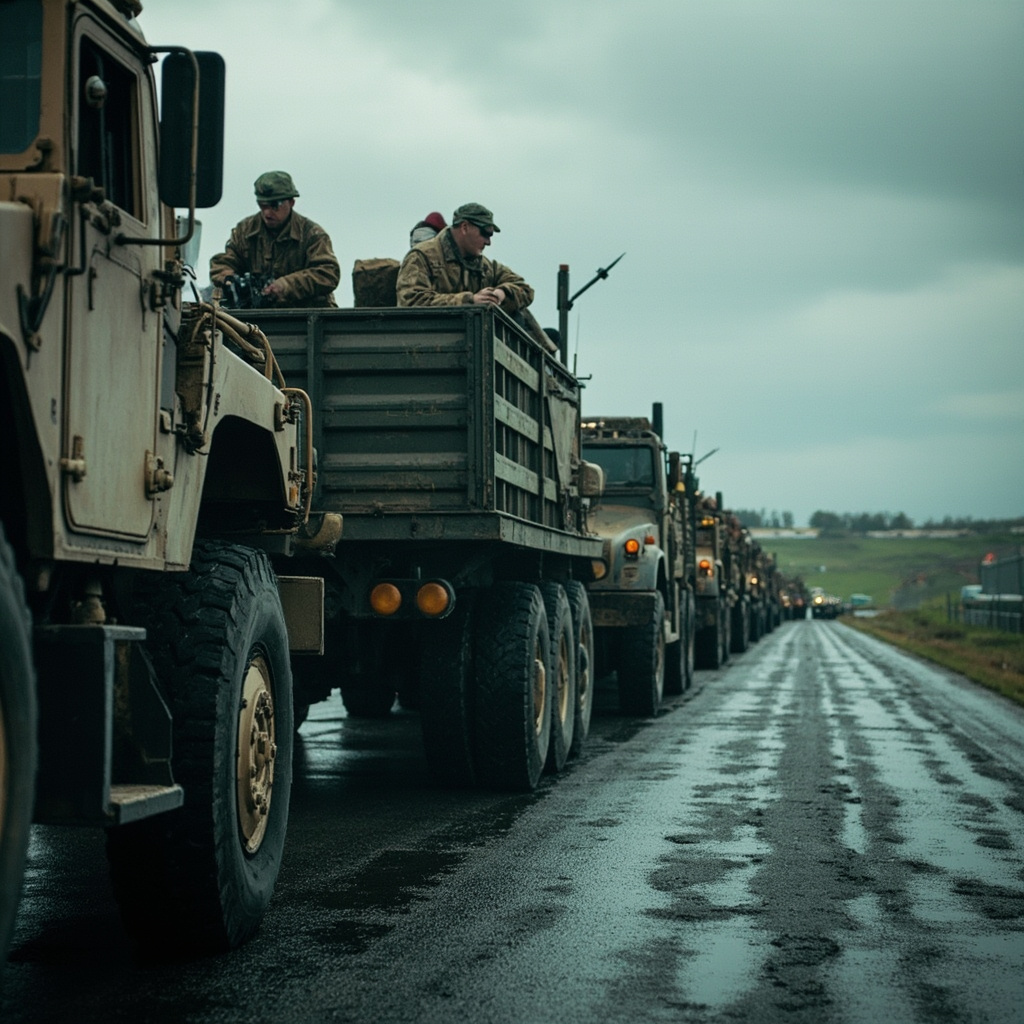
The Pentagon announced Thursday that approximately 5,000 US troops will be withdrawn from bases across Germany over the next 90 days, with a significant portion being redeployed to the Middle East to support ongoing operations related to the Iran conflict.
The Withdrawal Plan
Defense Secretary Pete Hegseth confirmed the drawdown at a press briefing at the Pentagon, describing it as a strategic realignment rather than a reduction in US military commitment to Europe. “We are not abandoning our NATO allies,” Hegseth said. “We are repositioning forces to where they are most needed right now, which is the Middle East.”
The withdrawal will affect troops stationed at Ramstein Air Base, Grafenwoehr Training Area, and Wiesbaden Army Airfield. Approximately 2,500 of the departing troops will be redeployed to bases in Saudi Arabia, Bahrain, and the UAE, while the remaining 2,500 will return to the United States for redeployment or demobilisation.
The move reduces the US military presence in Germany from approximately 35,000 to 30,000 troops, a 14 percent cut that military analysts say will have significant operational consequences for NATO readiness on the eastern flank.
German Reaction: Shock and Concern
Chancellor Friedrich Merz called the withdrawal “deeply regrettable” and warned that it would create security gaps that Russia could exploit. “NATO deterrence depends on credible American forward presence,” Merz told reporters in Berlin. “Any reduction in that presence must be compensated, and we have seen no plan for compensation.”
The withdrawal comes at an awkward moment for German defence policy. Merzs government had just approved a record 65 billion euro defence budget and was negotiating with Washington to increase, not decrease, the US footprint in Germany. German officials were given just 48 hours notice before the public announcement, according to two senior officials familiar with the matter.
The opposition Greens and SPD both condemned the move, with Green defence spokeswoman Agnieszka Brugger calling it “a gift to Putin at the exact moment we should be strengthening European deterrence.”
NATO Allies Express Alarm
The withdrawal has rattled NATO allies across Eastern Europe. Polands foreign ministry issued a statement calling for “urgent consultations” on the impact of the drawdown on NATOs eastern flank. The Baltic states, which rely heavily on US forces stationed in Germany as a rapid reinforcement capability, expressed similar concerns.
NATO Secretary General Mark Rutte struck a measured tone, saying the alliance had been “informed in advance” and that NATOs overall deterrence posture remained “strong and credible.” But diplomatic sources told Reuters that several allied governments had privately urged Washington to reconsider or at minimum provide a timeline for returning the troops.
The timing is particularly sensitive. Russia has been massing forces near the Ukrainian border for its spring offensive, and the reduction in US troops in Germany weakens the logistical backbone that supports NATOs reinforcement plans for the east.
The Iran Connection
The redeployment of 2,500 troops to the Middle East underscores the degree to which the Iran war has reshaped US military priorities. Since the conflict began on February 28, the Pentagon has quietly shifted air defence systems, logistics units, and intelligence assets from Europe to the Gulf.
The Strait of Hormuz blockade alone requires sustained naval and air presence, and the ongoing threat of Iranian proxy attacks on US bases in Iraq and Syria has stretched forces thin. A senior Pentagon official, speaking on condition of anonymity, said the Germany drawdown was driven by “operational necessity, not political preference.”
Trump has framed the move as part of his broader strategy to force European allies to pay more for their own defence. “Germany is very rich. They can afford their own troops,” the president told reporters. “We have been protecting them for 80 years. Its time to focus on our own priorities.”
Impact on Local Communities
The withdrawal will have significant economic consequences for the German communities surrounding the affected bases. Ramstein alone contributes an estimated 2.1 billion euros annually to the local economy through jobs, housing, and services. The Kaiserslautern military community, the largest concentration of Americans outside the United States, employs thousands of German civilians.
Local officials in Rhineland-Palatinate expressed dismay at the decision. “These bases are not just military installations, they are economic engines,” said Malu Dreyer, the states minister-president. “The US government owes us a plan for the transition.”
What Comes Next
The 90-day withdrawal timeline means the first troops will begin leaving in late May, with the full drawdown completed by August. Military logistics experts say the process will be visible and disruptive, involving hundreds of cargo flights and vehicle convoys.
The German government is expected to push for a formal NATO consultation under Article 4 of the Washington Treaty, which allows any ally to request discussions when its territorial integrity or security is threatened. Whether that consultation will produce any change in Washingtons plans remains to be seen.
In the meantime, European defence planners are accelerating discussions about strategic autonomy, a concept that has gained new urgency with each American redeployment to the Middle East. For Germany and its neighbours, the message from Washington is clear: the Iran war takes priority, and Europe will have to do more with less American help.