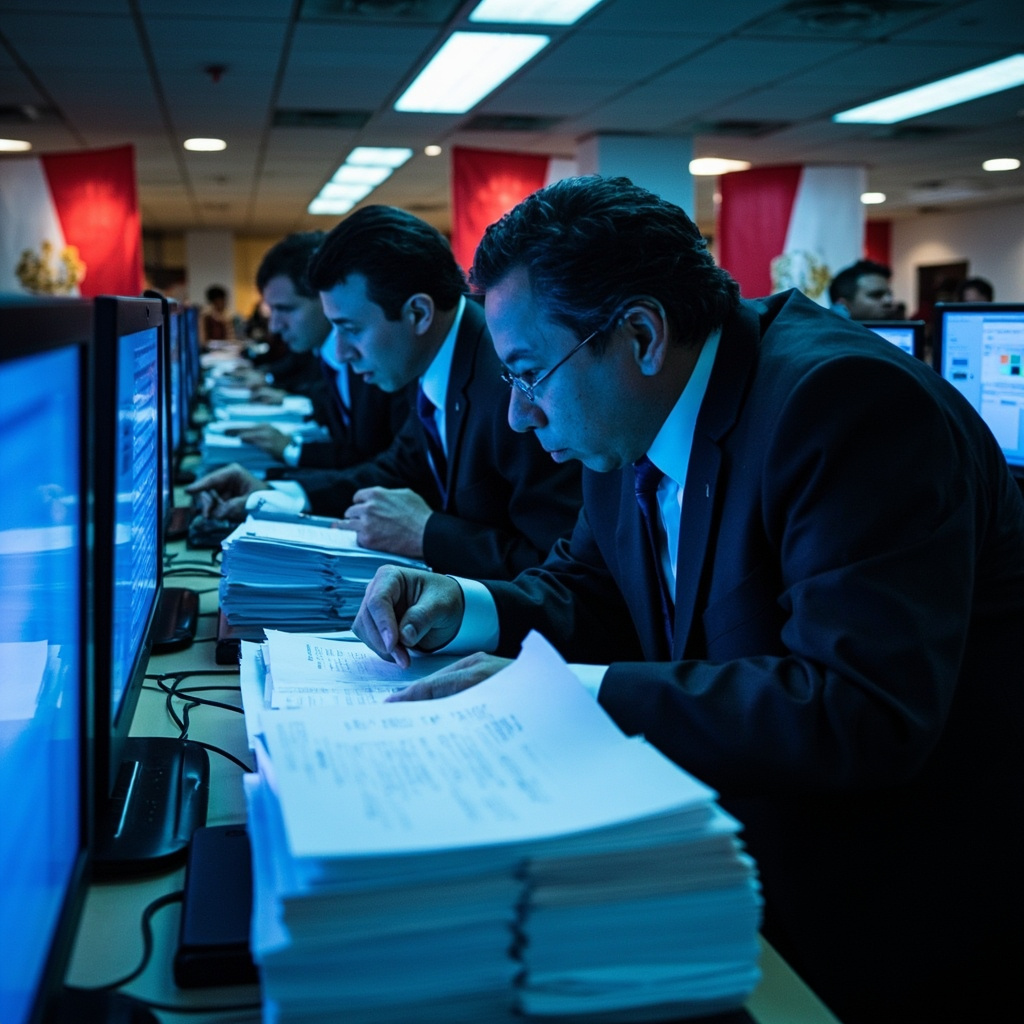
Peru’s National Jury of Elections has ordered a comprehensive audit of the first-round presidential results after reports of irregularities in vote tallying, throwing the country’s already fragile democracy into deeper uncertainty.
- Peru’s JNE has launched a full IT audit of presidential election results after multiple contested tally sheets were flagged
- Leading candidates are separated by a razor-thin margin, making every disputed ballot potentially decisive
- The audit mirrors Peru’s 2021 election crisis, raising fears of renewed political instability in Latin America’s most turbulent democracy
- International observers warn that any perception of a stolen election could trigger mass protests and institutional collapse
The Audit That Could Reshape a Nation
Peru’s electoral authorities took the extraordinary step on May 2 of ordering a comprehensive audit of the first-round presidential election results, a move that has sent shockwaves through Latin America and drawn urgent attention from international democracy monitors.
The National Jury of Elections, or JNE, announced the audit after reports of irregularities in electronic vote tallying surfaced from multiple regions. Several contested tally sheets — known in Peru as actas — were flagged for review, with discrepancies between electronic records and physical vote counts raising questions about the integrity of the results.
What makes this crisis particularly acute is the margin between the leading candidates. With results showing candidates separated by a narrow margin and multiple contested tally sheets under review, even a small number of disputed ballots could alter the outcome of the election — and with it, the political trajectory of a nation of 34 million people.
Echoes of 2021: A Democracy Under Strain
For anyone who followed Peru’s 2021 presidential election, the current crisis carries an unsettling sense of déjà vu. Four years ago, Pedro Castillo’s narrow victory over Keiko Fujimori was contested for weeks, with Fujimori’s campaign alleging fraud and demanding annulments of votes from rural areas. The country teetered on the edge of institutional collapse before the JNE finally certified the results.
That election exposed deep fissures in Peruvian society: the divide between Lima’s coastal elite and the Andean interior, between market-oriented economics and state interventionism, between those who trusted the system and those who saw it as rigged against them. Those fissures have not healed. If anything, they have widened.
Since 2021, Peru has cycled through three presidents. Castillo was impeached and arrested after attempting to dissolve Congress. His successor, Dina Boluarte, has governed under a state of emergency and faced violent protests that killed dozens. Congress itself has approval ratings in the single digits. The institutional fabric that a fair election might repair is precisely the fabric most at risk if this audit is perceived as illegitimate.
What the Audit Will Examine
According to the JNE’s announcement, the comprehensive IT audit will focus on several critical areas:
- Electronic tally verification: Cross-referencing digital vote counts with physical actas from polling stations where discrepancies have been reported
- Chain of custody review: Examining whether physical ballots were properly secured and transported between polling stations and counting centers
- Software integrity testing: Verifying that the vote-counting software was not tampered with or improperly configured
- Statistical anomaly detection: Identifying patterns in vote reporting that deviate from expected distributions, which could indicate systematic manipulation
The scope of the audit is unprecedented in modern Peruvian electoral history. While partial reviews have been conducted in previous elections, a full IT audit of first-round results has not been ordered since the country’s return to democracy in 2001.
International Reactions and Regional Implications
The Organization of American States has expressed concern over the situation, noting that Peru’s democratic institutions are being tested at a moment when Latin America faces broader questions about electoral integrity. The OAS observation mission, which was present for the first round, has offered technical assistance for the audit process.
The European Union’s election observation delegation similarly urged transparency, stating that the credibility of Peru’s democratic process depends on the thoroughness and impartiality of this audit.
Neighboring countries are watching with particular anxiety. Bolivia’s own electoral crisis of 2019 — in which disputed results led to the resignation of President Evo Morales — remains a fresh memory. Ecuador, Colombia, and Chile have all experienced periods of political instability in recent years, and regional leaders are acutely aware that democratic backsliding in one country can embolden anti-democratic forces across the continent.
The Stakes for Peru’s Future
Peru enters this crisis from a position of weakness. The country has had six presidents in the last five years. Congressional approval hovers near single digits. Public trust in institutions has been eroded by successive corruption scandals, political instability, and the failure of any government to deliver sustained economic improvement for the roughly one-third of Peruvians living in poverty.
If the audit confirms the original results, the winning candidate will face a legitimacy challenge from opponents who have already framed the process as suspect. If the audit reveals significant irregularities that change the outcome, the backlash from the initially leading candidate’s supporters could be severe.
Either way, the next president will govern a divided nation with weakened institutions and a public that has been given fresh reason to doubt the system that produced them. In a region where democratic fatigue is already widespread, Peru’s electoral crisis is a warning that the mechanics of democracy — vote counting, audit trails, transparent processes — matter as much as the ideals.
▸ How long will the audit take?
The JNE has not set a definitive timeline. Similar audits in other countries have taken anywhere from several days to several weeks. The urgency is compounded by the constitutional deadline for certifying results before the second round can proceed.
▸ Could the audit trigger a new election?
While theoretically possible, a full annulment and re-run is considered unlikely. The JNE would need to demonstrate that irregularities were so widespread that the entire first round was compromised. More probable outcomes include partial recounts in affected areas or adjustments to vote totals.
▸ What happens if protests erupt?
Peru has recent experience with election-related unrest. In 2022, protests following President Castillo’s impeachment led to dozens of deaths. Security forces are on alert, and the government has indicated it will deploy additional personnel to major cities if demonstrations materialize.
▸ How does this affect Peru’s economy?
The Peruvian sol has already shown volatility in response to the audit announcement. Investment decisions are being delayed, and the country’s mining sector — a major source of export revenue — faces uncertainty if political instability escalates. Peru is the world’s second-largest copper producer.