Beijing Invokes 2021 Blocking Statute in Direct Challenge to US Pressure Campaign
China has ordered its domestic companies to disregard United States sanctions targeting Iranian oil imports, escalating tensions with Washington and issuing a direct challenge to President Donald Trump’s maximum pressure campaign against Tehran.
China’s Commerce Ministry issued a directive on Sunday invoking a 2021 “blocking statute” that prohibits Chinese firms from complying with foreign sanctions Beijing considers illegitimate. The order applies to several Chinese refiners — including independent “teapot” refineries — accused by the United States of purchasing Iranian crude in violation of American sanctions.
Trump Administration Intensifies Pressure on Tehran
The move comes as the Trump administration ramps up sanctions aimed at cutting off a major source of Iranian revenue that funds the Islamic Republic’s military activities and regional proxy forces.
US Treasury Secretary Scott Bessent has accused China of effectively financing Iran’s terrorism through its massive oil purchases. “China has been buying 90 percent of their energy, so they are funding the largest state sponsor of terrorism,” Bessent told Fox News. “Let’s see them step up with some diplomacy and get the Iranians to open the strait.”
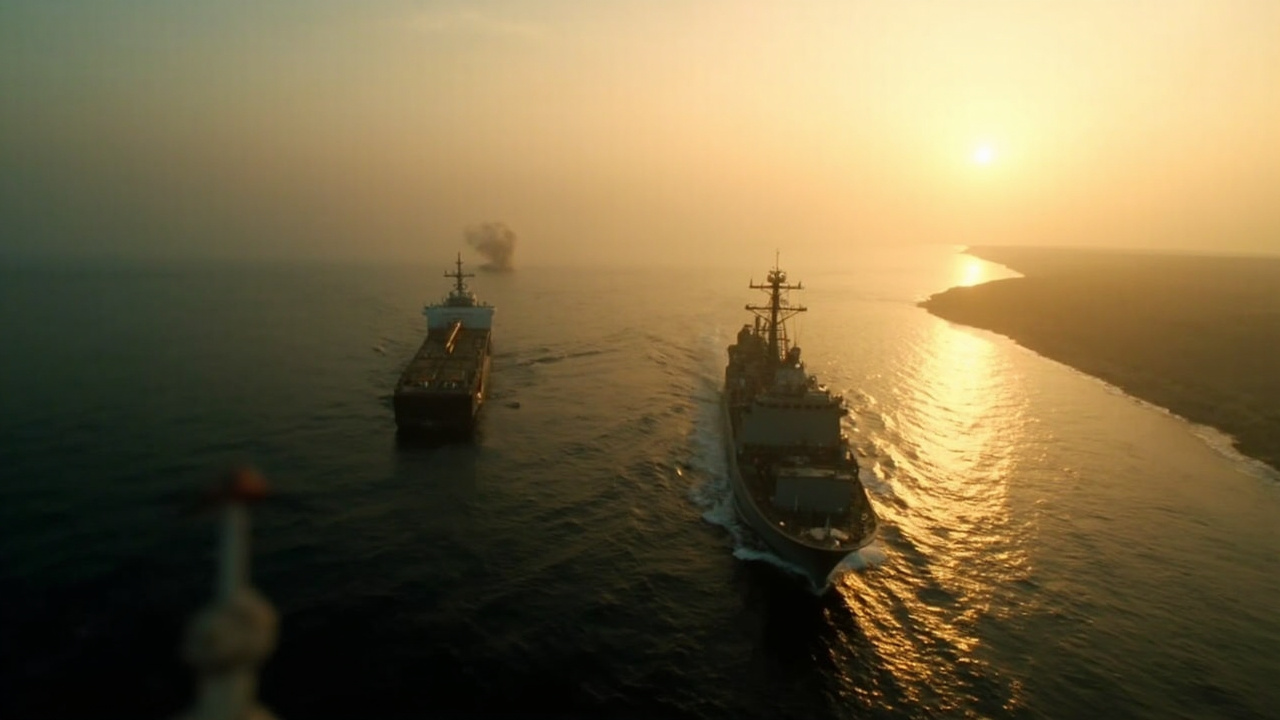
The administration has threatened secondary sanctions on any entity — including Chinese state-owned enterprises — that continues to facilitate Iranian oil exports. US naval forces have also increased their presence in the Persian Gulf and Gulf of Oman, conducting what Washington calls “self-defense strikes” against Iranian military facilities.
“China has been buying 90 percent of their energy, so they are funding the largest state sponsor of terrorism. Let them step up with some diplomacy and get the Iranians to open the strait.” — US Treasury Secretary Scott Bessent
China: US Sanctions Violate International Norms
Beijing has defended its latest action by saying the American sanctions unlawfully interfere with normal trade between sovereign nations. China’s Commerce Ministry confirmed that Chinese firms are prohibited from recognising or complying with the American measures, which it says violate international norms.
China continues to remain the primary destination for Iranian oil exports despite mounting US sanctions. Much of Iran’s sanctioned crude reportedly reaches Chinese refineries through complex maritime networks and indirect shipping channels designed to evade American detection — a system that has evolved significantly since previous US administrations imposed oil sanctions on Tehran.
Diplomatic Tensions Rise Ahead of Trump-Xi Meeting
The latest dispute comes ahead of a highly anticipated meeting between President Donald Trump and Chinese President Xi Jinping, expected later this month. The summit was already complicated by ongoing trade tensions and the broader US-China strategic rivalry, but the Iran sanctions standoff has added a new layer of complexity.
Iranian Foreign Minister Abbas Araghchi arrived in Beijing this week for talks with Chinese Foreign Minister Wang Yi — underlining China’s growing role as both Iran’s leading oil customer and a key diplomatic partner. China has consistently backed Iran’s right to develop its nuclear programme under the Nuclear Non-Proliferation Treaty, opposing what it calls outside interference in Iranian affairs.
The Bahrain and United States also circulated a draft United Nations Security Council resolution this week calling for Iran to cease attacks in the Strait of Hormuz — where Iranian forces have attacked commercial vessels as part of the ongoing conflict — raising the prospect of a major diplomatic confrontation at the world body.
Oil Markets on Edge
The standoff has rattled global oil markets already shaken by the widening US-Iran conflict. Brent crude prices have fluctuated sharply as traders weigh the risk of supply disruption against the possibility of a diplomatic breakthrough. The Strait of Hormuz remains the world’s most critical chokepoint for oil shipments, carrying roughly 20 percent of global oil trade.
For Beijing, maintaining stable Iranian oil flows is not merely an economic calculation. China views Iran as a strategic counterweight to American influence in the Middle East and has steadily deepened its diplomatic and economic partnership with Tehran over the past decade. The blocking statute invocation represents a shift from years of opaque workarounds to more explicit state-backed resistance.
What Comes Next
The effectiveness of Washington’s sanctions campaign now rests on whether it can compel compliance from Beijing — the world’s largest oil importer and a country with deeper economic ties to Iran than any other major power. China has successfully circumvented US oil sanctions before, and the new blocking statute gives it legal cover to formalise what was previously informal non-compliance.
Analysts warn the US faces a difficult choice: escalate secondary sanctions against Chinese financial institutions and risk a further deterioration in US-China relations, or accept reduced leverage over Tehran’s oil revenue. As talks between Washington and Tehran remain stalled and the Hormuz strait remains a flashpoint, the China-Iran oil alliance may prove to be the decisive fault line in the broader confrontation.
The coming weeks — particularly the outcome of the Trump-Xi meeting — could determine whether the US-Iran conflict deepens into a full-blown great power confrontation or whether space exists for a negotiated de-escalation.
This is a developing story. Check mhook.net for updates.