# Trump Announces Three-Day Ceasefire in Ukraine as Putin Accepts — But Skepticism Runs Deep
*Trump declared a 72-hour ceasefire effective immediately, hours after announcing the deal alongside Ukrainian President Zelenskyy at the White House on May 9, 2026. Russia confirmed acceptance the same day.*
—
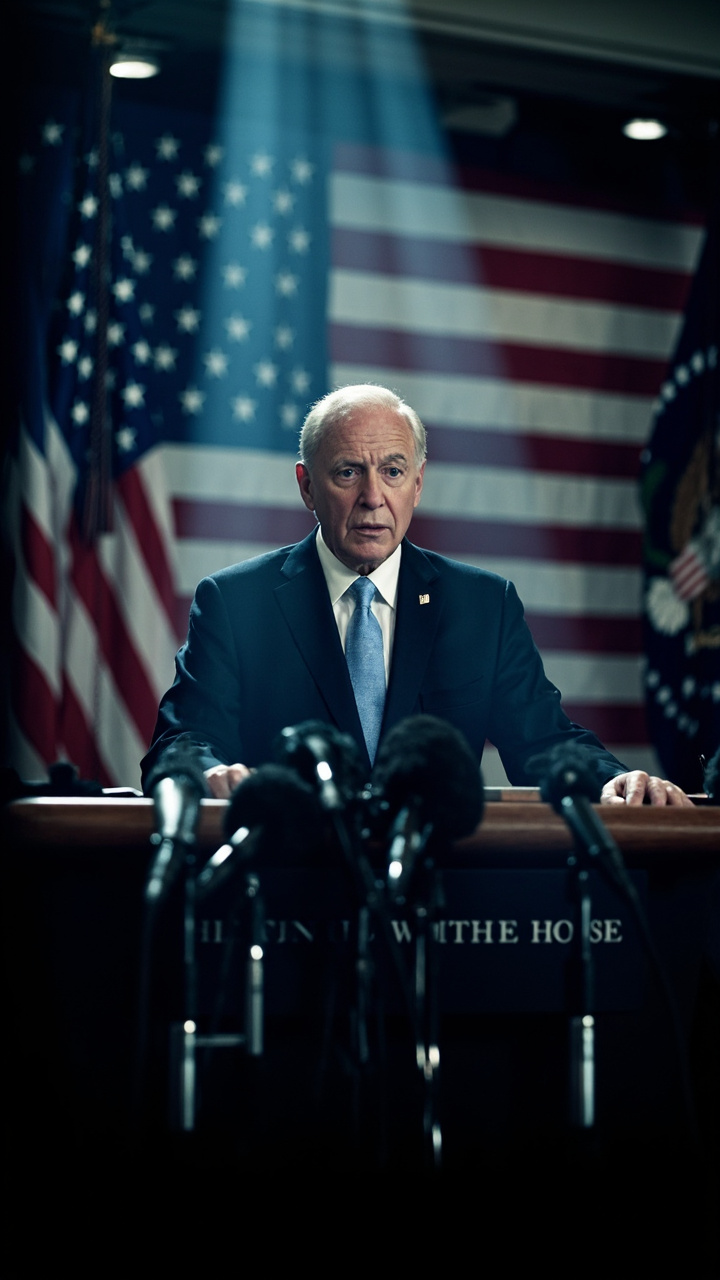
President Donald Trump announced on May 9, 2026, that Russian President Vladimir Putin had agreed to a 72-hour ceasefire in Ukraine, declaring the breakthrough a potential turning point in a conflict now in its fourth year. The announcement came after a lengthy bilateral meeting at the White House, with Ukrainian President Volodymyr Zelenskyy standing beside Trump in the Rose Garden. Within hours, the Kremlin confirmed its acceptance of the terms, and both governments indicated a willingness to negotiate a broader peace framework once the ceasefire takes hold.
The ceasefire officially took effect at midnight Kyiv time on May 10. Frontline reports from the Donetsk and Luhansk regions indicated a significant reduction in artillery exchanges within the first several hours, according to monitoring groups tracking the conflict. The Organization for Security and Co-operation in Europe (OSCE) deployed additional observers along the demarcation line to verify compliance.
> “This is a moment of profound relief for the families of every soldier on both sides who have spent the past four years in mud and blood. We will hold our breath for 72 hours and pray that what begins as a pause becomes a permanent peace.”
> — Volodymyr Zelenskyy, President of Ukraine, May 9, 2026
> “Russia has agreed to the ceasefire. We hope it will be respected. If it holds, we are prepared to move immediately into substantive negotiations on a lasting settlement.”
> — President Donald Trump, May 9, 2026
## Key Terms and Immediate Aftermath
The ceasefire agreement encompasses the following core provisions:
| Provision | Detail |
|—|—|
| Duration | 72 hours (3 days), effective midnight May 10 EET |
| Geographic scope | Full contact line across Donetsk, Luhansk, Zaporizhzhia, and Kherson oblasts |
| Monitoring | OSCE observers deployed to the demarcation line |
| Prisoner exchange | Both sides committed to releasing prisoners within 48 hours of ceasefire start |
| Humanitarian corridors | Agreed corridors to be opened for civilian evacuation from frontline settlements |
| Negotiations | A joint summit in a neutral venue proposed if the 72-hour ceasefire holds |
The Institute for the Study of War (ISW) characterized the agreement as “a tactical pause dressed as a diplomatic breakthrough,” noting that both sides entered the ceasefire from positions of relative exhaustion rather than strength. Ukrainian forces have been under sustained pressure along the Zaporizhzhia front for months, while Russian logistics have been strained by extended lines of supply and personnel rotation challenges.
The Kremlin’s rapid acceptance of the terms surprised some Western analysts who had predicted Moscow would demand preconditions — particularly security guarantees from NATO and legally binding territorial recognition — before halting operations. Whether those demands resurface in any subsequent negotiation remains an open question.
## The Geopolitical Backdrop: A Fragile Detente
The ceasefire emerged against a deteriorating broader relationship between Washington and Moscow that had persisted since the collapse of the initial peace talks in early 2026. American intelligence assessments cited in Western media outlets — and neither confirmed nor denied by the administration — indicated that Russian forces had made incremental territorial advances in three oblasts during the preceding six weeks. The gains were militarily modest but strategically significant, as they brought additional population centers within artillery range and tightened Russian control over a critical stretch of the Dnipro River’s eastern bank.
Trump’s announcement came as his administration was simultaneously re-escalating trade tensions with China ahead of a summit meeting with President Xi Jinping. Administration officials insisted the two tracks were unrelated, but critics in Congress noted the timing: a major foreign policy announcement on Ukraine one week after broad tariff increases on Chinese goods sent contradictory signals about the administration’s strategic priorities.
European allies were notably cooler in their public reactions. The French Élysée Palace issued a cautious statement welcoming “any reduction in bloodshed” while emphasizing that Paris would await “verifiable compliance on the ground before adjusting its policy of sustained support for Kyiv.” Germany, still navigating the political fallout from a coalition government fracture over weapons shipments earlier in the spring, offered no new defense aid commitments alongside its welcome of the ceasefire.
> “Three days buys us time. It buys us the chance to see whether Moscow wants a genuine off-ramp or simply a propaganda victory to consolidate recent gains. The world has been here before.”
> — Anders F. Rasmussen, former NATO Secretary-General, speaking to Reuters, May 9, 2026
## Historical Parallels and Analyst Skepticism
The 72-hour ceasefire recall multiple partial truces that have punctuated the conflict without producing durable peace. A 2023 Easter ceasefire collapsed within 36 hours after both sides accused the other of violations. A Black Sea grain corridor agreement signed in 2023 was subsequently violated and then renegotiated under Turkish mediation — a process that consumed months and ultimately proved unstable. The 2024 Istanbul Protocol, which offered the most detailed peace framework discussed in the conflict, fell apart when the Ukrainian parliament refused to ratify it amid disagreement over territorial concessions.
| Previous Ceasefire Attempts | Date | Duration | Outcome |
|—|—|—|—|
| Easter Truce | April 2023 | ~36 hours | Collapsed; mutual violations |
| Black Sea Grain Deal | July 2022 (initial) | 14 months | Lapsed after Russian withdrawal |
| Istanbul Protocol | April 2024 | Ongoing negotiation | Rejected by Ukrainian parliament |
| Limited Humanitarian Pause | January 2025 | 5 days | Held but not extended |
The Atlantic Council’s Eurasia Center estimates that more than 40,000 Ukrainian civilians and combatants have died since the full-scale invasion of February 2022, with Russian military and civilian casualties estimated at between 70,000 and 120,000 by independent monitoring groups — figures the Kremlin contests but has not formally denied. Displacement figures stand at approximately 6.2 million refugees abroad and an estimated 3.8 million internally displaced persons as of the first quarter of 2026.
## What Comes Next: The 72-Hour Window
Whether the ceasefire becomes a genuine negotiating framework depends entirely on what happens during the 72-hour window. Administration officials told reporters that a second summit — potentially in Geneva, Istanbul, or a neutral Gulf state — would be convened within a week if the ceasefire holds and preliminary discussions on a prisoner exchange are productive. A full peace conference would follow, modeled loosely on the 2015 Minsk process but with what one unnamed senior official described as “more direct American involvement and stronger verification mechanisms.”
Ukrainian officials, while publicly supportive of the ceasefire, have been careful to frame it as a tactical development rather than a political capitulation. Zelenskyy reiterated in a subsequent address to parliament that Ukraine’s “irreversible path toward EU accession” and any future security architecture “must reflect the will of the Ukrainian people as expressed through constitutionally legitimate institutions.” The statement was read by analysts as a signal that Kyiv intends to participate in any negotiations but has red lines — particularly on sovereignty over currently occupied territories — that it will not abandon.
Russian parliamentarians and state media, for their part, framed the ceasefire as a victory of sustained pressure, with Rossiya-1 running banners characterizing the three-day pause as a window for “regrouping and consolidation.” The framing suggested that Moscow views the current moment as a tactical pause rather than a strategic pivot.
The coming 72 hours will determine whether this agreement merits inclusion in the history of near-misses or marks the beginning of a genuine chapter of peace. The world will be watching — and so, increasingly, will investors in energy futures, defense contractors, and the commanders who must decide whether to hold fire.
*— Report compiled from statements by the Office of the President of the United States, the Presidential Administration of Ukraine, the Kremlin Press Service, OSCE monitoring reports, the Institute for the Study of War, the Atlantic Council, and Reuters.*