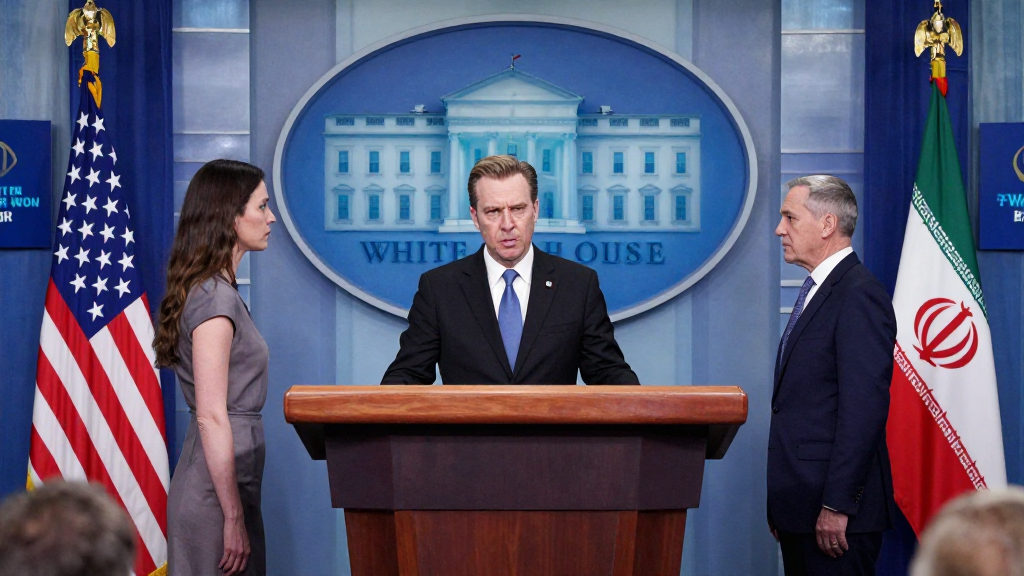
President Donald Trump warned Iran on Wednesday that the United States would revert to military action if negotiations fail, even as his administration opened a 60-day negotiating period aimed at securing a long-term agreement with Tehran and ending the five-week-old war that has reshaped energy markets and strained alliances across the Middle East.
The announcement marked the first formal diplomatic opening since U.S. forces launched strikes against Iran in late May. Secretary of State Marco Rubio and Vice President JD Vance both held calls with regional counterparts, the State Department confirmed, as the administration sought to project both strength and flexibility simultaneously. NATO Secretary General Mark Rutte joined the discussions at the White House, offering cautious support for the American approach while warning that allowing Iran to obtain a nuclear weapon would have devastating consequences for global security.
Trump Warns of Reverted Action
Speaking at the White House alongside Rutte, Trump offered a stark assessment of the negotiations ahead and repeated his criticism of European allies who he said failed to offer meaningful support during the opening phase of the military campaign. “We did not need help on this at all. We demolished them,” Trump told reporters. “But it would have been nice if they would have said, ‘We would like to help.’ We were let down.”
The president added that the United States would revert to doing “what we have to do” if Tehran fails to meet American demands. Rutte defended the U.S. military operation and echoed the warning. “A nuclear-armed Iran would export chaos and terrorism far beyond its own borders,” Rutte said. “We stand behind the goal of ensuring Iran can never develop a weapon,” he added.
Naval Blockade Lifted, Forces Remain
The Trump administration lifted its naval blockade of Iran while keeping major U.S. military forces deployed across the Middle East, a dual signal intended to keep pressure on Tehran while leaving room for diplomacy, according to a Pentagon briefing. Chief Pentagon spokesman Sean Parnell confirmed that the Defense Department has requested $67 billion in supplemental funding to cover expenses associated with the Iran offensive.
Around 20 million barrels of oil have exited the Strait of Hormuz in the last 24 hours, U.S. Energy Secretary Chris Wright told reporters, an indication that the waterway has not been fully disrupted despite ongoing military tensions. Wright cautioned that any further escalation near the strait could reverse those flows and push crude prices higher.
The IRGC naval announcement complicated efforts to stabilize the shipping lane. The Pentagon rejected the claim that Iran had authority to designate safe passage routes, with Parnell stating that freedom of navigation in international waters is a principle the United States will uphold by force if necessary.
Iran Sets Terms on Nuclear Access
Iran Deputy Foreign Minister Abbas Araghchi set a firm condition on any nuclear inspection framework. “Access to Iran nuclear sites and materials will only be examined within the framework of a final deal,” Araghchi said, according to statements carried by Iranian state media. The position underscores the deep gap that remains between the two sides even as talks are set to proceed.
An Iranian lawmaker separately claimed that Pakistani Prime Minister Shehbaz Sharif reported interest in meeting Supreme Leader Mojtaba Khamenei was part of a U.S.-Israeli plan to target the Iranian leader, a charge rejected by Islamabad. The allegations added to the atmosphere of mistrust surrounding the negotiating period.
Lebanese President Joseph Aoun thanked Vice President Vance and Secretary Rubio in a phone call on Tuesday for “the attention the United States is showing toward Lebanon, aimed at ending the war there,” according to a statement from his office. The call reflected the broader regional dimension of the U.S.-Iran standoff, which has drawn in Lebanon, Israel, and threatened to involve Gulf states.
What Comes Next
The 60-day window is set to include direct talks in a third-country venue, though both sides have yet to agree on a location. U.S. officials said Switzerland has been proposed as a neutral host. The outcome of those talks, and whether Iran agrees to any constraints on its nuclear programme before a deal is finalized, will determine whether the current negotiating period produces a durable agreement or collapses into renewed hostilities. Congressional officials said they expect a full briefing from the administration within two weeks.