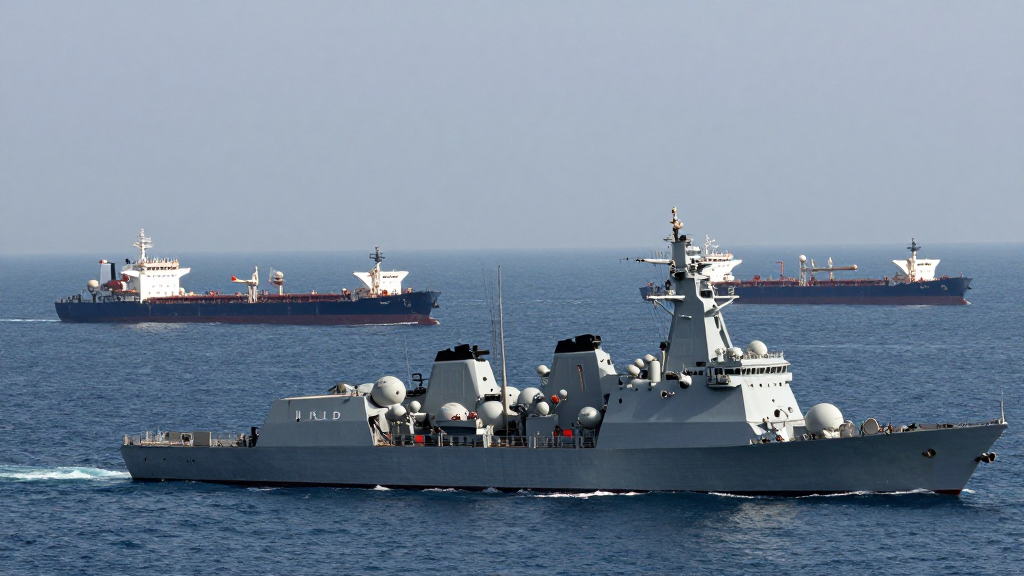
Iran warned on Thursday that safe passage through the Strait of Hormuz cannot be guaranteed for vessels taking parallel routes, escalating maritime tensions as the United States military buildup in the Persian Gulf entered its third week. The statement, carried by the Islamic Republic’s official news agency, came as American B-2 bombers arrived at Al Udeid Air Base in Qatar, reinforcing an already significant US naval presence in the region.
The Hormuz warning directly undermined diplomatic efforts to sustain a fragile 60-day ceasefire between the United States and Iran, brokered with Swiss and Omani mediation in May. That agreement, hailed as a breakthrough when it was announced, has since frayed under the weight of mutual accusations and a series of maritime incidents that both sides have blamed on the other. The new threat from Tehran represents the most explicit challenge yet to freedom of navigation in one of the world’s most critical oil shipping lanes.
Tehran Signals Retaliation Over Sanctions
Iran said the new Hormuz advisory, which requires vessels to seek approval through routes it designates, was a response to what it described as American economic strangulation through resurrected sanctions. The Trump administration reimposed a sweeping sanctions architecture in May, targeting Iran’s oil exports, banking sector and Revolutionary Guard Corps economic holdings. European Union members, who had sought to preserve a separate humanitarian sanctions exemption, expressed alarm at the speed of the US rollback.
International oil markets reacted sharply. Brent crude rose 3.1 percent to $84.20 per barrel before paring gains. The shipping index for very large crude carriers in the Gulf spiked to its highest level since the 2024 Hormuz crisis. Analysts warned that the combination of military tensions and sanctions pressure was squeezing an already fragile global supply chain.
Shipping insurance underwriters told Reuters they were treating the Iranian advisory as a Category 2 threat, requiring enhanced premiums for any vessel operating within 50 nautical miles of the Strait. The International Maritime Organization said it was in contact with flag states and ship operators but stopped short of issuing a formal advisory.
US Military Buildup Compounds Diplomatic Strain
The arrival of B-2 stealth bombers at Al Udeid underscored the disconnect between the diplomatic track and the military one. While American diplomats continued to insist a negotiated solution remained possible, the deployment of strategic bombers signaled a preparedness for a broader contingency. The Pentagon has not confirmed whether the aircraft are equipped for conventional or nuclear missions, an ambiguity that regional analysts said was intentional.
A senior State Department official, speaking on background, told the Associated Press that the White House was maintaining two parallel tracks. “We are pursuing every diplomatic avenue while ensuring our forces are positioned to defend American personnel and interests,” the official said. The official declined to elaborate on what trigger conditions would move from the diplomatic to the military track.
The aircraft carrier USS Abraham Lincoln, accompanied by its strike group, entered the Arabian Sea last week. Two additional Ohio-class submarines are believed to be operating in the Persian Gulf, according to defence officials quoted by the Washington Post. The combined naval and air presence represents the largest American military concentration in the Middle East since the 2020 Iran standoff.
Diplomatic Talks Stumble as Deadline Nears
Indirect talks between American and Iranian officials resumed in Oman on Wednesday, their third session since the ceasefire took effect. Omani and Swiss mediators shuttled between delegations in Muscat’s Cayan Tower venue. According to a person familiar with the proceedings, who spoke to the Financial Times on condition of anonymity, the two sides remain deadlocked over the sequencing of sanctions relief and the verification architecture for Iran’s nuclear programme.
The United States has demanded immediate and verifiable dismantlement of a significant portion of Iran’s enrichment infrastructure, calling it the minimum precondition for sanctions relief. Iran, in turn, insists any agreement must preserve its right to peaceful nuclear technology under the Nuclear Non-Proliferation Treaty and demands the complete removal of all American military assets from neighbouring countries as part of any final arrangement.
European powers, who were largely sidelined from the direct US-Iran negotiations, issued a joint statement through the Belgian Foreign Ministry urging both parties to exercise maximum restraint. The statement, backed by France, Germany and Britain, called Iran’s Hormuz advisory “a dangerous escalation” and reaffirmed the EU’s readiness to reimpose its own sanctions if diplomacy fails.
The ceasefire agreement reached in Bern in May set a 60-day window for a comprehensive nuclear accord. That window closes on August 4. Mediators told reporters in Geneva that they were working to arrange a direct meeting between US and Iranian negotiating teams before the end of July. Whether those talks can bridge the current gulf between the two sides will determine whether the ceasefire survives beyond its initial term.