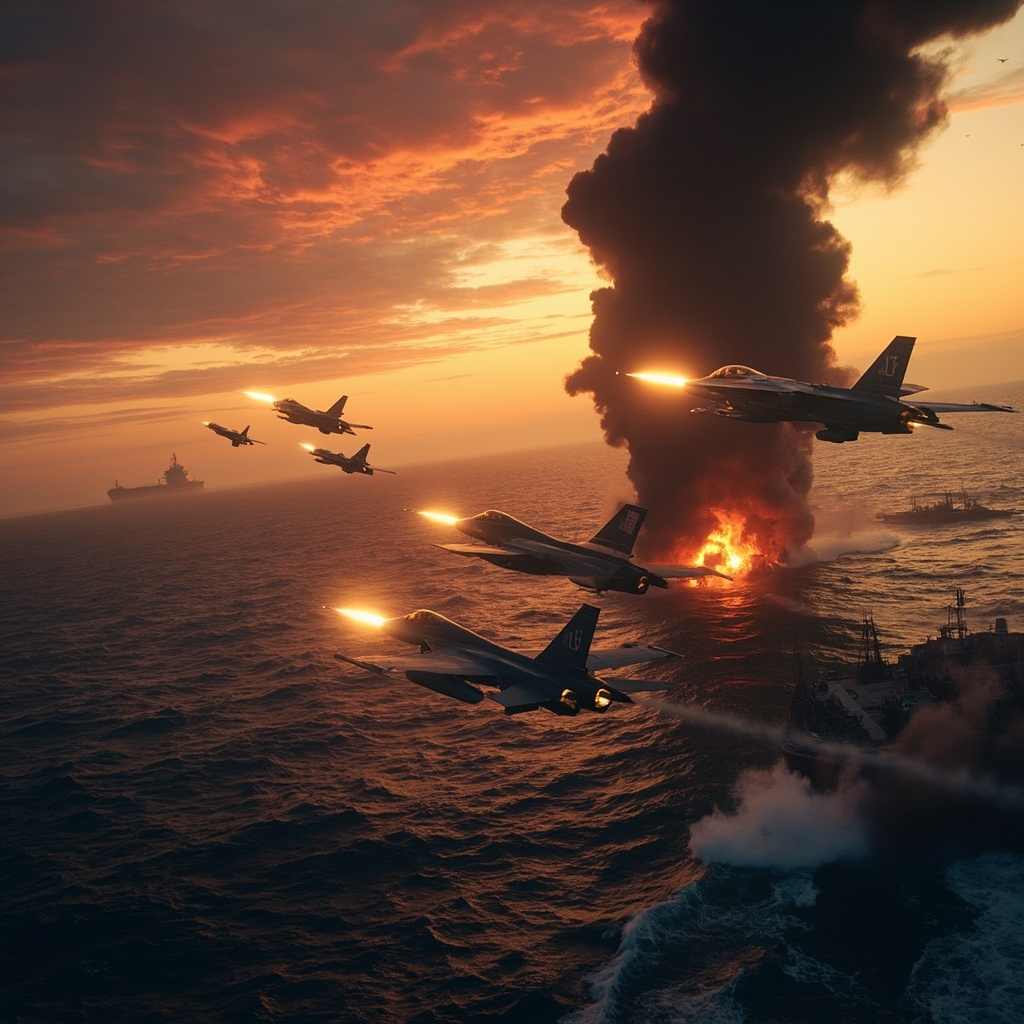
US Strikes Iran for Fourth Day as Trump Warns Tehran ‘Will No Longer Exist’
American forces launched a fourth consecutive wave of airstrikes against Iranian military targets on Saturday, June 27, after Tehran fired missiles and drones at United States bases in Kuwait and Bahrain in retaliation for an earlier American attack on Iranian positions near the Strait of Hormuz. The exchange marks the most intense escalation since a fragile ceasefire memorandum was signed between Washington and Tehran less than two weeks ago, raising the prospect that the interim diplomatic accord may be collapsing. President Donald Trump posted on Truth Social that Iran would “no longer exist” if it continued to violate the agreement.
Iran Retaliates Against US Bases in Two Gulf Nations
Iran’s Islamic Revolutionary Guard Corps announced Saturday that its naval and aerospace forces carried out a joint missile and drone operation targeting American military installations in Kuwait and Bahrain. The statement said the strikes were a direct response to what Tehran called a “clear violation” of the June 18 ceasefire memorandum of understanding signed between Washington and Tehran. Iran’s Foreign Ministry issued a separate statement Sunday morning, saying, “This once again demonstrates that the U.S. regime places no value on its commitments and that breaking promises is part of this regime’s nature.” The statement added that Iran “reaffirms its determination to defend its national sovereignty and territorial integrity against U.S. military aggression.”
The IRGC also warned that the US strikes — which hit the coastal town of Sirik in southeastern Iran — would “result in the complete halt of all diplomatic processes.” A separate IRGC statement dismissed American firepower, saying the strikes would “not resolve our dominance over the Strait of Hormuz” and promising a “crushing response” to any further violations. Kuwait’s government condemned the Iranian attacks as “heinous,” as did Bahrain, which hosts a significant US naval installation.
US Military Hits 10 Iranian Targets Around Vital Shipping Lane
US Central Command said earlier Saturday that American Navy and Air Force aircraft struck 10 Iranian military targets in and around the Strait of Hormuz. The strikes came after Iranian forces attacked a commercial cargo vessel in the strategic waterway, which carries roughly one-fifth of the world’s oil and liquefied natural gas supply. The Pentagon said the strikes targeted Iranian missile batteries, drone launch sites, and radar installations that had been used to track and threaten commercial shipping. A US military spokesperson said the operation was launched “in direct response to continued Iranian aggression against commercial shipping.”
The initial ceasefire agreement, signed June 18, was designed to restore traffic through the Strait of Hormuz after months of disruption caused by the four-month-old conflict between the two countries. Since the accord took effect, commercial shipping had begun returning to the waterway. However, Iran has targeted two cargo ships with drones in recent days, according to US officials, and the latest attack on a vessel prompted the renewed American bombardment. Washington has been promoting a southern lane along the coast of Oman for commercial traffic, while Tehran insists ships use a northern route through its own territorial waters — a dispute that has complicated enforcement of the ceasefire.
Ceasefire on the Brink as Both Sides Dig In
Regional capitals watched with alarm as the exchange of strikes unfolded over the weekend. Qatar and the United Arab Emirates issued joint calls for maximum restraint, while the United Nations Secretary-General urged both governments to return to the negotiating table. European Union foreign policy chief Kaja Kallas said the bloc was prepared to reimpose sweeping economic sanctions on Iran within 72 hours if hostilities did not cease. “The window for diplomacy is narrowing by the hour,” Kallas told reporters in Brussels. Britain’s Foreign Office summoned Iran’s ambassador in London for urgent consultations Sunday.
Israeli military activity added another layer of complexity. Hours after the IRGC strikes on US bases, the Israeli military said its forces killed Hezbollah militants in southern Lebanon and dismantled a rocket launcher in the Nebatieh region — an operation carried out a day after Israel agreed to withdraw some troops from the area. The parallel crises underscored the risk of a broader regional spillover as the US-Iran standoff deepens.
What Comes Next
The immediate question is whether the ceasefire memorandum can be salvaged. US Secretary of State Marco Rubio is expected to speak with Qatari and Omani intermediaries early this week in an attempt to restore de-escalation channels that both sides used during the original negotiations. Pentagon officials said additional US military assets were being repositioned in the Gulf, a signal that Washington is prepared to escalate further if Iranian attacks on shipping continue. Iran, for its part, has signaled that it will not return to diplomatic talks while American strikes are ongoing — a position that leaves the two sides on a trajectory toward intensified confrontation rather than negotiated peace.