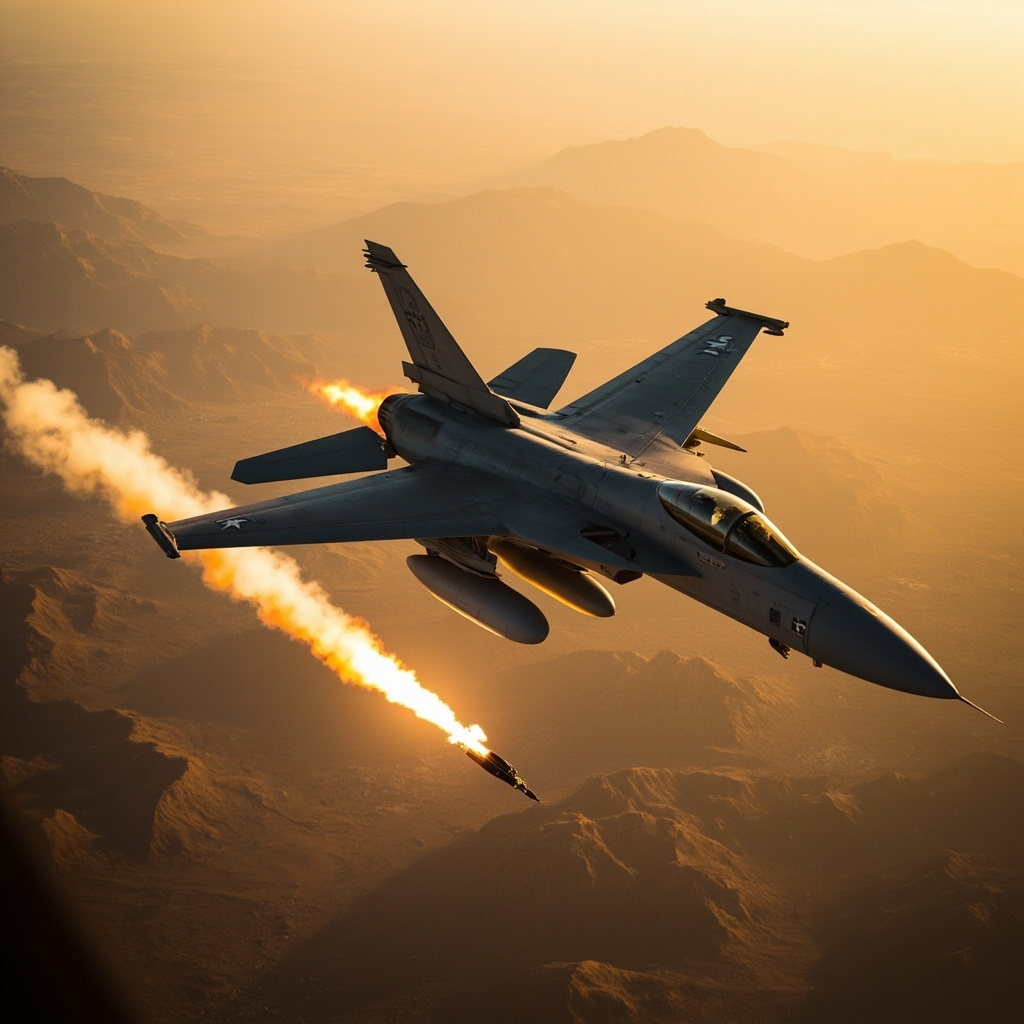
The United States launched a second wave of military strikes against Iran on Saturday, officials confirmed, targeting additional nuclear and military facilities in retaliation for a drone attack that killed three American contractors aboard a commercial vessel transiting the Strait of Hormuz earlier in the week.
Pentagon spokesman Major General Patrick Ryder told reporters that the strikes were conducted by F-15E and F/A-18 aircraft launched from carriers in the Persian Gulf, striking a total of nine targets including an uranium enrichment facility near Natanz, a ballistic missile production site outside Isfahan, and three coastal defense batteries that officials said had been used to track and target commercial shipping. Ryder said the operations were designed to degrade Iran’s ability to produce nuclear material and conduct future attacks on vessels in the strait.
Escalation Follows Diplomatic Breakdown
The strikes mark a significant escalation in an already deteriorating relationship between Washington and Tehran. According to two senior US officials who spoke on condition of anonymity because they were not authorized to discuss the matter publicly, the drone that struck the Marshall Islands-flagged tanker on Thursday was launched from a site in southwestern Iran controlled by the Islamic Revolutionary Guard Corps. The vessel, identified by the Pentagon as the Merrick Archers, was carrying a cargo of liquefied petroleum gas when it was hit, causing a fire that burned for more than 14 hours.
Secretary of Defense Pete Hegseth said in a statement that the United States would not tolerate attacks on American personnel or commercial shipping in international waterways. “These targeted strikes send an unambiguous message: those who threaten our forces or our economic interests will face decisive consequences,” Hegseth said. The statement made no mention of ceasefire discussions or diplomatic channels, signaling that the administration had moved fully toward a military response.
Iran Vows Retaliation as Regional Tensions Spike
Iran’s foreign minister, Abbas Araghchi, condemned the strikes in a post on the social media platform X, calling them “state terrorism” and a violation of international law. “Iran’s right to self-defense is inalienable. The aggressor will receive a proportionate and decisive response,” Araghchi wrote. The Islamic Revolutionary Guard Corps separately issued a statement promising a “crushing and painful” retaliation that would target US bases throughout the region, though it did not specify timing or scope.
Bahrain, home to the US Fifth Fleet, immediately raised its alert level to the highest classification and announced the temporary closure of its airspace to all non-military aircraft. Saudi Arabia issued a similar advisory to commercial airlines, while the United Arab Emirates said it was monitoring the situation closely and coordinating with American and allied naval forces in the Gulf.
Oil Markets Jump as Shipping Lanes Face Fresh Risk
Brent crude oil surged more than 4.7 percent in early Asian trading on Sunday, climbing to $94.20 per barrel, after the strikes raised fresh concerns about the security of the Strait of Hormuz, through which roughly 20 percent of the world’s oil supply passes. Lloyd’s of London, the insurance market, said it was treating the Persian Gulf as a heightened-risk zone and warned that war risk premiums for vessels transiting the area would increase substantially.
The United Nations secretary-general Antonio Guterres issued a statement calling for an immediate cessation of hostilities and warning that further military escalation risked destabilizing the entire Middle East. “There is no military solution to this conflict. We urge all parties to return to dialogue,” the statement said. A UN Security Council emergency session was scheduled for Monday at the request of Russia and China.
Britain, France, and Germany issued a joint statement expressing “grave concern” about the escalation and calling for restraint, but stopped short of directly condemning the US strikes. A French foreign ministry spokesperson told reporters in Paris that the original drone attack on the tanker was “unacceptable” but that the response must be “proportionate and consistent with international law.”
What Comes Next
Defense analysts say the strikes have effectively closed off any near-term diplomatic path between Washington and Tehran. The Trump administration reimposed sweeping Iran sanctions last month and withdrew from indirect nuclear talks hosted by Oman, leaving few channels for communication. Iranian officials have said repeatedly that they will not negotiate under economic pressure or the threat of military force.
Regional oil markets are expected to remain volatile as traders assess the likelihood of Iranian retaliation. Satellite imagery analyzed by the Center for Strategic and International Studies on Sunday showed an increased concentration of Iranian naval vessels near the Strait of Hormuz, suggesting preparations for a potential interdiction of commercial shipping. US officials said the aircraft carrier USS Truman and its escort group were repositioning to the northern Arabian Sea as a precautionary measure.