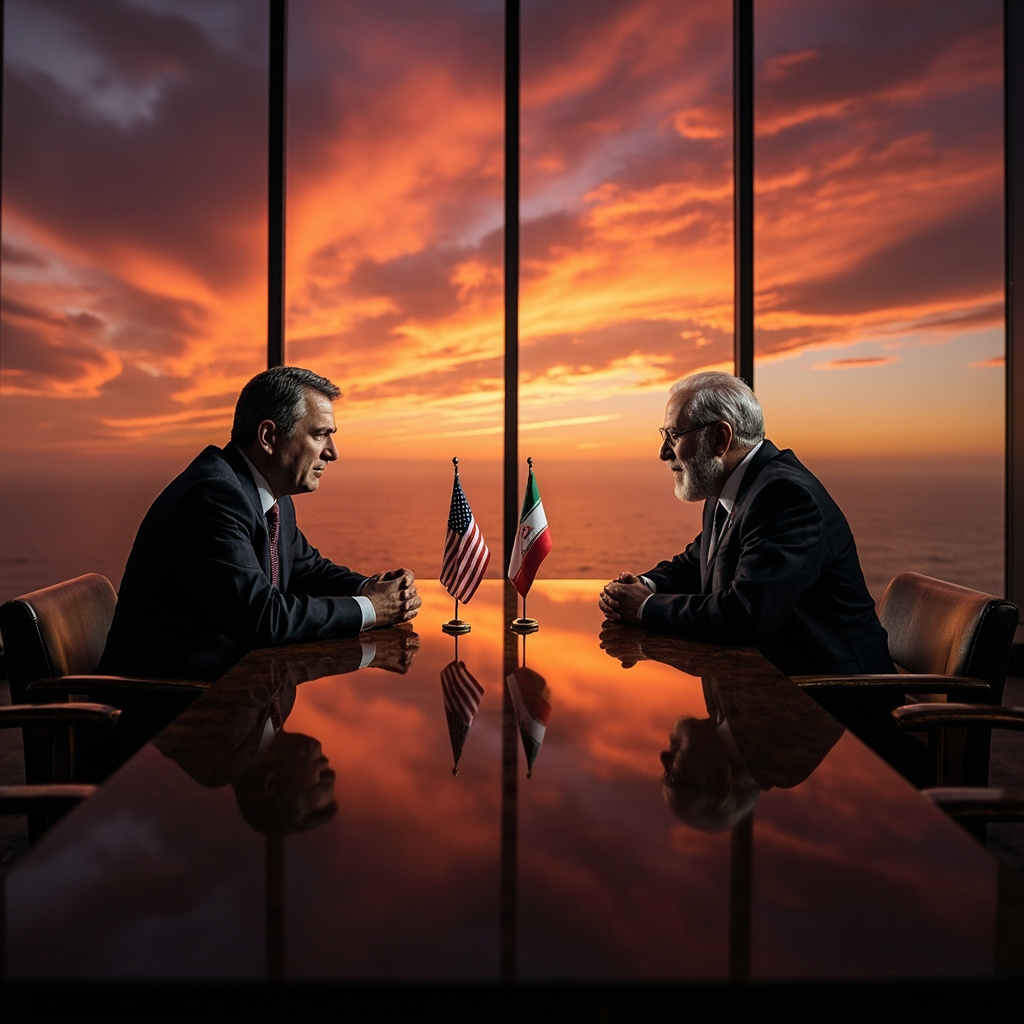
The United States and Iran agreed Sunday to halt hostilities in the Gulf and resume face-to-face negotiations over control of the Strait of Hormuz, according to a senior US official, bringing temporary relief to a region on the brink after days of escalating tit-for-tat strikes that threatened to unravel a fragile 12-day-old ceasefire agreement signed in mid-June.
Both Sides Stand Down After Days of Strikes
The development, first reported by Axios and confirmed by the US official, came after Iran launched missile and drone strikes against American military installations in Kuwait and Bahrain early Sunday — its most significant attack since an Iranian projectile struck a commercial cargo vessel in the Strait of Hormuz on Thursday. The US military responded with a second consecutive day of airstrikes against Iranian targets, prompting fears of a full collapse of the interim memorandum of understanding signed on June 17 to end four months of hostilities between the two nations.
President Donald Trump had warned earlier Sunday that the Islamic Republic would “cease to exist” if it failed to honor the agreement, while Iran’s Foreign Minister Abbas Araghchi accused the United States and Israel of breaching the terms of the MoU during separate meetings in Baghdad with Iraqi officials. Both sides nonetheless signaled willingness to return to the table rather than let the interim deal collapse entirely.
“Technical talks are slated to continue on all areas of the MoU. Both sides will stand down for now and vessels can move freely,” the senior US official said in a statement widely circulated to media outlets. Axios reported that senior diplomats from both sides are scheduled to meet Tuesday in Qatar to resume formal negotiations. Iran’s foreign ministry confirmed the Doha meeting in a brief statement but said no preconditions had been agreed upon.
Article 5: The Clause at the Heart of the Crisis
The current confrontation stems from deep disagreement over Article 5 of the June 17 MoU, which calls for the reopening of the Strait of Hormuz and the immediate resumption of commercial shipping. The provision requires Iran to remove “technical and military obstacles” and demine sections of the waterway within 30 days. But the two sides have sharply different interpretations of what that means in practice.
Iran insists it retains “total oversight and management” of the strait during the 30-day implementation window. The US, backed by Gulf Arab states, interprets the clause as guaranteeing freedom of navigation and is pushing to establish alternative shipping routes closer to Omani waters — a position Tehran has rejected as a violation of the agreement’s text and an attempt to sidestep Iranian sovereignty.
“The Strait of Hormuz remains under the total oversight and management of Iran through the 30 coming days, and after all obstacles are removed, the total capacity of the waterway will be restored,” Araghchi said during a visit to Baghdad. “This responsibility rests on the Islamic Republic of Iran. There is no other party or state in this respect. This is totally clear under the memorandum of understanding, and any intervention or any unilateral action will result in exacerbating the situation and also delay the reopening of the strait.”
Global Stakes Rise as Oil Route Reopens
The Strait of Hormuz handles roughly a fifth of global oil supplies and the passage of hundreds of commercial vessels that had been stranded since Iran announced a blockade shortly after the US-Israel war on Iran began on February 28 — now entering its 122nd day. The MoU’s signing on June 17 was designed to end four months of hostilities and restart commercial traffic through the waterway, but implementation has stalled repeatedly over the Article 5 dispute, which both sides regard as foundational to any lasting agreement.
Tehran-based political analyst Abas Aslani told Al Jazeera that Iran views control of the strait as essential leverage against any future US or Israeli military action. “Iran sees it as leverage to stop the repetition of any new round of aggression against the country,” Aslani said. “Any attempt to change the situation there by force is unacceptable for Tehran.” Wolfgang Pusztai, a Vienna-based defence analyst, said the standoff reflects a fundamental incompatibility that no diplomatic language can paper over. “Iran insists on control of the Strait of Hormuz while the US and Arab states insist on the freedom of shipping through the Strait of Hormuz,” he told Al Jazeera. “In order to underline its point of view, Iran has now twice attacked ships, and it doesn’t really come as a surprise that the US responded.”
What Happens Next
US and Iranian delegations are expected in Doha on Tuesday for what officials described as a comprehensive technical review of all outstanding MoU provisions, with particular focus on the sequencing of demining operations and the governance framework for commercial transit. A successful outcome could clear the way for full implementation of the strait reopening and potentially set the stage for broader peace negotiations to end the 122-day conflict. However, analysts warned that without a binding agreement on Article 5, the ceasefire remains fragile and a renewed disruption to Gulf shipping lanes — and global energy markets — could follow within days if the Doha talks collapse.