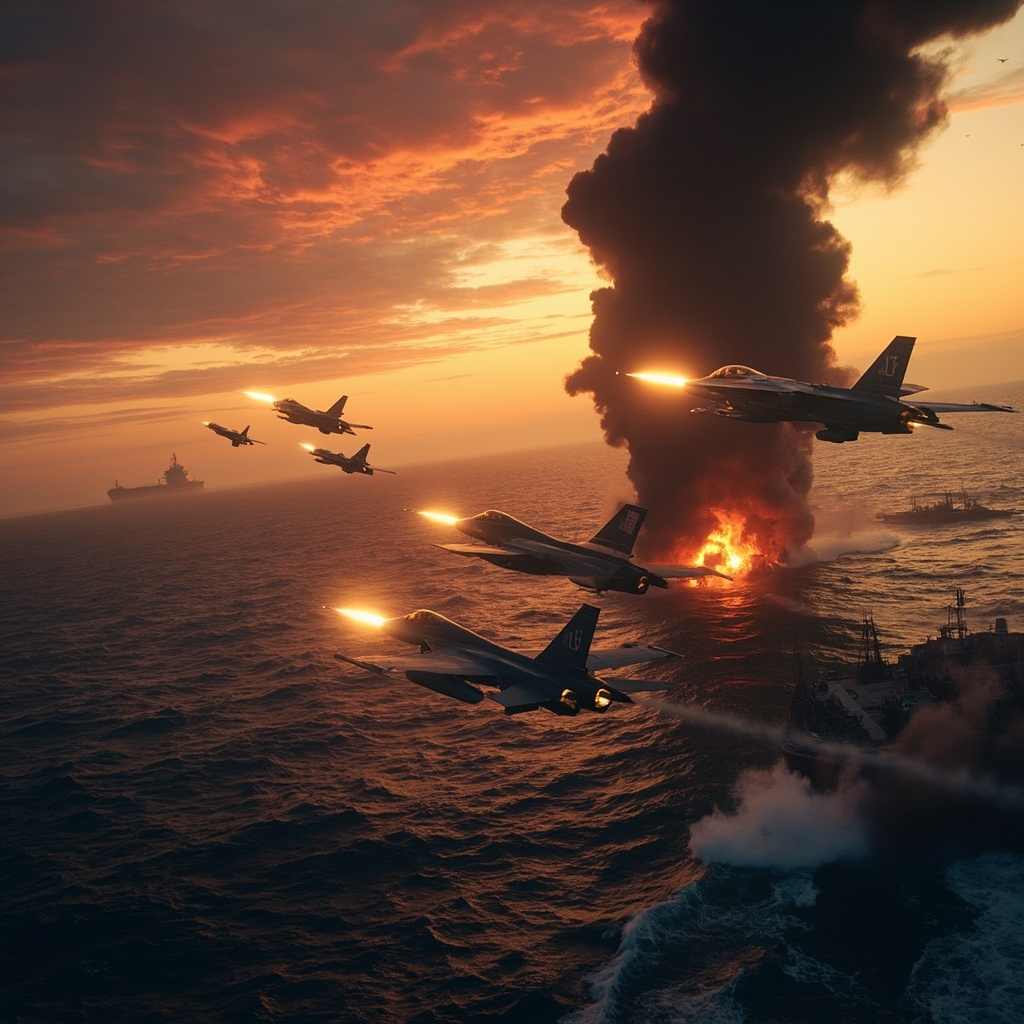
American forces launched a fresh wave of airstrikes against Iranian military infrastructure on Saturday, June 27, after Tehran attacked a commercial oil tanker carrying more than 2 million barrels of crude through the Strait of Hormuz. The strikes marked the third consecutive day of U.S. military action against Iranian targets and represented the most intense sustained combat operation between the two nations since a fragile ceasefire framework was struck in May. Pentagon officials said the latest offensive was approved at the direction of President Donald Trump and targeted surveillance systems, air defense sites, drone storage facilities and minelaying capabilities inside Iran.
Iranian Strike on Tanker Triggers Fresh U.S. Retaliation
According to U.S. Central Command (CENTCOM), Iranian forces struck the Panama-flagged tanker M/T Kiku with an attack drone at approximately 4:30 a.m. ET on Saturday while the vessel was transiting near the Strait of Hormuz with a full cargo of crude oil. CENTCOM said Iran was given an opportunity to honor the ceasefire agreement following retaliatory strikes launched a day earlier, but “elected not to,” prompting the new round of military action. American aircraft struck multiple Iranian military installations, including surveillance infrastructure, communications systems, air defense positions, drone storage sites and minelayer capabilities, the Pentagon confirmed.
The Pentagon said U.S. forces in the region remain “vigilant, lethal, and ready” and that commercial vessel transits through the Strait of Hormuz continue, though shipping insurers have issued fresh hazard advisories for the waterway. President Trump, posting on Truth Social, issued a stark warning to Tehran. “There may come a point when we are no longer able to be reasonable and will be forced to militarily complete the job that we very successfully started,” he wrote. “If that happens, the Islamic Republic of Iran will no longer exist!” The ultimatum rattled energy traders and contributed to a spike in global crude prices, according to early market data.
Ceasefire Framework Under Severe Strain as Gulf Nations Caught in Crossfire
The escalation marked the third day of direct U.S.-Iranian military exchanges since a ceasefire mediated by Gulf Arab states took effect in May. That framework, which also involved agreements between Israel and Lebanon, established a U.S.-Iran Joint Commission to monitor compliance and de-escalate incidents. Observers from Qatar and the United Arab Emirates have been in continuous contact with both Washington and Tehran since the exchanges began, officials familiar with the diplomatic effort said.
CNN correspondents in the Gulf region reported that regional capitals, including Manama and Kuwait City, recorded air raid alerts as U.S. and Iranian exchanges neared their airspace. The Gulf Cooperation Council issued a statement urging “maximum restraint” from all parties and warning that the Strait of Hormuz, through which roughly a fifth of the world’s oil supply passes, must remain open to commercial traffic. The European Union’s foreign policy chief called for an emergency session of the Joint Commission and appealed directly to both governments to return to the ceasefire framework.
Regional analysts said the sustained nature of the strikes, combined with the tanker attack, suggests a deliberate Iranian strategy to test the boundaries of the ceasefire. “What we are seeing is not a breakdown of negotiations — it is a test of will,” said one analyst with knowledge of the U.S. intelligence assessment, speaking on condition of anonymity. “The question is whether the Trump administration will give Iran room to step back or push to a point of no return.”
Oil Markets React as Shipping Disruptions Spread
The tanker attack sent immediate shockwaves through global energy markets. Brent crude surged on news of the strike on the Kiku, with traders citing concerns about the safety of shipping through the Strait of Hormuz. Lloyd’s of London said it was reviewing war risk classifications for vessels transiting the Gulf and warned that premiums could rise sharply if the violence continues. Several major tanker operators have already rerouted vessels away from the Strait in recent days, adding transit time and cost to shipments bound for Asia and Europe.
The U.S. Energy Information Administration said it was monitoring the situation closely but had not yet revised its global supply forecasts. Saudi Arabia’s energy ministry issued a statement affirming the kingdom’s commitment to stable oil markets and urging dialogue to resolve the standoff. Kuwait, which hosts a significant U.S. military presence, has not publicly commented on the strikes but was reported by regional media to have convened an emergency session of its national security council.
What Happens Next
U.S. and Iranian officials have made no public indication of willingness to return to the Joint Commission table in the immediate term, though diplomatic channels remain open through third-party intermediaries, according to State Department officials. The U.N. Secretary-General has called on both governments to halt hostilities and resume ceasefire talks under the May framework. If the strikes continue into next week, analysts expect the Joint Commission to formally convene, either in Doha or Geneva, with Qatari and Emirati mediators facilitating. The wildcard remains the tanker insurance market: if Lloyd’s escalates war risk designations for the Strait, it could force commercial traffic to halt regardless of what governments decide, compressing timelines for diplomacy significantly.