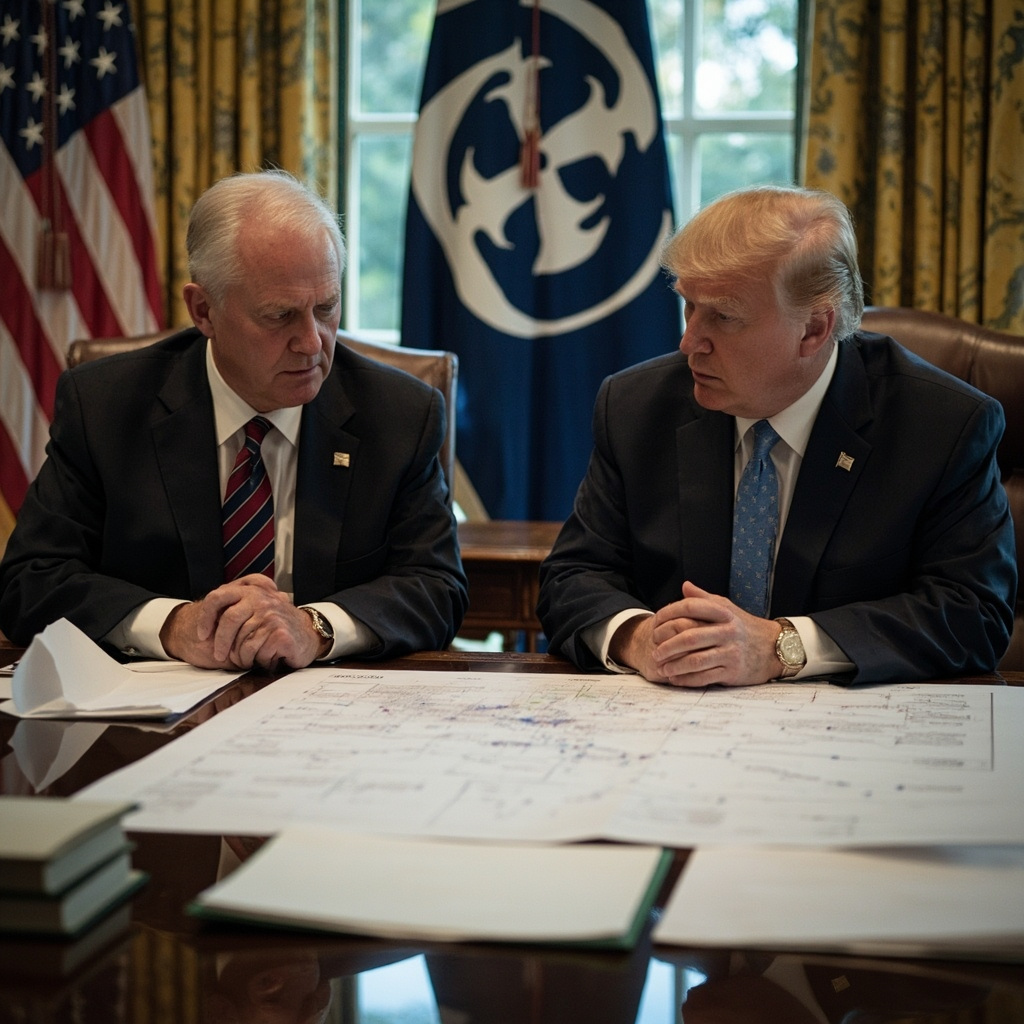
NATO Secretary General Mark Rutte met President Donald Trump at the White House on Wednesday, presenting the American president with charts showing more than one trillion dollars in cumulative additional defence expenditure by European allies and Canada since 2016, in what Rutte described as a landmark shift in the transatlantic alliance’s financial burden-sharing.
The meeting, held on June 25, 2026, was the latest in a series of high-level diplomatic engagements designed to steady NATO’s relationship with Washington ahead of a summit in Ankara scheduled for July. Rutte, who has cultivated a reputation as a close interlocutor with the Trump administration, told reporters outside the West Wing that Europeans and Canadians had increased their defence spending by nearly 20 percent in 2025 alone compared with the previous year. “The Europeans and Canada are now on a trajectory to equalise their spending with the United States,” Rutte said. “It was a problem since Eisenhower — this President got this done.”
Rutte’s White House Presentation and the Defence Spending Rebalance
Rutte presented charts outlining more than one trillion dollars in cumulative additional core defence expenditure by European allies and Canada since 2016. He also highlighted that European defence industry investment had supported more than 83,000 jobs in the United States, a figure designed to appeal to Trump’s emphasis on domestic manufacturing and employment. The presentation reflected a deliberate strategy by the NATO secretariat to frame increased European defence budgets as directly benefiting the American economy, not merely reducing the financial burden on the United States.
The Dutch diplomat has invested heavily in the relationship with Trump since assuming the NATO secretary general post, making multiple visits to Washington and cultivating direct channels to senior officials in the administration. His approach has been described by former NATO officials as ” Trump’s NATO whisperer” diplomacy — a sustained effort to address the president’s longstanding grievances about European under-spending before those grievances calcified into a formal withdrawal threat. Trump repeatedly threatened during his first term to leave NATO, arguing that European members were free-riding on American security guarantees.
Following the meeting, Rutte met with members of Congress on Capitol Hill before delivering a speech at the Atlantic Council in which he outlined expectations for the Ankara summit. “In Ankara we are going to show that we are delivering on the commitments we made in The Hague last year,” Rutte said. “Transformation in defence investment, revolution in defence industry, affirmation of our enduring support to Ukraine.” The remarks signalled that NATO will present the Ankara gathering as a progress report on the defence spending commitments made at the 2025 Hague summit.
Iran Strikes Complicate the Diplomatic Calendar
The Rutte visit took place against a backdrop of renewed military tension in the Gulf. The United States Central Command announced that American forces had conducted additional strikes inside Iran following a drone attack on a commercial tanker near the Strait of Hormuz. The attack underscored the fragility of the security environment that NATO members face and added urgency to discussions about alliance cohesion and collective response capabilities.
The Hormuz incident follows the collapse of ceasefire negotiations in Doha last week, where American and Iranian delegations failed to reach agreement on the terms of a renewed nuclear accord and the status of Iran’s regional proxy forces. Iran has since threatened to walk away from the nuclear talks entirely, complicating Rutte’s message of allied unity and diplomatic progress. “Ukraine is doing so much better over the last five, six months than before,” Rutte told reporters. “Also, thanks to all the help the US is providing.” The comment, made in the presence of Trump, drew no public reaction from the president but reflected the secretary general’s effort to keep Ukraine support at the centre of the NATO agenda.
Regional analysts said the Hormuz strikes would likely strengthen the hand of those NATO members who have argued for accelerated defence spending and a more robust allied presence in the Gulf and Eastern Mediterranean. “When the chips are down, allies look to NATO,” said James Werz, a senior fellow at the Centre for Strategic and International Studies. “The secretary general’s visit this week is an opportunity to demonstrate that the alliance can deliver both in Europe and beyond.”
The Ankara Summit and Alliance Burden-Sharing Under Scrutiny
NATO officials said the Ankara summit on July 11-12 would focus on three broad themes: demonstrating credible progress on defence investment, presenting a united front on continued support for Ukraine, and addressing the evolving threat picture in the Middle East and Indo-Pacific. The summit communiqué is expected to include new benchmarks for European defence industrial capacity and a formal endorsement of the increased 2025 spending trajectory.
Allies remain divided, however, on how to balance the competing demands of sustaining aid to Ukraine and rebuilding their own stockpiles and industrial bases. Several Eastern European members have pressed for concrete timelines on reinforced forward presence in the Baltic region and Poland, while southern European members have cautioned against neglecting the Mediterranean theatre. The challenge for Rutte will be to present a consensus that satisfies Trump’s demand for visible burden-sharing without alienating those allies who argue that NATO’s long-term strength depends on strategic depth, not merely financial contributions.
The secretary general is expected to hold a bilateral meeting with Turkish President Recep Tayyip Erdoğan on the margins of the summit to discuss the status of Sweden’s NATO accession process and trilateral defence cooperation. Turkey’s role as both a NATO ally and an occasional diplomatic interlocutor with Russia has made it a pivotal actor in the alliance’s strategic calculations heading into the Ankara gathering.