Military Governments Tighten Grip Across Africa as Burkina Faso Severs France Ties and Uganda Shuts Media
Three African nations convulsed by parallel political crises this weekend demonstrated the continent’s accelerating drift toward authoritarian governance, as a West African junta cut diplomatic ties with France, Uganda’s military chief ordered the shutdown of the country’s leading independent media group, and eastern Libya barred nationals from four African countries from entering its territory.
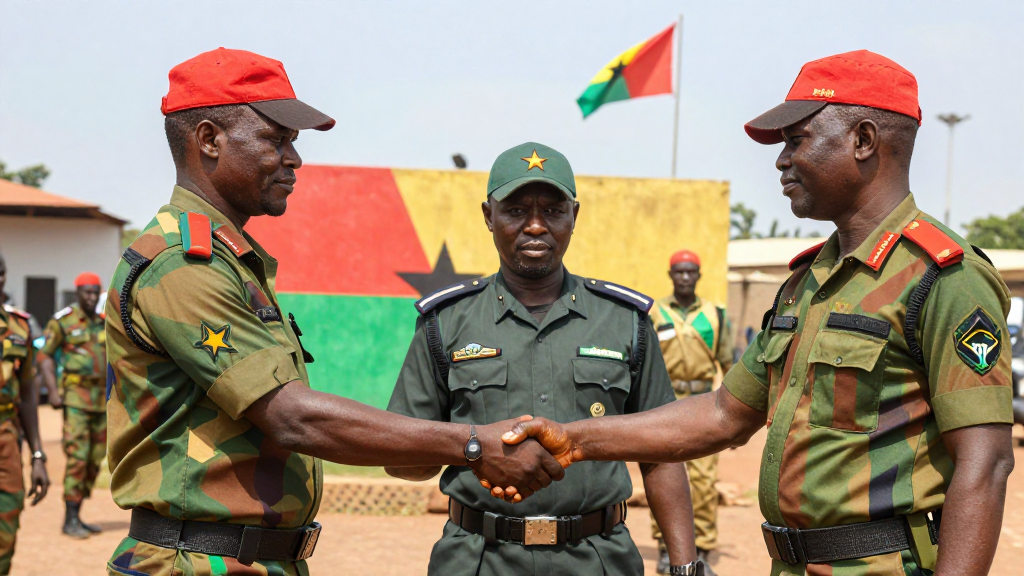
Burkina Faso’s military junta announced the severance of relations with Paris on Friday, accusing France of “ceaseless activism” against the country and harboring “neo-colonial ambitions.” Communications Minister Pingdwendé Gilbert Ouédraogo delivered the announcement in a televised statement, saying conditions for mutual respect no longer exist between the two nations. The French foreign ministry described the move as “hostile and unfounded,” warning French nationals in Burkina Faso to exercise heightened vigilance. France has had no ambassador in Ouagadougou since January 2023, and three additional French diplomats were expelled in 2024 over accusations of “subversive activities,” which Paris denied. Captain Ibrahim Traoré, who seized power in a 2022 coup, has progressively dismantled Burkina Faso’s French partnerships and pivoted toward China and Russia for security cooperation.
Burkina Faso Breaks with France as Anti-Western Pivot Deepens
The dissolution of diplomatic relations marks the lowest point in a deteriorating relationship that began when Traoré expelled French forces shortly after taking power. Burkina Faso, alongside Mali and Niger, subsequently withdrew from the regional ECOWAS bloc and formed the rival Alliance of Sahel States. The junta formally dissolved political parties in January and has reneged on promises to restore democratic elections. France maintains that its forces acted only in support of the government’s own counter-insurgency efforts against Islamist militants who have ravaged the Sahel region for more than a decade. Ouédraogo said in his statement that the decision “in no way calls into question the historical, human, cultural and social ties that unite the Burkinabe and French peoples.”
“This is a significant escalation,” said Dr. Boubacar Toure, a Sahel affairs analyst at the Institute for Peace and Security Studies in Addis Ababa. “Burkina Faso has been systematically dismantling its French partnerships for three years, but an outright break in diplomatic relations crosses a symbolic threshold that will complicate an already dire security situation.”
Uganda Military Chief Shuts Down Nation Media Group Amid Mounting Authoritarianism
In Kampala, Uganda’s military chief General Muhoozi Kainerugaba — son of President Yoweri Museveni — ordered the immediate closure of the Nation Media Group’s newspapers, television station, and radio outlets on Sunday, placing the offices under what the company described as a “military siege.” Armed soldiers surrounded the NMG headquarters as NTV Uganda and Spark TV went off air, displaying “Video unavailable” messages to viewers. Kainerugaba, who has amassed expanding political power in recent months, confirmed the shutdowns on social media. “In Uganda, I DO NOT believe in a free press! The press should be guided by cadres of the revolution,” he posted on X. He added that the outlets would not reopen without his personal permission. President Museveni, 81, who has ruled Uganda for four decades, endorsed his son’s decision. Uganda ranks 143rd out of 180 countries on Reporters Without Borders’ press freedom index.
The Committee to Protect Journalists condemned the shutdown. “This is a blatant attack on press freedom and the public’s right to information,” the group said in a statement. Opposition leader Bobi Wine also denounced the closures, calling them “a dark day for Uganda.” NMG is East Africa’s largest independent media company, also owning the Daily Monitor, The East African, and several other platforms across the region. Kainerugaba has previously ordered the arrest of politicians and activists who challenged his authority, alarming rights groups who warn he is positioning himself to succeed his father.
Despite winning a fresh term in January elections that opposition parties called fraudulent, Museveni faces mounting pressure from a youthful population demanding political change. The closure of NMG’s Ugandan operations removes one of the last independent editorial voices remaining in the country. A journalist at Daily Monitor, speaking on condition of anonymity, said staff were ordered to vacate the premises by armed soldiers. “We were told our accreditation is revoked and we are no longer authorized to publish anything,” the journalist said.
Eastern Libya Bars Sudanese, Ethiopian, Eritrean and Somali Nationals
In North Africa, Libya’s eastern-based administration headed by Osama Hamad, aligned with military commander Khalifa Haftar, issued a decree on Tuesday banning citizens of Sudan, Eritrea, Ethiopia, and Somalia from entering all territories under its control through land, sea, and air ports. The measure, which does not apply to accredited diplomats and their families or to education and healthcare professionals with valid work contracts, was described by a government source as aimed at “regulating the entry of foreign nationals.” Libya has become one of sub-Saharan Africa’s primary transit points for migrants seeking to reach Europe across the Mediterranean since the 2011 uprising that toppled Muammar Gaddafi. The United Nations estimates the country hosts more than 900,000 migrants. The ban represents a significant tightening of an already restrictive migration regime in a nation split between the internationally recognized Government of National Unity in Tripoli and Haftar’s Libyan National Army in the east.
The developments in Ouagadougou, Kampala, and Benghazi unfolded within the same 72-hour window, reflecting a continent where military-controlled governments, contested successions, and hardened migration policies are reshaping the political landscape with increasing speed. Analysts warn the convergence of these crises could accelerate democratic backsliding across multiple regions simultaneously.
“What we are witnessing is not coincidental,” said Dr. Jakkie Cilliers, head of the African futures programme at the Institute for Security Studies in Pretoria. “The concentration of power, the hostility to independent media and civil society, and the rejection of regional bodies are interconnected trends. When multiple countries move in the same direction at once, the pressure on remaining democracies to hold the line only increases.”
Home - News - Military Governments Tighten Grip Across Africa as Burkina Faso Severs France Ties and Uganda Shuts Media
Military Governments Tighten Grip Across Africa as Burkina Faso Severs France Ties and Uganda Shuts Media
Three African nations convulsed by parallel political crises this weekend demonstrated the continent’s accelerating drift toward authoritarian governance, as a West African junta cut diplomatic ties with France, Uganda’s military chief ordered the shutdown of the country’s leading independent media group, and eastern Libya barred nationals from four African countries from entering its territory.
Burkina Faso’s military junta announced the severance of relations with Paris on Friday, accusing France of “ceaseless activism” against the country and harboring “neo-colonial ambitions.” Communications Minister Pingdwendé Gilbert Ouédraogo delivered the announcement in a televised statement, saying conditions for mutual respect no longer exist between the two nations. The French foreign ministry described the move as “hostile and unfounded,” warning French nationals in Burkina Faso to exercise heightened vigilance. France has had no ambassador in Ouagadougou since January 2023, and three additional French diplomats were expelled in 2024 over accusations of “subversive activities,” which Paris denied. Captain Ibrahim Traoré, who seized power in a 2022 coup, has progressively dismantled Burkina Faso’s French partnerships and pivoted toward China and Russia for security cooperation.
Burkina Faso Breaks with France as Anti-Western Pivot Deepens
The dissolution of diplomatic relations marks the lowest point in a deteriorating relationship that began when Traoré expelled French forces shortly after taking power. Burkina Faso, alongside Mali and Niger, subsequently withdrew from the regional ECOWAS bloc and formed the rival Alliance of Sahel States. The junta formally dissolved political parties in January and has reneged on promises to restore democratic elections. France maintains that its forces acted only in support of the government’s own counter-insurgency efforts against Islamist militants who have ravaged the Sahel region for more than a decade. Ouédraogo said in his statement that the decision “in no way calls into question the historical, human, cultural and social ties that unite the Burkinabe and French peoples.”
“This is a significant escalation,” said Dr. Boubacar Toure, a Sahel affairs analyst at the Institute for Peace and Security Studies in Addis Ababa. “Burkina Faso has been systematically dismantling its French partnerships for three years, but an outright break in diplomatic relations crosses a symbolic threshold that will complicate an already dire security situation.”
Uganda Military Chief Shuts Down Nation Media Group Amid Mounting Authoritarianism
In Kampala, Uganda’s military chief General Muhoozi Kainerugaba — son of President Yoweri Museveni — ordered the immediate closure of the Nation Media Group’s newspapers, television station, and radio outlets on Sunday, placing the offices under what the company described as a “military siege.” Armed soldiers surrounded the NMG headquarters as NTV Uganda and Spark TV went off air, displaying “Video unavailable” messages to viewers. Kainerugaba, who has amassed expanding political power in recent months, confirmed the shutdowns on social media. “In Uganda, I DO NOT believe in a free press! The press should be guided by cadres of the revolution,” he posted on X. He added that the outlets would not reopen without his personal permission. President Museveni, 81, who has ruled Uganda for four decades, endorsed his son’s decision. Uganda ranks 143rd out of 180 countries on Reporters Without Borders’ press freedom index.
The Committee to Protect Journalists condemned the shutdown. “This is a blatant attack on press freedom and the public’s right to information,” the group said in a statement. Opposition leader Bobi Wine also denounced the closures, calling them “a dark day for Uganda.” NMG is East Africa’s largest independent media company, also owning the Daily Monitor, The East African, and several other platforms across the region. Kainerugaba has previously ordered the arrest of politicians and activists who challenged his authority, alarming rights groups who warn he is positioning himself to succeed his father.
Despite winning a fresh term in January elections that opposition parties called fraudulent, Museveni faces mounting pressure from a youthful population demanding political change. The closure of NMG’s Ugandan operations removes one of the last independent editorial voices remaining in the country. A journalist at Daily Monitor, speaking on condition of anonymity, said staff were ordered to vacate the premises by armed soldiers. “We were told our accreditation is revoked and we are no longer authorized to publish anything,” the journalist said.
Eastern Libya Bars Sudanese, Ethiopian, Eritrean and Somali Nationals
In North Africa, Libya’s eastern-based administration headed by Osama Hamad, aligned with military commander Khalifa Haftar, issued a decree on Tuesday banning citizens of Sudan, Eritrea, Ethiopia, and Somalia from entering all territories under its control through land, sea, and air ports. The measure, which does not apply to accredited diplomats and their families or to education and healthcare professionals with valid work contracts, was described by a government source as aimed at “regulating the entry of foreign nationals.” Libya has become one of sub-Saharan Africa’s primary transit points for migrants seeking to reach Europe across the Mediterranean since the 2011 uprising that toppled Muammar Gaddafi. The United Nations estimates the country hosts more than 900,000 migrants. The ban represents a significant tightening of an already restrictive migration regime in a nation split between the internationally recognized Government of National Unity in Tripoli and Haftar’s Libyan National Army in the east.
The developments in Ouagadougou, Kampala, and Benghazi unfolded within the same 72-hour window, reflecting a continent where military-controlled governments, contested successions, and hardened migration policies are reshaping the political landscape with increasing speed. Analysts warn the convergence of these crises could accelerate democratic backsliding across multiple regions simultaneously.
“What we are witnessing is not coincidental,” said Dr. Jakkie Cilliers, head of the African futures programme at the Institute for Security Studies in Pretoria. “The concentration of power, the hostility to independent media and civil society, and the rejection of regional bodies are interconnected trends. When multiple countries move in the same direction at once, the pressure on remaining democracies to hold the line only increases.”


