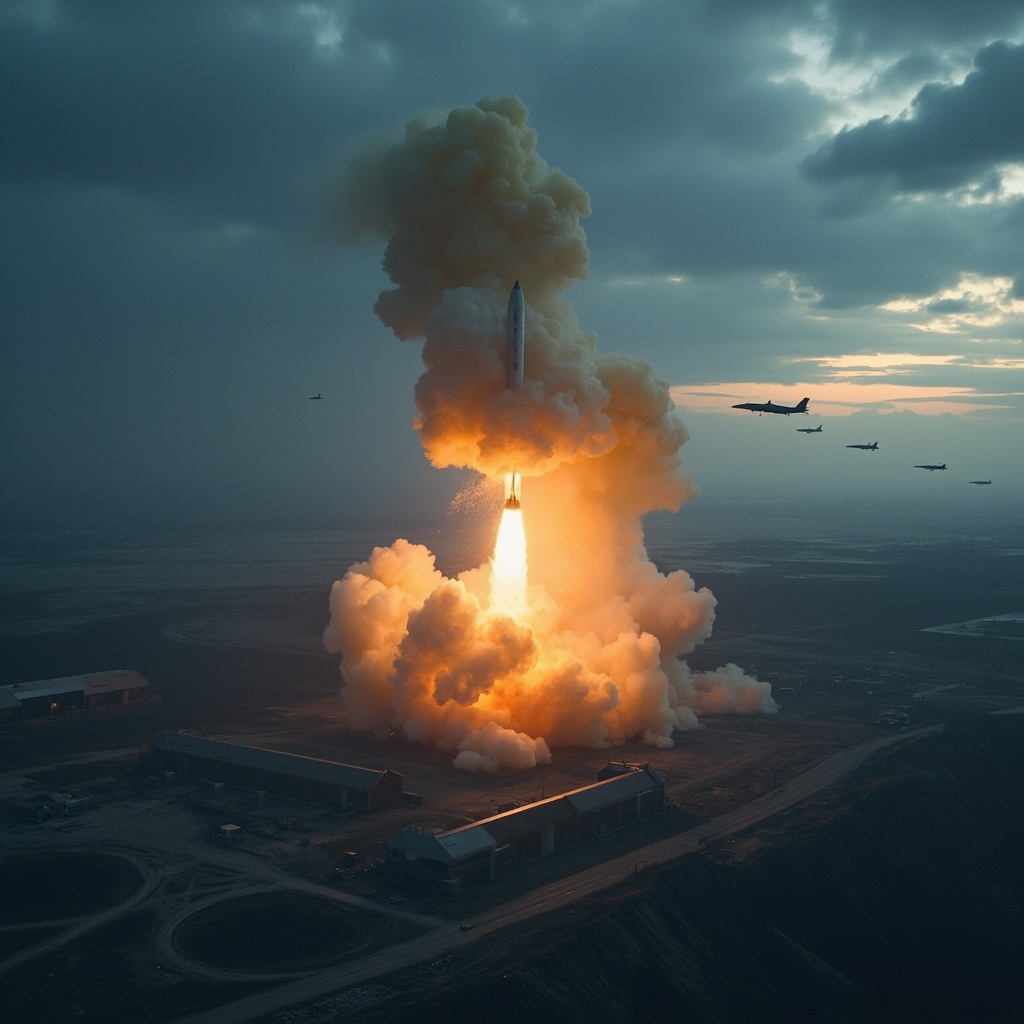
North Korea announced on Monday that it had successfully tested newly developed warheads, cruise missile technology, and a novel artificial intelligence navigation system — the latest in a rapid series of military demonstrations that have sent shockwaves through the Korean Peninsula and drawn sharp condemnation from Seoul, Tokyo, and Washington.
What Kim Jong Un Called a “Deadly and Destructive” Military Posture
State media KCNA reported that Supreme Leader Kim Jong Un personally oversaw the tests, describing the new weapons as essential to what he called a “just cause” of self-defence. The announcements follow a series of tests conducted over the past week that saw ballistic missiles and cruise missiles launched from multiple sites across the country.
The AI-guided missile system, described as the first of its kind to be publicly confirmed by Pyongyang, reportedly demonstrated improved terminal guidance accuracy during a test on Thursday. Officials in Seoul expressed alarm at the claim, saying it marked a qualitative leap in North Korea’s strike capability.
Seoul, Washington, and Tokyo Respond with Joint Drills
South Korea’s Joint Chiefs of Staff confirmed it had detected all launches and was analysing the debris and trajectory data. A senior South Korean defence official said the tests represented “an unambiguous violation of multiple United Nations Security Council resolutions” and warned that Seoul would respond “proportionally and decisively.”
The United States Indo-Pacific Command said it was in close contact with allies following the tests. State Department spokesperson remained measured but firm: “We are aware of the reports and are consulting closely with South Korea and Japan. Any nuclear or missile advancement by North Korea is a serious threat to regional and global security, and we remain committed to the defence of our allies.”
Japan’s Defence Ministry placed its missile defence units on heightened alert and lodged a formal protest through diplomatic channels in Tokyo.
Regional Context: The Arms Race Accelerates
The tests come as North Korea has accelerated its weapons development at a pace unseen since the peak of the 2017 crisis. Since January, Pyongyang has conducted more than a dozen major weapons tests, including hypersonic glide vehicles, intercontinental ballistic missiles, and now what it claims is an operational AI-guided cruise missile system.
Analysts say the timing of the announcements, coming just days after the United States and South Korea concluded their largest-ever joint military exercises, is likely deliberate — a political signal as much as a technical one.
“Kim is not simply building weapons for the sake of it,” said one regional security analyst who monitors North Korean military developments. “These tests are designed to normalised North Korea as a nuclear state, to erode international resolve, and to extract concessions when negotiations eventually resume.”
What Happens Next
The UN Security Council is expected to hold an emergency consultation this week, though prospects for new sanctions remain uncertain given divisions among permanent members. Meanwhile, South Korea and the United States are planning an expanded series of joint military exercises in response to the tests, according to officials briefed on the planning.
Pyongyang has signalled it will continue testing in the coming days, with KCNA indicating additional launches are scheduled. The window for diplomatic engagement appears increasingly narrow, with both sides hardening their positions at a moment of heightened risk on the Korean Peninsula.
Seoul responded swiftly. The South Korean Joint Chiefs of Staff issued a statement confirming it had tracked all launches through its integrated air and missile defence network and was sharing data with US and Japanese counterparts in real time. A government spokesperson said the tests were “a direct challenge to peace and stability on the Korean Peninsula” and warned that Seoul reserved the right to take “all necessary measures to protect its citizens.”
Japan’s Prime Minister convened an emergency national security council meeting within hours of the announcement. Defence Minister Nakatani Hiromi said Japan would activate its Aegis Ashore missile defence batteries and deploy additional maritime patrol assets to the Sea of Japan. “This is an unprecedented level of provocation,” she told reporters in Tokyo. “Japan will not tolerate any threat to our territory or our people.”