USS Nimitz Deployed to Caribbean as US Escalates Cuba Sanctions and Raúl Castro Indictment
The United States has deployed the USS Nimitz aircraft carrier strike group to the Caribbean and leveled sweeping new sanctions against Cuba’s military-controlled conglomerate, in the most aggressive American pressure campaign against Havana since the Cold War. The twin moves — announced simultaneously on June 28 — came as the indictment of former Cuban President Raúl Castro and five senior military pilots over the 1996 downing of two U.S. civilian aircraft sent shockwaves through the region and drew fierce condemnation from the Cuban government.
“These actions are designed to hold the Cuban regime accountable for decades of aggression against American citizens and to deny the military hardliners who have enslaved the Cuban people the resources they use to perpetuate their rule,” a U.S. State Department spokesperson said in a statement accompanying the announcement.
Military Buildup Sends a Clear Message
The arrival of the Nimitz carrier strike group in Caribbean waters marks the first time a U.S. aircraft carrier has operated in the region specifically as a signal of resolve toward Cuba in more than six decades. The vessel, accompanied by the guided-missile cruiser USS Normandy and destroyer USS Farragut, will conduct what the Pentagon described as “routine operations” but which analysts say are unmistakably calibrated to project overwhelming naval power within easy striking distance of the island.
The simultaneous indictment of Raúl Castro — who has not held an official government post since 2008 but retains control over the Cuban armed forces through a network of loyalists — escalates the legal dimension of Washington’s pressure campaign. A federal grand jury in Miami returned the indictment on June 27, charging Castro and five pilots with murder in connection with the February 24, 1996 shootdown of two Brothers to the Rescue civilian aircraft that resulted in the deaths of four U.S. citizens. The planes were shot to pieces over international waters by Cuban MiG fighters.
Sanctions Target the Economic Engine of Repression
The Treasury Department’s Office of Foreign Assets Control (OFAC) moved in parallel to designate GAESA — the Grupo de Administración Empresarial S.A. — as a specially designated national, effectively freezing all assets the conglomerate holds under U.S. jurisdiction and prohibiting American entities from conducting business with its extensive network of subsidiaries. GAESA controls a sprawling commercial empire that touches virtually every sector of the Cuban economy, from hotels and restaurants to banking, telecommunications, and food import businesses.
The sanctions are designed to strangle the revenue streams that fund the Cuban military’s internal security apparatus — the same forces that have violently suppressed anti-government demonstrations that erupted across the island over the past year as chronic fuel shortages and widespread shortages of food and medicine pushed ordinary Cubans to breaking point.
Cuban Foreign Minister Bruno Rodríguez dismissed the American actions as an illegal economic siege and called the indictment a politically motivated abuse of judicial process. “The United States has once again demonstrated that it considers itself above international law, treating our airspace as its own and our citizens as subjects for regime change operations,” Rodríguez told reporters in Havana. “Cuba will not bow to this pressure, and our people will not surrender their sovereignty.”
Protests Spread as Economic Crisis Deepens
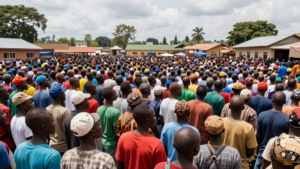
The military and diplomatic offensive coincides with mounting domestic unrest. Demonstrations over worsening humanitarian conditions and fuel shortages swept across multiple Cuban cities throughout May, according to the Armed Conflict Location and Event Data Project. While most protests remained peaceful, ACLED recorded a number of violent incidents: vandals set fire to a gas station in Havana, and looters stormed a government-run supply store in the Villa Clara department. Security forces responded with increasing force, firing shots in the air to disperse demonstrators in the town of Antilla and carrying out mass arrests targeting known organizers of anti-government mobilization.
With the USS Nimitz now visible from Cuban shores and a U.S. federal indictment naming the island’s former president by name, the pressure on the Díaz-Canel government has reached a level unseen since the 1962 missile crisis — with one critical difference, analysts note: this time, the United States is not demanding the removal of Soviet missiles but the dismantling of an entire system of military-controlled economic power that has kept the same family in authority for nearly seven decades.
The convergence of a U.S. carrier battlegroup off Cuba’s coast, the criminal indictment of a former head of state, and the economic strangulation of a military-controlled empire represents an extraordinary moment in Cold War history repeating itself — this time with a very different and deeply uncertain ending.