House GOP Revolt Forces Early Recess as SAVE Act Stalls Defense Bill, Exposing Johnson’s Fragile Majority
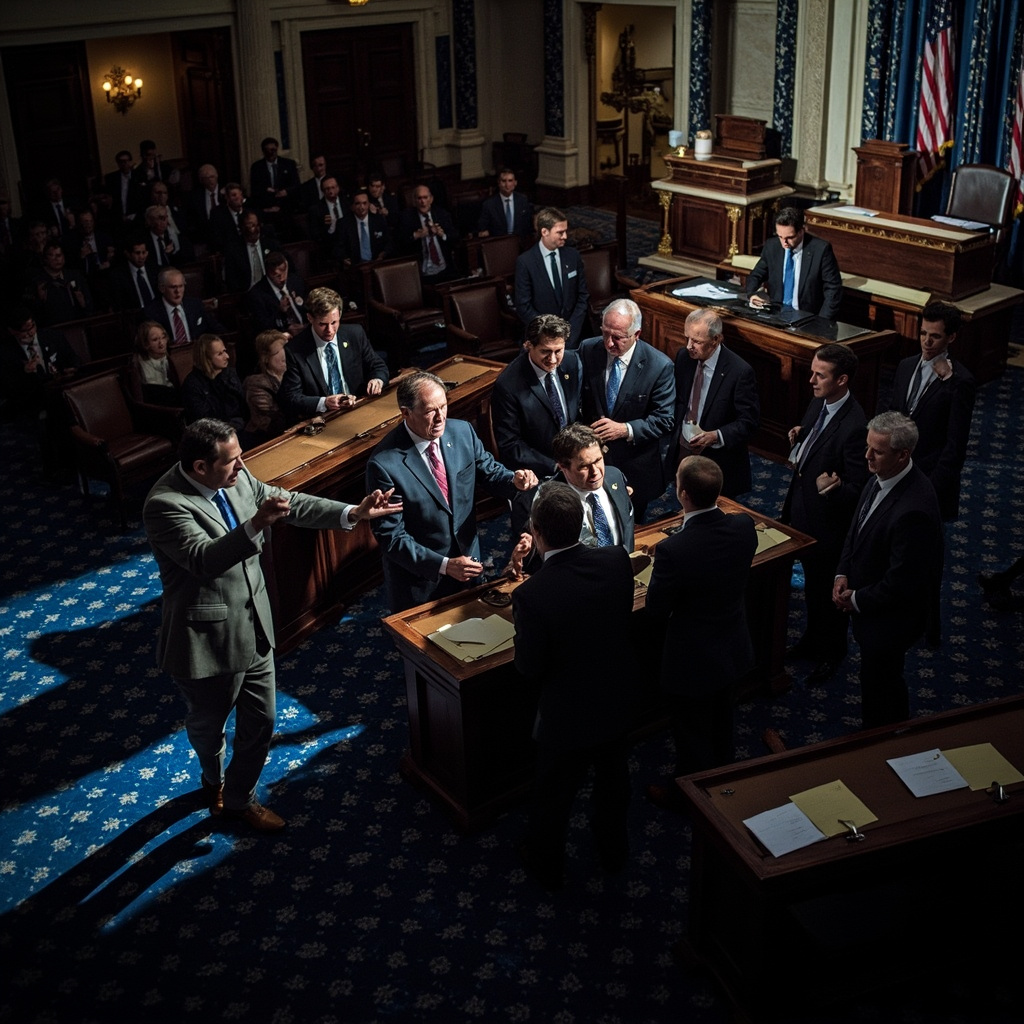
House Speaker Mike Johnson’s legislative agenda collapsed on the floor of the U.S. House of Representatives on June 30, 2026, when a bloc of hardline Republican conservatives joined every Democrat in rejecting a procedural vote needed to begin debate on the annual National Defense Authorization Act. The failed 224-198 vote, which required a simple majority to advance the rule governing NDAA debate, exposed the depth of divisions within the Republican Conference over immigration and election security legislation that President Donald Trump has championed for months.
A Faction of One: How Luna Built the Revolt
The revolt was led by Representative Anna Paulina Luna of Florida, a close ally of Trump’s MAGA movement, who had spent weeks publicly threatening to withhold her vote from any rule that did not directly embed voter ID and proof-of-citizenship language into the NDAA text. Luna and a group of roughly a dozen conservative Republicans rejected a procedural workaround offered by Johnson’s office that would have attached the SAVE America Act — the Safeguard American Voter Eligibility Act — to the defense bill through a mechanism called engrossment, which merges the text of separate measures without requiring a standalone floor vote.
“I will not support a rule that buries voter ID inside a procedural maneuver,” Luna said in a statement released shortly after the vote. “The American people deserve a direct, transparent vote on citizenship verification, not a back-room amendment to a defense authorization.” The failure of the rule means the NDAA — a bill traditionally passed with broad bipartisan support — will not advance to the Senate before the July 4 holiday recess.
The SAVE Act: What It Demands and Why It Matters
The SAVE America Act is Trump’s signature election security legislation, passed by the House earlier this year but stalled in the Senate, where opponents have argued it amounts to a modern poll tax that disproportionately suppresses turnout among low-income, elderly and minority voters. The bill would require a valid government-issued photo ID before registering to vote in federal elections, mandate documentary proof of U.S. citizenship such as a REAL ID with citizenship notation, a valid U.S. passport or certified birth certificate, and impose strict new limits on mail-in balloting, restricting absentee voting to voters who cite illness, disability, active military service or travel as the basis for their request.
Trump has publicly endorsed the legislation, and senior White House officials confirmed that the President personally pressed Johnson to find a legislative pathway before the August recess. “The President wants this on his desk before the midterms,” a senior administration official told reporters on background. “Every week of delay is a week the American election system remains vulnerable.” However, the President’s public messaging on the standoff has been notably restrained, and senior Republicans in both chambers say his private pressure on Luna has not produced a compromise.
The failed vote left the House in disarray, with Republican leaders canceling all remaining legislative business for the week and sending members home three days ahead of the scheduled July 4 recess. According to the House Clerk, Republicans currently hold 218 seats, Democrats hold 212, one seat is held by an independent and four seats remain vacant following special elections, leaving Johnson with virtually no margin for error on any closely divided vote.
What Comes Next: Budget Reconciliation or a Revised Vote
Johnson’s office floated a budget reconciliation strategy as a potential workaround, arguing that reconciliation bills are not subject to the Senate filibuster and could carry the SAVE Act language as part of a broader spending measure. But that approach requires coordination with the Senate and a CBO score, a process that could take weeks and is not guaranteed to satisfy Luna’s demands for an immediate standalone vote.
The NDAA has passed every year for more than six decades, and its derailment is a significant embarrassment for a Speaker who staked his speakership on delivering Trump’s agenda. Conservative outlets close to the Freedom Caucus warned that Johnson faces a potential motion to vacate the chair if he cannot produce a vote on the SAVE Act before the August recess. “This is not a warning shot,” one senior Republican aide said. “This is the gun being loaded.” The House is not expected to return until July 13, and observers in both parties say the standoff is unlikely to resolve itself without direct presidential intervention.
