Wednesday, July 1, 2026
News

China’s Fujian Carrier Transits Taiwan Strait as Regional Alliances Reshape Indo-Pacific

China’s most advanced aircraft carrier, the Fujian, transited the Taiwan Strait on Tuesday in a closely watched passage that came as Taiwan launched an unprecedented five-day combat readiness exercise and Japan finalized a landmark defense cooperation pact with the Philippines — moves that collectively exposed how the Indo-Pacific’s security architecture is being rewired at speed.

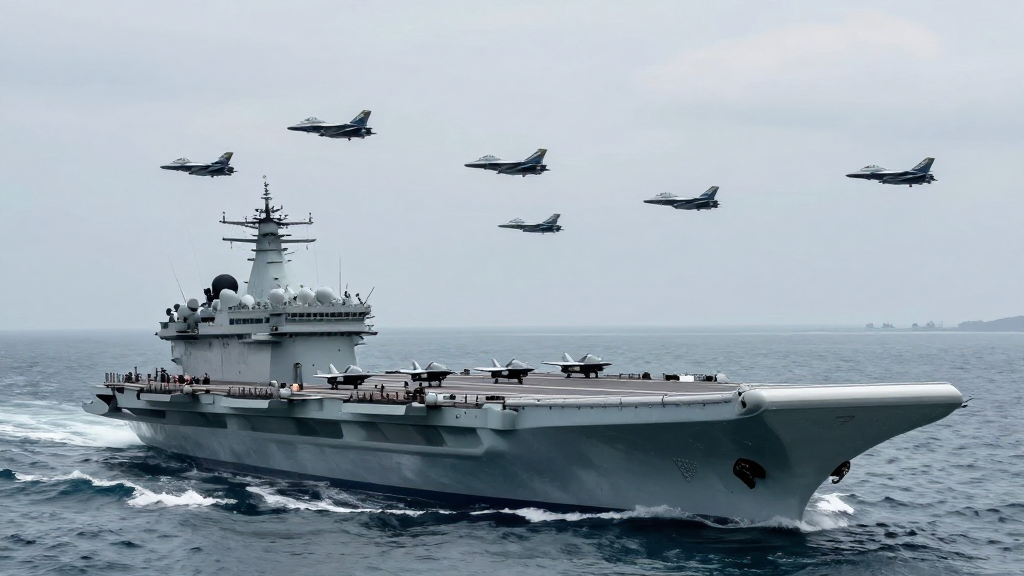
The People’s Liberation Army’s Type 003 carrier, the Fujian, passed through the narrow waterway that separates mainland China from Taiwan, prompting Taipei’s defense ministry to deploy joint intelligence, surveillance and reconnaissance assets to track the vessel throughout its passage. Taiwan released a photograph showing the carrier’s deck cleared of aircraft, a detail that military analysts said suggested the transit was conducted in a low-threat configuration, possibly while en route to its home port in Hainan for a training break before returning to South China Sea operations.

Beijing’s Dual-Channel Pressure on Taipei and Manila

The Fujian’s transit arrived one day after Taiwan initiated its Immediate Combat Readiness Exercise, a five-day drill designed to test whether military units can rapidly shift to wartime footing. Taiwan’s defense officials said the exercise would focus on the period immediately preceding a potential conflict, evaluating command chain responsiveness and unit deployment speed. Song Zhongping, a former PLA instructor and military commentator, said the Fujian could be heading to Hainan before resuming South China Sea training — a pattern that has become familiar as Beijing normalizes carrier operations across both the Taiwan Strait and the disputed waters to its south.

Meanwhile in Manila, the Philippines and Japan were putting final touches to a defense cooperation framework that would grant Japanese Self-Defense Forces access to Philippine military bases under a reciprocal arrangement. The talks, held in Manila, built directly on the Reciprocal Access Agreement signed in July 2024, and reflect a deliberate effort by both governments to embed Japan’s security footprint deeper into Southeast Asia’s architecture. The Philippines, for its part, has been deepening coast guard and maritime patrol cooperation with the United States, Australia and Canada, creating a web of interlocking partnerships that Beijing views as containment.

Japan’s Strategic Depth and the Realigned Indo-Pacific

Japan’s engagement with the Philippines is part of a broader realignment that has seen Tokyo sign acquisition and cross-servicing agreements with Australia, Britain and Germany within the past eighteen months. The Japan-Philippines framework, still being finalized, would allow Japanese warships to resupply at Philippine ports and vice versa — a significant departure from Japan’s postwar security restraints. Japanese defense officials have framed the pact as essential for maintaining stability in waters that carry roughly $3 trillion in trade annually.

The developments come as the United States has been repositioning its Indo-Pacific Command to prioritize maritime domain awareness and has accelerated the transfer of surveillance drone technology to the Philippines, according to a June 2026 think-tank assessment. The combination of Japan’s expanding regional role, Taiwan’s sharpening defense posture and the Philippines’ deepening ties with the United States and its allies is forming a configuration that Beijing’s foreign ministry has called “a deliberate attempt to encircle China through a chain of proxies.”

The New Calculus Across the Taiwan Strait and South China Sea

The PLA’s decision to transit the Fujian through the Taiwan Strait rather than around it — the route it took during earlier South China Sea deployments — was read by regional analysts as a calibrated signal. By choosing the narrow strait, Beijing demonstrated it does not consider Taiwan’s five-day drill a sufficient justification to alter planned operations. By keeping the passage low-profile and without visible carrier aircraft, the message was simultaneously restrained.

“The transit was deliberate but not escalatory,” said one regional defense analyst who tracks PLA naval operations. “Beijing wants to show it can operate where it wants, when it wants, without being deterred by Taiwan’s drills — but it also doesn’t want to hand Taipei a propaganda victory ahead of the exercise’s conclusion.” The analyst spoke on condition of anonymity because of the sensitivity of the subject.

For Japan and the Philippines, the parallel activities of this week illustrate a shared strategic logic: as China’s naval footprint expands from the East China Sea through the Taiwan Strait and into the South China Sea, the countries within that arc are moving to link their defenses in ways that would have been politically unthinkable a decade ago. The Fujian’s transit may prove to be a single naval passage, but the responses it provoked — in Manila, in Tokyo, in Taipei — were anything but routine.

Kenji T.

Kenji Tanaka covers Japan, the Philippines, Southeast Asia and the broader Indo-Pacific region from New Delhi.

News

China’s Fujian Carrier Transits Taiwan Strait as Regional Alliances Reshape Indo-Pacific

China’s most advanced aircraft carrier, the Fujian, transited the Taiwan Strait on Tuesday in a closely watched passage that came as Taiwan launched an unprecedented five-day combat readiness exercise and Japan finalized a landmark defense cooperation pact with the Philippines — moves that collectively exposed how the Indo-Pacific’s security architecture is being rewired at speed.

The People’s Liberation Army’s Type 003 carrier, the Fujian, passed through the narrow waterway that separates mainland China from Taiwan, prompting Taipei’s defense ministry to deploy joint intelligence, surveillance and reconnaissance assets to track the vessel throughout its passage. Taiwan released a photograph showing the carrier’s deck cleared of aircraft, a detail that military analysts said suggested the transit was conducted in a low-threat configuration, possibly while en route to its home port in Hainan for a training break before returning to South China Sea operations.

Beijing’s Dual-Channel Pressure on Taipei and Manila

The Fujian’s transit arrived one day after Taiwan initiated its Immediate Combat Readiness Exercise, a five-day drill designed to test whether military units can rapidly shift to wartime footing. Taiwan’s defense officials said the exercise would focus on the period immediately preceding a potential conflict, evaluating command chain responsiveness and unit deployment speed. Song Zhongping, a former PLA instructor and military commentator, said the Fujian could be heading to Hainan before resuming South China Sea training — a pattern that has become familiar as Beijing normalizes carrier operations across both the Taiwan Strait and the disputed waters to its south.

Meanwhile in Manila, the Philippines and Japan were putting final touches to a defense cooperation framework that would grant Japanese Self-Defense Forces access to Philippine military bases under a reciprocal arrangement. The talks, held in Manila, built directly on the Reciprocal Access Agreement signed in July 2024, and reflect a deliberate effort by both governments to embed Japan’s security footprint deeper into Southeast Asia’s architecture. The Philippines, for its part, has been deepening coast guard and maritime patrol cooperation with the United States, Australia and Canada, creating a web of interlocking partnerships that Beijing views as containment.

Japan’s Strategic Depth and the Realigned Indo-Pacific

Japan’s engagement with the Philippines is part of a broader realignment that has seen Tokyo sign acquisition and cross-servicing agreements with Australia, Britain and Germany within the past eighteen months. The Japan-Philippines framework, still being finalized, would allow Japanese warships to resupply at Philippine ports and vice versa — a significant departure from Japan’s postwar security restraints. Japanese defense officials have framed the pact as essential for maintaining stability in waters that carry roughly $3 trillion in trade annually.

The developments come as the United States has been repositioning its Indo-Pacific Command to prioritize maritime domain awareness and has accelerated the transfer of surveillance drone technology to the Philippines, according to a June 2026 think-tank assessment. The combination of Japan’s expanding regional role, Taiwan’s sharpening defense posture and the Philippines’ deepening ties with the United States and its allies is forming a configuration that Beijing’s foreign ministry has called “a deliberate attempt to encircle China through a chain of proxies.”

The New Calculus Across the Taiwan Strait and South China Sea

The PLA’s decision to transit the Fujian through the Taiwan Strait rather than around it — the route it took during earlier South China Sea deployments — was read by regional analysts as a calibrated signal. By choosing the narrow strait, Beijing demonstrated it does not consider Taiwan’s five-day drill a sufficient justification to alter planned operations. By keeping the passage low-profile and without visible carrier aircraft, the message was simultaneously restrained.

“The transit was deliberate but not escalatory,” said one regional defense analyst who tracks PLA naval operations. “Beijing wants to show it can operate where it wants, when it wants, without being deterred by Taiwan’s drills — but it also doesn’t want to hand Taipei a propaganda victory ahead of the exercise’s conclusion.” The analyst spoke on condition of anonymity because of the sensitivity of the subject.

For Japan and the Philippines, the parallel activities of this week illustrate a shared strategic logic: as China’s naval footprint expands from the East China Sea through the Taiwan Strait and into the South China Sea, the countries within that arc are moving to link their defenses in ways that would have been politically unthinkable a decade ago. The Fujian’s transit may prove to be a single naval passage, but the responses it provoked — in Manila, in Tokyo, in Taipei — were anything but routine.

Kenji T.

Kenji Tanaka covers Japan, the Philippines, Southeast Asia and the broader Indo-Pacific region from New Delhi.