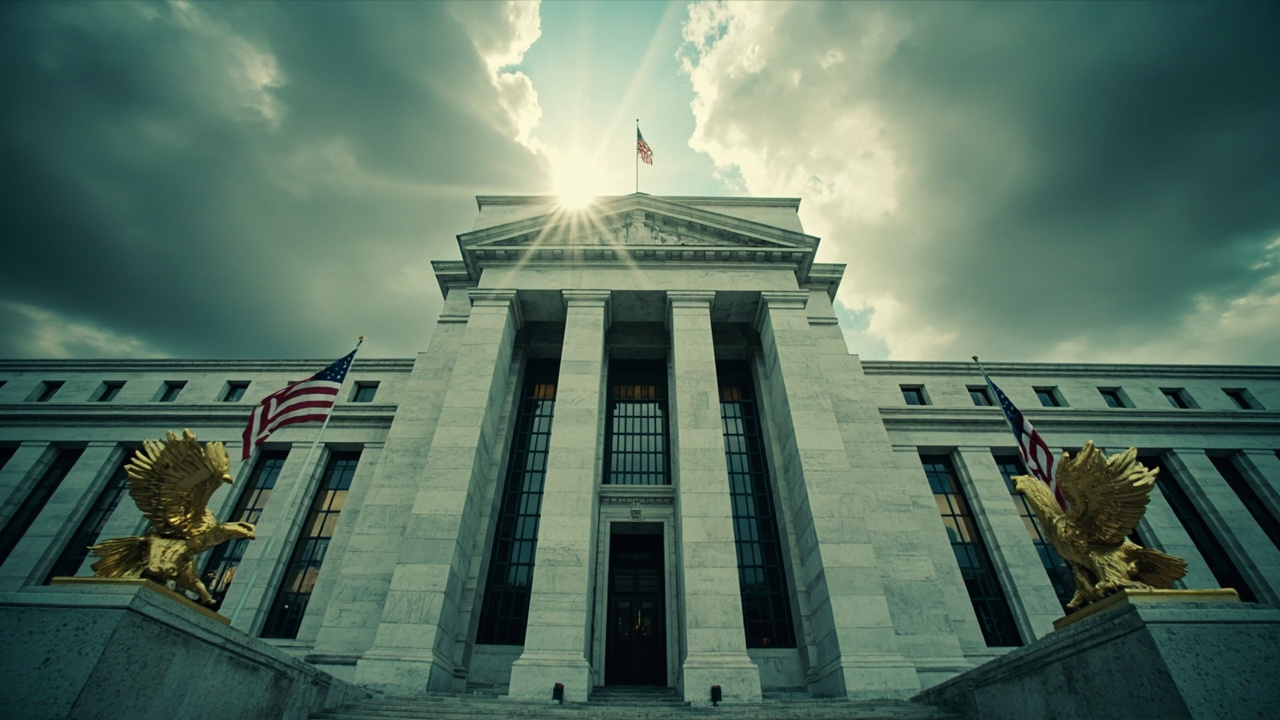
The Federal Reserve left interest rates unchanged on Wednesday in Kevin Warsh’s first meeting as chairman, voting unanimously to keep the benchmark overnight rate in the 4.25%–4.50% target range as inflation continued to hover above the central bank’s 2% target while economic growth showed signs of deceleration.
The decision, which matched market expectations, came amid heightened uncertainty about the economic outlook as a sweeping new round of trade tariffs announced by the Trump administration threatened to reignite price pressures across a range of consumer goods and industrial inputs.
Inflation Holds Above 3% as Tariff Threat Looms
The Fed’s preferred inflation gauge, the Personal Consumption Expenditures price index, rose 3.1% year-over-year in the most recent reading, well above the committee’s 2% target and effectively blocking any near-term path to rate cuts. “We are data-dependent and the data have not given us the confidence we need to begin easing,” said one official, speaking on background after the decision. “Inflation remains too high and the tariff situation introduces fresh upside risk that we simply cannot dismiss.”
The combination of persistent inflation and slowing growth has placed the Fed in what analysts describe as an increasingly difficult position, with the dot plot — the committee’s projection of future rate moves — shifting notably hawkish in the latest quarterly update.
Dot Plot Turns Hawkish as Growth Disappoints
The median dot plot now shows just one rate cut for the remainder of the year, down from two projected in the prior quarter, reflecting a meaningful deterioration in the committee’s confidence in the inflation outlook. “The committee has essentially taken rate cuts off the table for the foreseeable future unless we see a very sharp and sustained decline in inflation data,” said one senior economist following the announcement. “Warsh is signaling he will not be rushed.”
GDP growth for the first quarter came in at an annualized rate of 1.3%, revised down from an initial estimate of 1.6%, while separate data showed consumer spending — the backbone of the US economy — contracting for the first time since the pandemic recovery began. The Conference Board’s Consumer Confidence Index fell to its lowest level in more than two years last month, with respondents citing rising prices and labor market uncertainty as their primary concerns.
Trade Policy Complicates the Fed’s Calculus
The announcement of broad new tariffs on imports from the European Union and key Asian trading partners has added a layer of complexity that the Fed has not faced in recent cycles. Economists at Goldman Sachs revised their full-year growth forecast down to 1.5% following the tariff announcement, noting that the levies were significantly broader in scope than market participants had anticipated.
“These are not surgical tariffs aimed at specific sectors,” the Goldman analysis read. “They represent a fundamental shift in the US trade posture and the second-order effects on inflation could prove more durable than the Fed currently anticipates.” The Federal Reserve’s own staff has begun incorporating tariff pass-through effects into their economic projections, though officials have declined to quantify the specific impact on their forecasts.
Market Reaction and What Comes Next
Equity markets sold off modestly following the rate decision and subsequent press conference, with the S&P 500 falling 0.9% and the tech-heavy Nasdaq Composite losing 1.2% as investors recalibrated their expectations for monetary easing. The two-year Treasury yield, which moves closely with expectations for short-term Fed policy, rose to its highest level since early February, reflecting the hawkish shift in the dot plot.
The next Federal Open Market Committee meeting is scheduled for six weeks from now, and officials have made clear that the decision will be highly dependent on incoming data — particularly the next monthly inflation reading and any developments on the trade policy front. “We will do what the data require,” Warsh said at his post-meeting press conference. “That has always been our guiding principle and it will not change.”
The chair’s careful framing underscores the delicate balancing act facing policymakers: inflation that refuses to fully retreat, an economy that is losing momentum, and a set of external shocks that could either push prices higher or sap demand further, depending on how businesses and consumers ultimately respond.
The implications of Wednesday’s decision extend well beyond interest rate mechanics. For millions of Americans carrying credit card balances or seeking new mortgages, the Fed’s hold means borrowing costs will remain elevated for the foreseeable future, keeping household budgets under pressure at a time when wage growth has begun to lag behind inflation in several key sectors. Small businesses, which rely heavily on short-term credit lines, have reported increasing difficulty refinancing existing debt at rates they can sustain — a dynamic that could translate into slower hiring and capital investment in the months ahead. The Federal Reserve’s next scheduled policy meeting is six weeks away, and officials have made clear that no decisions are pre-committed. “We will evaluate the data as it comes in and adjust accordingly,” Warsh said. Markets are now pricing in roughly a 30% chance of a rate cut at that meeting, down from nearly 50% before Wednesday’s decision.