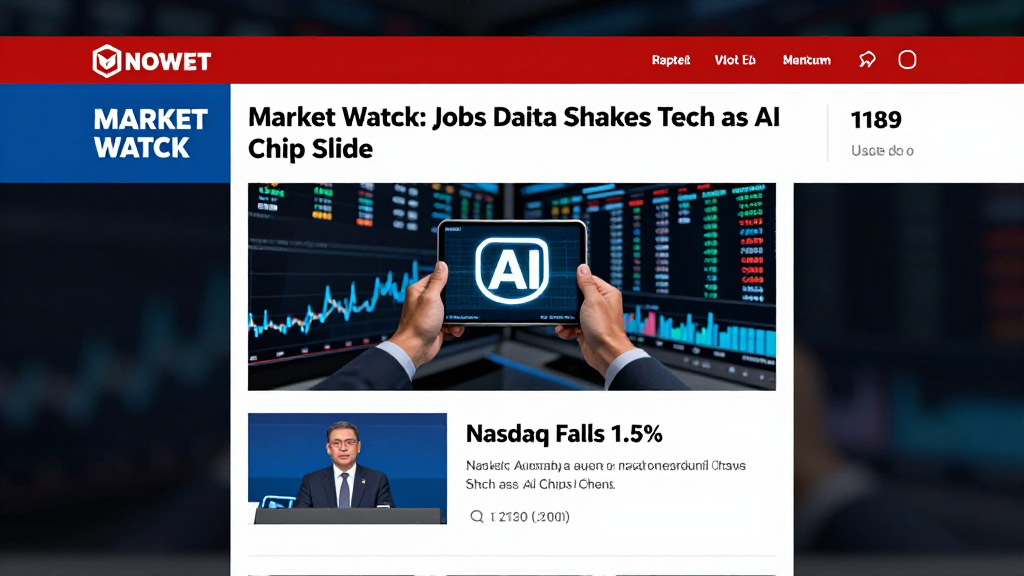
U.S. equities gave back a portion of recent gains on Wednesday, July 2, 2026, as investors digested a mixed batch of economic data headlined by a weaker-than-expected private-sector jobs report and fresh caution around the durability of the AI-driven rally. The S&P 500 slipped 16.13 points, or 0.22%, to settle at 7,497.93 — still up 0.15% on the day when measured from the prior session open — while the tech-heavy Nasdaq Composite fell 467.22 points, or 1.54%, to close at 29,856.91 as investors rotated out of AI chip names that had led markets higher for much of the first half of the year. The Dow Jones Industrial Average managed to hold near the flatline, down just 13.96 points, or 0.03%, at 52,365.66. The small-cap Russell 2000 was a relative bright spot, falling 0.30% on July 1 but holding a 35.44% year-to-date gain that dwarfs the S&P 500’s 19.41% rise over the same period.
U.S. Equities
Semiconductor stocks bore the brunt of Wednesday’s selling pressure, with chipmakers and memory names leading the retreat after a series of downbeat analyst notes raised questions about whether the AI infrastructure buildout could maintain its torrid pace. Micron Technology dropped 10.6%, SanDisk Corp. shed 10.6%, AMD fell 6.9%, Intel slumped 9%, and Applied Materials declined 10% — a broad-based purge that rippled through the Philadelphia Semiconductor Index. Not all technology was on the retreat, however: Microsoft added 3.05% after a positive earnings preview, Alphabet gained 1.07%, Apple rose 1.73%, and Meta Platforms surged 8% on strong advertising revenue expectations. The divergence between mega-cap profit-takers and struggling chip manufacturers reflects a market that is becoming increasingly selective about which corners of the AI theme deserve premium valuations after a blistering first half. Nvidia, the sector’s bellwether, slipped 2.51%, or 1.25%, pulling its year-to-date gain to a still-impressive 25.65% and its market capitalization to $5.45 trillion — a figure that dwarfs the GDP of most nations.
Fixed Income
The bond market absorbed the jobs data with caution, sending the 10-year U.S. Treasury yield up 4 basis points to 4.43% — a move that reflects both concern about sticky inflation and uncertainty ahead of Friday’s official June jobs report from the Bureau of Labor Statistics. Private-sector hiring slowed more than economists had anticipated in the latest ADP report, which covered the period through mid-June, setting the stage for a potentially disappointing headline number. Fed Chair Kevin Warsh, in his first public remarks since taking the helm, struck a nuanced tone: he noted that inflation expectations had eased over the past month while reaffirming the central bank’s commitment to restoring price stability. That measured language left markets pricing in a roughly 60% probability of a rate hold at the July meeting, with traders watching wage growth and core PCE data as the key arbiter of when — not whether — the Fed will eventually ease. The two-year Treasury yield, more sensitive to near-term Fed expectations, held at 4.12%, keeping the yield curve moderately steep and signaling that bond investors remain skeptical of an imminent policy pivot.
Energy Markets
Oil prices edged lower as the market weighed the implications of the Doha talks ending in stalemate, with Iran and the United States unable to reach agreement on Hormuz Strait de-escalation and the release of frozen oil revenues. West Texas Intermediate crude settled around $73.50 per barrel, down roughly 0.5%, while Brent held in the $76–$77 range. The stalemate removes a potential tailwind for oil markets that traders had been counting on: a credible Iranian production increase could have added 500,000 to 800,000 barrels per day to global supply over the next six months, easing price pressure in energy-importing nations. Instead, the status quo premium remains embedded in current prices, and traders are now turning their attention to OPEC+ compliance data due later this week and U.S. inventory reports for signs of whether demand destruction from higher prices is beginning to crimp consumption. Natural gas prices held steady at $3.45 per million British thermal units, supported by stronger-than-expected summer cooling demand and tighter-than-expected storage levels.
Currencies, Commodities & Crypto
Gold surged to $4,100.40 per troy ounce, gaining $50.40 on the session as investors sought shelter from equity volatility and a slightly weaker dollar. The precious metal has now added more than $200 per ounce over the past 30 days, a move that reflects a meaningful reassessment of macro risk rather than purely technical factors. The U.S. Dollar Index held at 106.50, flat on the day, as the mixed jobs picture limited directional conviction in either direction. EUR/USD consolidated near 1.0834, while USD/JPY drifted to 151.23 — a level that keeps the Bank of Japan on alert for yen weakness intervention. In digital assets, Bitcoin traded around $58,200, essentially flat over 24 hours, as crypto markets struggled to find directional catalysts beyond the broader risk-off rotation. Ethereum held in the $1,580–$1,620 range, with traders watching for any regulatory developments from the SEC that could clarify the classification pathway for spot Ethereum exchange-traded products.
Forward Look
The calendar pivots sharply toward macro data in the days ahead, with Friday’s June jobs report the undisputed centerpiece. Economists surveyed by Trading Economics expect 185,000 non-farm payrolls, with the unemployment rate holding at 4.2% and average hourly earnings rising 0.3% month-over-month — a print that would likely ease recession fears while leaving the Fed room to remain patient. Any meaningful miss could reignite rate-cut expectations and provide a tailwind for rate-sensitive sectors like utilities and real estate investment trusts, while a blowout number could extend the pressure on bonds and amplify the rotation out of AI growth stocks into cyclical value names. Beyond payrolls, May factory orders, weekly jobless claims, and the Fed’s Beige Book survey of regional economic conditions will all receive close attention as investors calibrate positioning ahead of the August symposium at Jackson Hole. In energy, the OPEC+ compliance report and the International Energy Agency’s monthly oil market report will both drop this week, offering a comprehensive update on the global supply-demand balance just as the Doha stalemate adds a geopolitical risk premium back into the market.