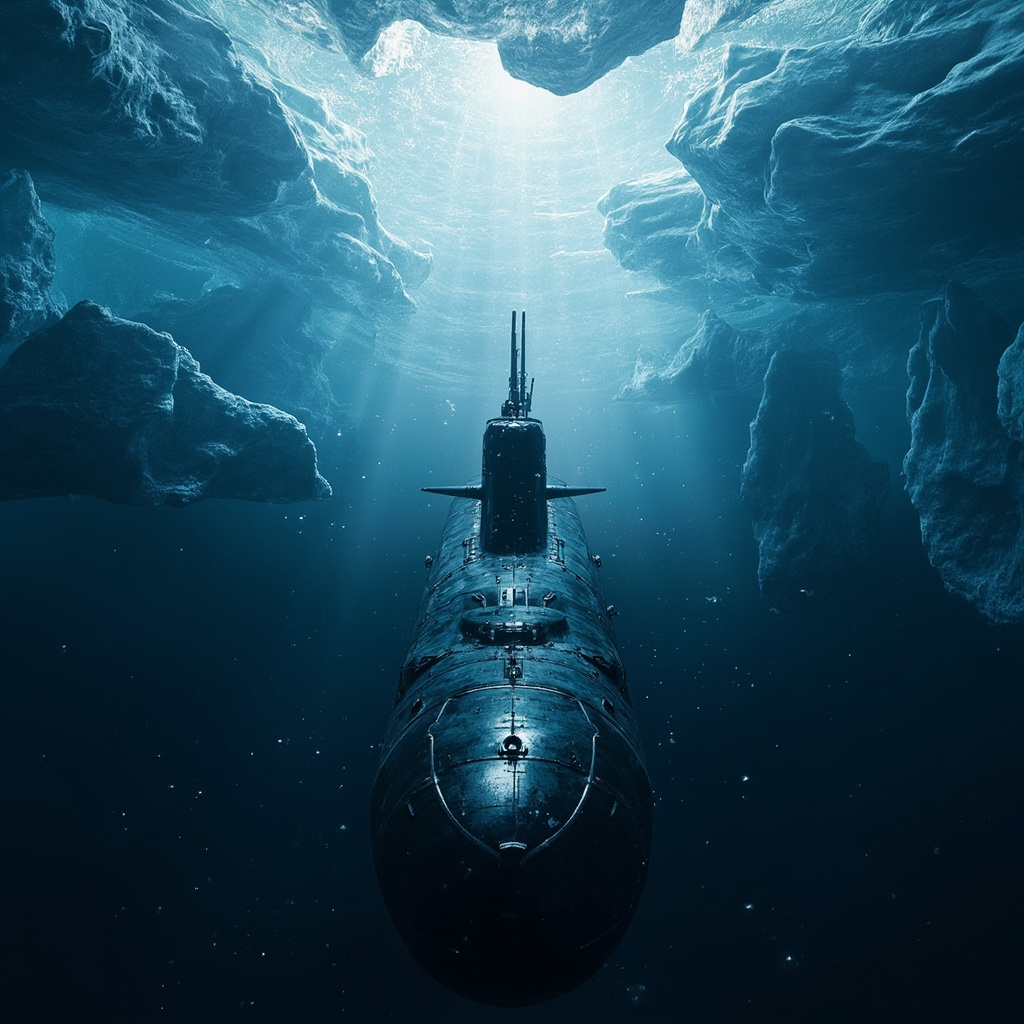
Deep inside the Arctic Circle, in waters so cold they crack paint off steel, a Norwegian frigate is running silent. Somewhere beneath the black Atlantic swell, a Russian nuclear submarine is doing the same. This is not a scene from the 1980s Cold War – it is Tuesday in April 2026, and the Norwegian Armed Forces have just concluded the most intensive anti-submarine operation in the Barents Sea since the collapse of the Soviet Union.
The incident, disclosed by Oslo on Tuesday and confirmed by NATOs North Atlantic Command, marks a significant escalation in the undersea contest between Russia and the Western alliance. Three Russian submarines – believed to be of the Severodvinsk-class, among the quietest and most capable in the Russian fleet – were tracked by a joint Norwegian-British task force operating from the Andoya and Faslane bases. When one of the submarines appeared to be positioning near the Norway-Germany undersea data cable, the task force moved to intercept. The Russian vessel submerged to deeper waters and the incident ended without weapons being discharged. But the message sent was unambiguous: the rules of engagement in the high north are changing.
The Undersea Contest Nobody Talks About
Most of the public conversation about NATOs strategic competition with Russia focuses on land forces in the Baltics, air policing over the Baltic states, or the grinding war in Ukraine. The undersea domain – the cold, dark world beneath the waves where submarines prowl and fibre-optic cables carry 97 percent of the worlds digital data – rarely enters public view. Yet it may be the most consequential theatre of the new Cold War.
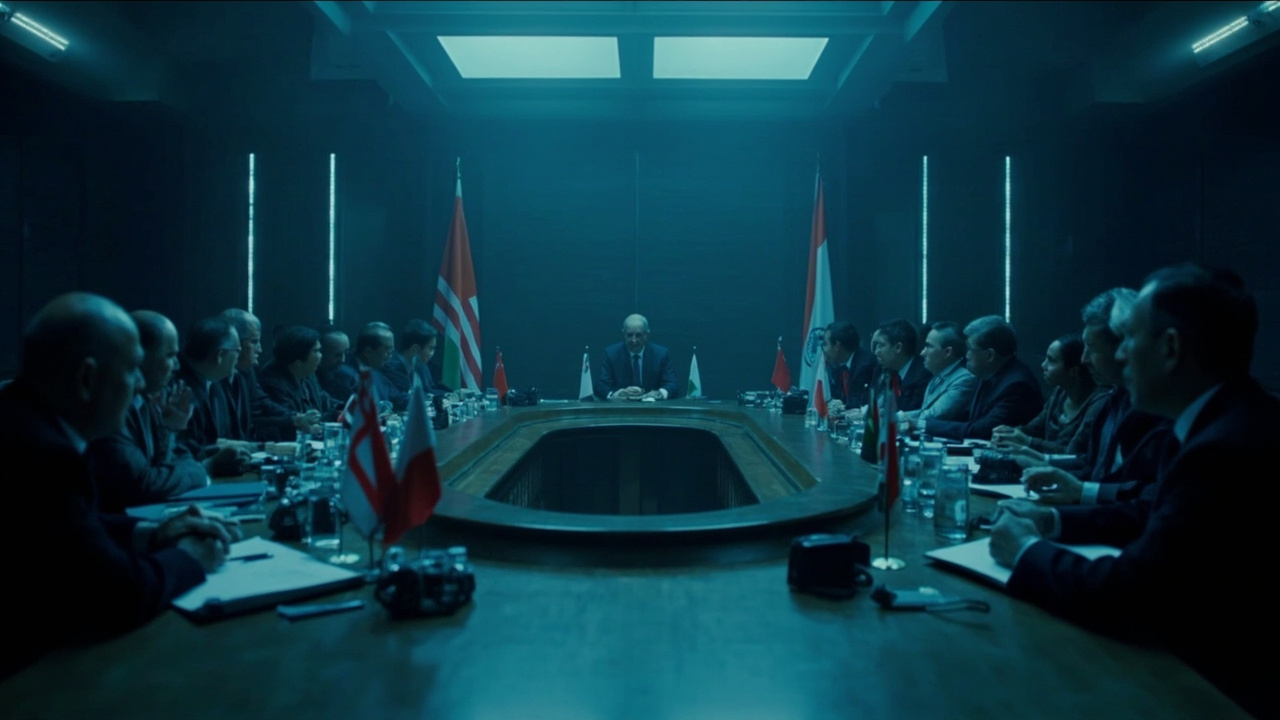
NATOs Strategic Command has acknowledged, in a rare public statement issued last month, that undersea infrastructure is now classified alongside territorial defence as a Tier 1 priority – a designation previously reserved for direct threats to alliance territory.
The undersea domain is where deterrence either holds or breaks. If a single cable is cut in the wrong moment, the economic and psychological consequences would dwarf anything we have seen in the land domain. The Russians understand this. We are beginning to.
– Senior NATO defence official, Brussels, April 2026
Why the Arctic Is the New Centre of Gravity
The strategic logic is not hard to follow. The Arctic is warming four times faster than the global average, opening new shipping lanes and exposing vast reserves of oil, natural gas, and critical minerals that Russia, Canada, the United States, Norway, and Denmark all claim rights to. The Northern Sea Route – Russias coastal shipping lane along its Arctic shoreline – is now navigable for roughly six months a year, compared to less than two months in the 1990s. Russia has invested heavily in Arctic military infrastructure, including new bases on Franz Josef Land and Novaya Zemlya, and has conducted large-scale exercises involving nuclear-capable submarines, icebreakers, and long-range aviation.
NATOs expansion to include Finland in 2023 and Sweden in 2024 transformed the alliances Arctic posture overnight. The alliance now controls the eastern Baltic exits, the Danish Straits, and the Greenland-Iceland-UK gap – the three chokepoints through which Russian submarines must transit to reach the open Atlantic. But the ability to actually project power inside the Arctic – to track, shadow, and if necessary neutralise Russian submarines operating from their northern bases – remains deeply contested.
We have excellent anti-submarine capabilities in the Norwegian Sea. What we are building now is the ability to sustain them – not for days, but for months. That is a fundamentally different challenge.
– Commodore Ingrid Haaland, Royal Norwegian Navy, Oslo, April 2026
Britains P-8 Poseidon and the New Northern Architecture
Britains decision to base P-8 Poseidon maritime patrol aircraft at RAF Lossiemouth, with forward deployments to Andoya in Norway, represents the most visible manifestation of NATOs new northern focus. The P-8 is the worlds most capable anti-submarine aircraft, carrying torpedoes, Harpoon anti-ship missiles, and a sensor suite capable of tracking submarines at considerable depth. Britain has committed to maintaining a continuous presence of at least two aircraft in Norway – a commitment that would have been politically unthinkable five years ago.
Norway has accelerated its defence cooperation agreement with the United Kingdom under the 2024 bilateral treaty, which includes provisions for joint command of northern waters in a crisis scenario. Oslo has also begun construction on a new deep-water quay at Tromso capable of accommodating American nuclear submarines – a development that Moscow protested formally in March, describing it as a violation of existing confidence-building agreements in the high north.
The China Factor in Northern Waters
The Arctic calculus is not binary. China, though it has no territorial claim to Arctic waters, has declared itself a near-Arctic state and has increased its scientific and commercial presence in the region. Chinese research vessels operating under the Polar Silk Road framework have been observed in areas adjacent to NATO exercises, and a joint Russian-Chinese liquefied natural gas project in the Yamal Peninsula has given Beijing a direct financial stake in Arctic energy infrastructure. NATOs 2026 Arctic Security Assessment describes the China factor as the most significant new variable in northern strategy, one that blurs the traditional distinction between commercial and military activity.
The Ceasefire Negotiations Hanging Over Everything
The Barents Sea incident unfolds against a backdrop of fragile ceasefire negotiations elsewhere – a reminder that the threads of global security are always entangled. As American and Iranian negotiators prepare for a fourth round of talks in Muscat, with Omans court-mediated dialogue showing marginal progress but no breakthrough, the Norwegian submarine operation serves as a sharp reminder that competition between great powers continues regardless of diplomatic theatrics elsewhere.
What happens in the Arctic over the next two years will not dominate headlines the way events in the Gulf or the Korean Peninsula do. But the build-up of submarine capabilities, the hardening of undersea cable routes, and the increasingly frequent encounters in the Barents and Norwegian Seas are setting conditions for a confrontation that, if it comes, will be fought in darkness, beneath the ice, and beyond the reach of any diplomatic communique. The Norwegian frigate is still running silent. The submarine is still out there.
Elena Rodriguez is an International Affairs Correspondent for Media Hook, covering global diplomacy, conflict, and the emerging world order.