Fed Holds Rates as Inflation Exceeds 4% for Third Consecutive Month

The Fed Holds Steady for the First Time Under Warsh
The Federal Reserve held interest rates steady at its June meeting, maintaining the federal funds rate target range at 3.50% to 3.75% in the first policy decision overseen by new Chairman Kevin Warsh. All 12 members of the Federal Open Market Committee voted unanimously to hold, a decision that reflected broad consensus even as internal divisions over the longer-term path were beginning to surface. The announcement came on June 17, 2026, marking a pivotal moment as Warsh, a Trump administration nominee who took the helm in May, presided over his inaugural rate-setting meeting. The decision aligned with market expectations, but the accompanying projections sent a far more hawkish signal than many investors had anticipated heading into the week.
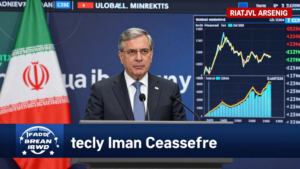
“Persistently high prices are a burden for the American people,” Warsh told reporters at a post-meeting press conference in Washington, D.C. “This committee will deliver price stability.” The chairman’s remarks underscored a clear shift in tone from his predecessor, Jerome Powell, who had signaled patience on additional tightening. Warsh’s language was more direct, tying the Fed’s mandate squarely to bringing inflation back to its 2% target, which the current pace of price increases stands well above. Nine of the twelve FOMC members subsequently indicated they expect at least one interest rate increase before the end of the year, a notable hawkish shift compared to projections issued just three months earlier under the previous chairmanship.
Inflation Running at More Than Twice the Fed Target
The case for holding rates steady while preparing for future hikes rests on a stubborn inflation backdrop that has proven resistant to the current level of monetary restraint. Consumer prices, as measured by the Consumer Price Index, rose to 333.979 in May 2026 from 332.407 in April and 330.293 in March, reflecting a sustained upward trajectory that has now persisted for three consecutive months. This puts the annual pace of price increases firmly above 4%, according to multiple third-party estimates, the highest sustained reading in three years and more than double the Federal Reserve’s stated 2% target. The Federal Open Market Committee’s official statement described the inflation environment as “elevated,” a word that appeared five times in the committee’s June policy statement, up from twice in the prior meeting’s language.
The inflation picture has been shaped significantly by global energy market disruptions tied to the ongoing Iran conflict, which prompted the closure of the Strait of Hormuz, a maritime corridor through which roughly one-fifth of the world’s oil supply passes. The resulting supply shock sent gasoline prices surging across the United States, with national averages reaching levels not seen since the post-pandemic surge of 2022. While a U.S.-Iran diplomatic breakthrough announced in late June — set to be formally signed on June 19, 2026 — raised hopes for a partial reopening of the strait and some relief at the pump, fuel costs remained substantially above pre-war baselines. Groceries, utilities, and a range of consumer goods continued to reflect elevated input costs passed through from higher energy prices, keeping headline inflation elevated and core measures stickier than the Fed would prefer.
Markets Brace for a Higher Path as Odds of a Hike Rise
Financial markets absorbed the Fed’s decision and the hawkish dot-plot signals with a notable repricing across fixed income, equities, and currency markets. The CME FedWatch Tool, which tracks futures contracts to estimate the market’s implied probability of rate moves, showed odds of a quarter-point rate increase by December rising to approximately 40% in the immediate aftermath of the announcement, up from roughly 25% just one week prior. Futures contracts moved to price in a fed funds rate near 3.8% by September and approaching 4% by mid-2027, a meaningful recalibration from the near-zero probability of further hikes that traders had assigned at the start of the second quarter. The yield on the 10-year Treasury note climbed to its highest level since early 2026, reflecting the market’s reassessment of the rate trajectory and the term premium demanded by investors holding government debt through a potentially prolonged tightening cycle.
“The Federal Reserve is signaling that it is prepared to do what is necessary to bring inflation back to target, even if that means additional tightening,” said a senior strategist at a major New York investment bank, speaking on background due to compliance restrictions. “The question for markets now is not whether the Fed will hold again, but when the first of those projected hikes arrives and how quickly the committee moves thereafter.” Equity markets showed resilience in the face of higher rates, with the S&P 500 advancing 0.8% and the Dow Jones Industrial Average rising 0.3% on the session following the Fed announcement, as investors weighed the headwind of higher borrowing costs against the countervailing signal that the central bank remains committed to price stability. The U.S. dollar strengthened against a basket of major currencies, reflecting the relative attractiveness of dollar-denominated assets in a higher-rate environment and the confidence that the Fed is not prepared to let inflation become entrenched.
The Labor Market: Stable but Signaling Caution
One factor that gives the Federal Reserve room to contemplate additional rate increases is the relative resilience of the American labor market, even as some forward-looking indicators begin to soften. The unemployment rate held steady at 4.3% in May 2026, a level that historically represents full employment by most standard definitions. A stronger-than-expected jobs report earlier in the month showed robust hiring across manufacturing, healthcare, and professional services, defying earlier predictions that the cumulative drag from eighteen months of elevated interest rates would produce a more pronounced slowdown in employment. The combination of tight labor markets and above-target inflation creates a classic stagflationary matrix that complicates the Fed’s path: raising rates risks tipping the economy into recession, but failing to tighten risks allowing inflation expectations to become unanchored.
Consumer sentiment data from The Conference Board, released on June 30, 2026, offered a nuanced read on how American households are perceiving this economic crosscurrent. While consumer confidence edged upward as falling oil prices in recent weeks provided some relief to inflation anxieties, the proportion of respondents saying jobs are “hard to get” rose to 22.5%, the highest reading since January 2021. Dana M Peterson, Chief Economist at The Conference Board, noted that the improving inflation outlook was providing households with some breathing room, but warned that the underlying shift in labor market perceptions was a development the Fed would be watching closely. The tension between still-elevated inflation, a resilient but softening labor market, and a Fed that is visibly shifting toward a more hawkish posture sets up a particularly consequential second half of 2026 for monetary policy and the broader economy alike.