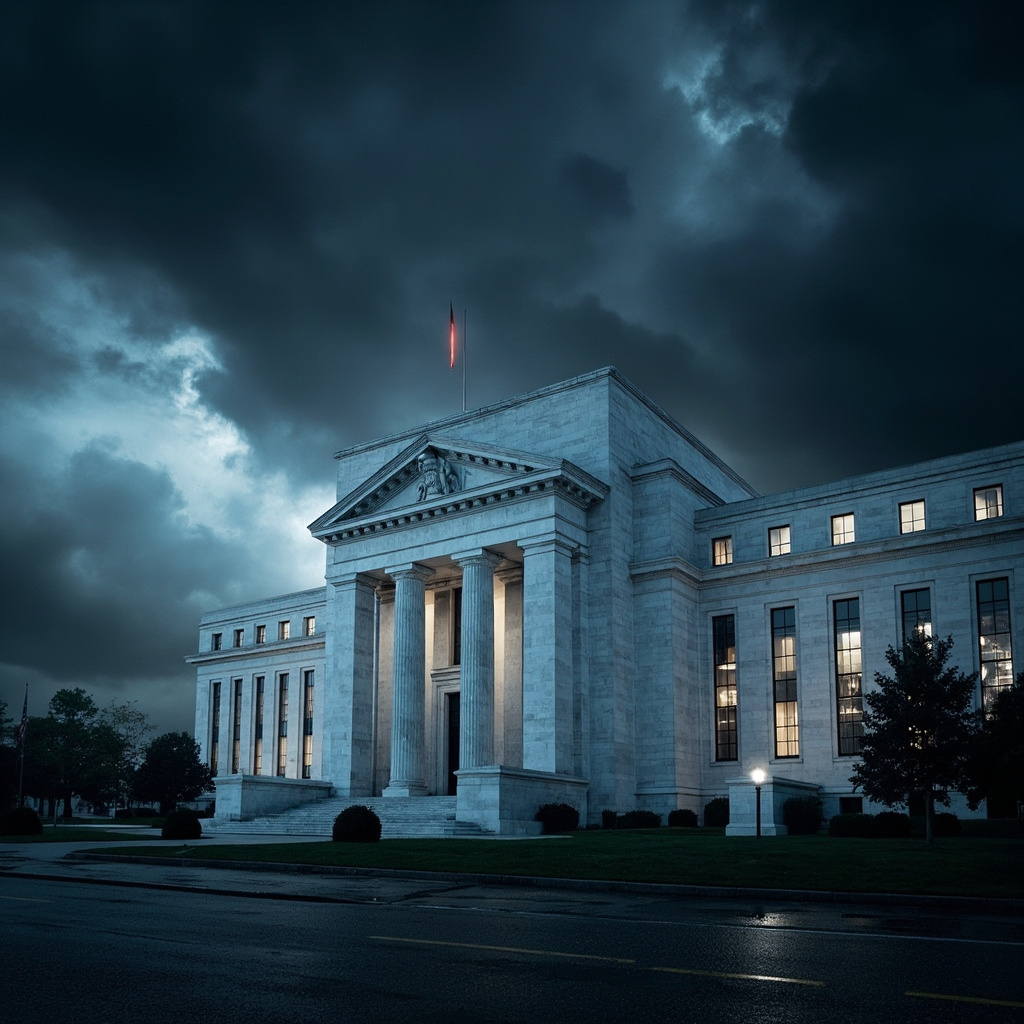
The Federal Reserve left interest rates unchanged on Wednesday in Kevin Warsh’s first meeting as chairman, voting unanimously to keep the benchmark overnight borrowing rate anchored in a range of 3.5% to 3.75%. The decision, widely anticipated by markets, came as the central bank released a dramatically shortened policy statement and signaled that higher rates may be needed to tame inflation that has surged to multi-year highs.
A Statement Rewritten From the Ground Up
The post-meeting communique checked in at just 130 words, a stark reduction from the 341-word statement issued after the April meeting. Gone was the Federal Reserve’s signature “cutting bias” language that had telegraphed openness to future rate reductions for more than two years. In its place, the committee offered only a bare-bones assessment of economic conditions followed by a vow to control inflation. “Economic activity is expanding at a solid pace despite elevated uncertainty that owes, in part, to the conflict in the Middle East,” the statement read. “Job gains have kept pace with the workforce, and the unemployment rate has changed little.”
Warsh’s Dot Plot Revolt
Perhaps the most striking feature of Warsh’s debut was his refusal to submit a rate projection to the “dot plot” grid, the closely watched chart that publishes FOMC members’ anonymous forecasts. “I did not submit a dot for me,” Warsh said at his post-meeting news conference. “It’s not helpful in the conduct of policy.” Warsh, a longtime critic of the Fed’s reliance on forward guidance, said he plans to overhaul the forecasting tool as part of a broader review of central bank communications by year-end. “I suspect by year-end, there’ll be a review about communication broadly, press conferences, dots, meetings, and the like,” he told reporters. “I don’t want to prejudge the outcomes there, but I’m pretty open-minded about what they could be.”
The Hawkish Shift in Projections
Even without Warsh’s input, the dot plot painted a considerably more hawkish picture than markets had expected. The median forecast for the federal funds rate at the end of 2026 rose to 3.8% from 3.4% in March’s projections, implying that at least one rate hike is on the table for this year. Of the 19 committee participants, nine now anticipate at least one rate increase in 2026, while eight expect no change and just one foresees a cut. The long-run neutral rate estimate held steady at 3.1%. Officials also sharply revised their inflation outlook upward: the 2026 headline inflation projection climbed to 3.6% from 2.7%, and core inflation was raised to 3.3% from 2.7%, reflecting supply shocks concentrated in energy markets stemming from the conflict in the Middle East.
Inflation Data Complicates the Picture
The upgraded inflation forecasts landed against an already troubling backdrop. May’s consumer price index showed an annual inflation rate of 4.2%, the highest reading in more than three years, though the core measure that strips out volatile food and energy prices came in at a more moderate 2.9%. The divergence has put the Federal Reserve in an awkward position, forcing it to distinguish between a persistent inflation problem and a transitory shock. “Inflation remains elevated relative to the Committee’s 2 percent goal, in part reflecting supply shocks that have driven price increases in certain sectors, including energy,” the statement acknowledged. The GDP growth projection for 2026 was trimmed to 2.2% from 2.4%, while the unemployment forecast was lowered marginally to 4.3%.