Iran’s Deputy Foreign Minister Kazem Gharibabadi warned on Saturday that the Islamic Republic is “fully prepared” for renewed conflict, as Israel confirmed it has received over 6,500 tonnes of US military equipment — the strongest signal yet that the 62-day Iran war may be entering a new and more dangerous phase.
Iran’s Dual-Track Warning
Speaking at a gathering of ambassadors and heads of foreign diplomatic missions in Tehran, Gharibabadi laid out what he described as Iran’s two-path strategy. “Iran has presented its plan to Pakistan as a mediator with the aim of permanently ending the imposed war, and now the ball is in America’s court,” he said, according to IRIB. “Iran is ready for both paths in order to ensure its national interests and security.”
The Deputy Foreign Minister added a pointed caveat: “In any case, it will always maintain its pessimism and distrust of America and its honesty in the path of diplomacy.” The statement reflects Tehran’s growing frustration with what it sees as Washington’s bad-faith negotiating posture — offering talks while maintaining a crippling naval blockade.
Hours before Gharibabadi’s remarks, Fars news agency quoted Mohammad Jafar Asadi, a senior figure in Iran’s central military command, as saying that “a renewed conflict between Iran and the United States is likely.” Asadi accused US officials of using media statements to “prevent a drop in oil prices” and “escape the predicament they have created for themselves.”
Israel’s 6,500-Tonne Military Shipment
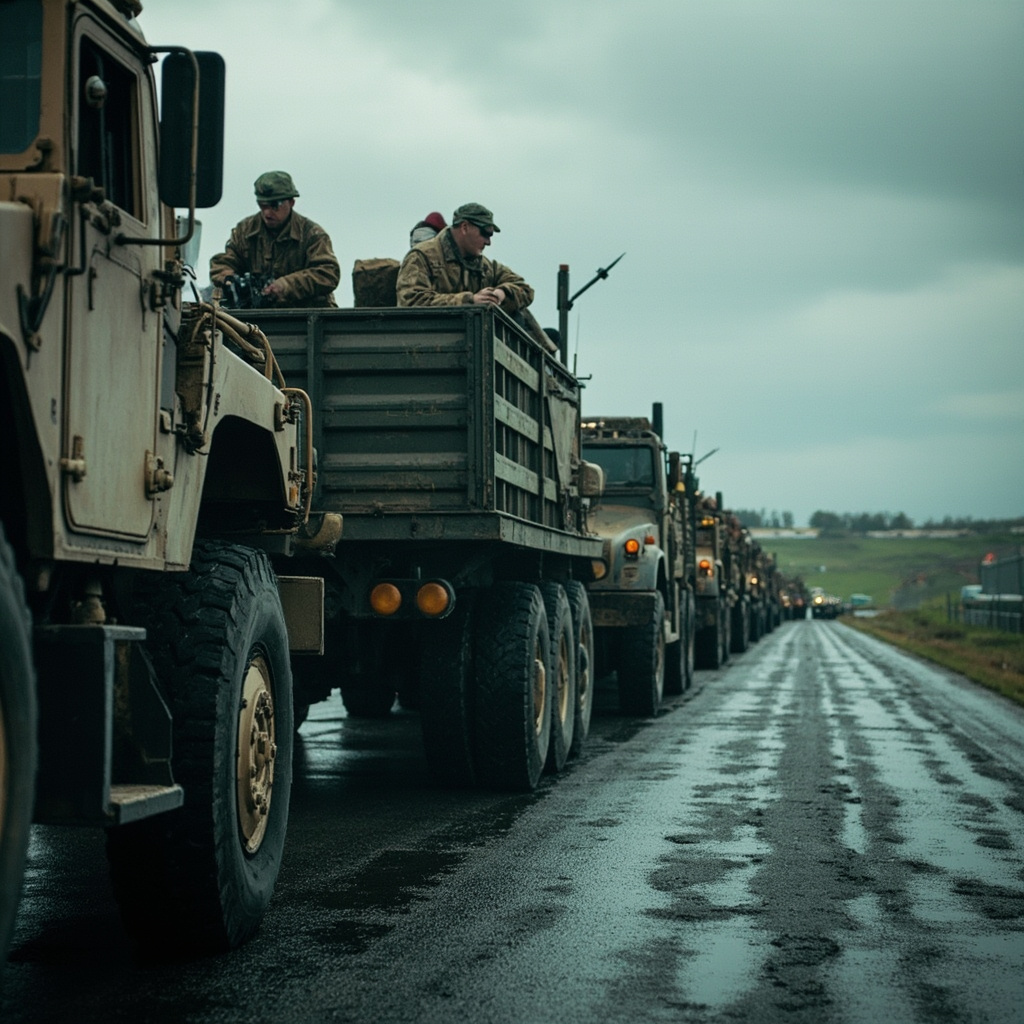
The Iranian warnings come as Israeli Defense Minister Israel Katz confirmed on Thursday that Tel Aviv has received more than 6,500 tonnes of US military equipment since the war began — a figure that dwarfs previous known deliveries and suggests preparations for a significant escalation.
Katz issued an explicit warning that a renewed military strike on Iran could be possible, a statement that coincided with Trump receiving a briefing from US Central Command (CENTCOM) on potential military options. CENTCOM has been enforcing the naval blockade of Iranian ports since the April 7 ceasefire.
The scale of the resupply — 6,500 tonnes is equivalent to roughly 130 fully loaded C-17 transport aircraft — indicates that both Washington and Tel Aviv are maintaining the capacity for large-scale kinetic operations even as diplomatic channels remain nominally open.
The Diplomatic Impasse
Peace talks have been stalled since the first round failed in Islamabad. Iran has refused to return to the negotiating table, citing the ongoing US naval blockade as the primary obstacle. Trump has repeatedly claimed a deal is “possible” and “close,” but Tehran has publicly denied those assertions, with one official accusing the president of lying.
Iran’s latest proposal, delivered through Pakistani mediators on Friday, follows a set of amendments sent by US Special Envoy Steve Witkoff on Monday. Axios reported that one of the US amendments demands Iran commit to not transferring any enriched uranium from its bombed nuclear facilities or restarting any nuclear-related activities while negotiations continue — a condition Tehran views as an unacceptable infringement on sovereignty.
Trump rejected the Iranian proposal on Friday, telling reporters at the White House: “They want to make a deal, but I’m not satisfied with it. We just had a conversation with Iran. Let’s see what happens. But I would say that I am not happy.”
The War Powers Clock
The escalation in rhetoric comes as the war has now crossed the 60-day threshold, triggering the War Powers Resolution requirement for congressional authorisation. Trump has claimed that “hostilities that began on February 28, 2026, have terminated” — a characterisation that both parties in Congress have rejected as a legal fiction.
Trump told reporters he would not seek congressional authorisation. “It has never been used. It has never been adhered to. And every other president considered it totally unconstitutional. And we agree with that,” he said. The position sets up a potential constitutional confrontation with Congress even as military preparations continue.
What Comes Next
Three factors will determine whether the Iran war escalates or de-escalates in the coming days. First, whether Pakistan can broker a face-to-face meeting between US and Iranian negotiators — something that has not happened since the first round of talks collapsed. Second, whether Trump’s “deal or blast” rhetoric is a negotiating tactic or a genuine threat — the 6,500 tonnes of equipment suggests the military option is being kept very real. Third, whether Congress asserts its constitutional role under the War Powers Resolution, which could constrain Trump’s freedom of action.
For now, the ceasefire holds — but as Gharibabadi made clear, Iran is preparing for it to break. The world’s most dangerous conflict is balanced on a knife’s edge, and the next move belongs to Washington.