Sudan’s RSF Commits Crimes Against Humanity in El Fasher as Africa Faces Overlapping Crises
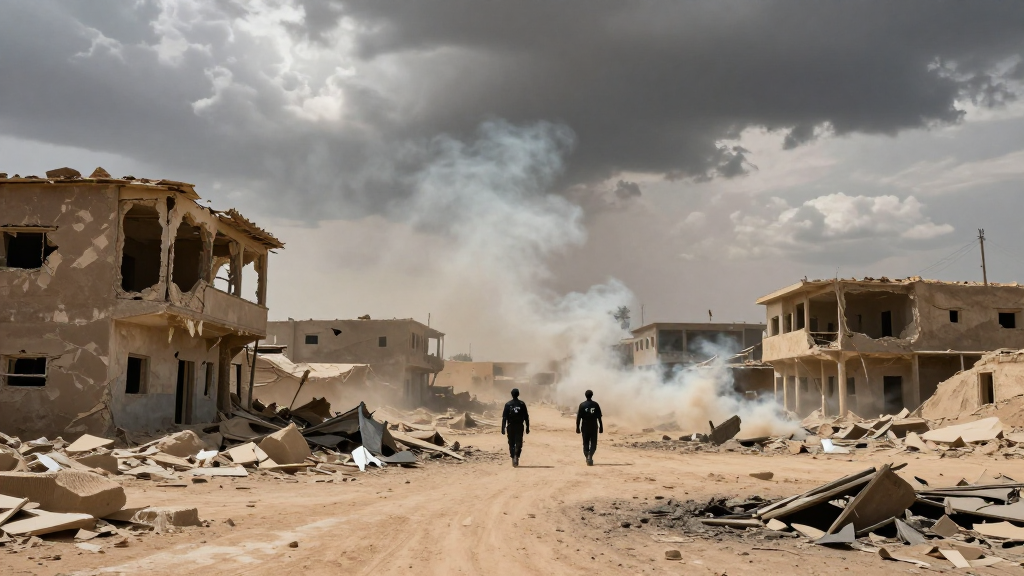
DAKAR, Senegal — A new Amnesty International report released this week has concluded that Sudan’s Rapid Support Forces committed crimes against humanity in El Fasher, the capital of North Darfur, deepening what the United Nations has called the world’s worst humanitarian catastrophe. The findings come as Africa confronts a cascade of overlapping crises spanning five distinct regions, straining regional organizations and aid networks already operating at capacity.
North Africa: RSF Atrocities in El Fasher
The Amnesty report, published July 1, 2026, documents a systematic campaign of ethnic cleansing carried out by RSF forces in El Fasher, where tens of thousands of civilians remain trapped without access to food, water, or medical care. The RSF, which has controlled much of Darfur since the conflict erupted in 2023, stands accused of mass killings, sexual violence, and the deliberate destruction of civilian infrastructure.
“The atrocities in El Fasher are a stain on the conscience of humanity,” said Amnesty International’s Secretary-General. The UN Human Rights Office has independently verified patterns of attacks consistent with crimes against humanity, and Washington has imposed sanctions on both the RSF and Sudan’s military government.
West Africa: Burkina Faso’s Diplomatic Rupture with France
In West Africa, Burkina Faso formally severed diplomatic relations with France on June 28, expelling the French ambassador and announcing a strategic pivot toward Russia for security cooperation. The decision follows similar moves by Mali in 2022 and Niger in 2023, signaling a broader realignment of Sahelian states away from former colonial powers and toward Moscow-backed security arrangements.
The diplomatic rupture has left thousands of French nationals scrambling to depart, and Paris has called the move “regrettable” while acknowledging it cannot continue operating in a country where its personnel face hostility. Regional bloc ECOWAS has urged all parties to respect the rights of civilians caught in the transition.
Central Africa: Ebola Crosses the DRC-Uganda Border
In Central Africa, an Ebola outbreak that began in the Democratic Republic of Congo has crossed into Uganda for the first time, prompting the World Health Organization to declare a public health emergency of continental concern. The cross-border transmission, confirmed by Uganda’s Ministry of Health on June 29, has resulted in 14 confirmed cases and at least three deaths inside Ugandan territory. Health workers have been deployed to the Kasese district, where the cases were identified.
The strain responsible for the outbreak has no licensed vaccine, complicating response efforts. The Africa Centres for Disease Control and Prevention warned that the convergence of an active war zone in eastern DRC with a viral outbreak has created conditions for rapid spread.
Southern Africa: Xenophobic Violence Rocks South Africa
Southern Africa is grappling with its own humanitarian emergency. Xenophobic attacks targeting foreign nationals — primarily from Somalia, Ethiopia, and other African countries — have intensified across South Africa, displacing thousands and drawing condemnation from regional governments. The South African government has acknowledged the crisis but faces criticism that security forces have been slow to respond to vigilante violence in provinces including Gauteng and KwaZulu-Natal.
Neighboring countries have begun evacuating their nationals. Zimbabwe has repatriated more than 2,000 citizens, and Mozambique has opened emergency shelters along its border. The African Union has called for an emergency session to address the surge in anti-migrant violence across the region.
East Africa: Kenya’s Gen Z Returns to the Streets
In East Africa, Kenya’s Generation Z protest movement returned to the streets of Nairobi and Mombasa on June 30, marking the second anniversary of the wave of demonstrations that briefly paralyzed the government in 2024. This year’s protests have been larger and more confrontational, with organizers calling for the dissolution of the current administration and new elections. Police deployed water cannon and tear gas to disperse crowds near the central business district, and at least 30 protesters were treated for respiratory injuries.
The protests have complicated Kenya’s role as a regional mediator, particularly in the Democratic Republic of Congo, where Kenyan peacekeepers form part of the MONUSCO mission. Uganda has escalated its media crackdown in response to coverage of the Kenyan protests, with the independent Nation Media Group forced to suspend broadcast operations for the third time this year.
The convergence of war, disease, diplomatic upheaval, and civic unrest across five African regions is testing the continent’s institutions at every level. The African Union faces mounting pressure to convene an emergency heads-of-state summit to coordinate a unified response, though analysts are skeptical that consensus can be reached given deepening geopolitical rivalries among member states.