When Iranian forces fired three ballistic missiles at Qatar in April 2026—one striking a QatarEnergy-registered oil tanker in the Persian Gulf—the world learned, once again, that the Strait of Hormuz is the most strategically consequential stretch of water on earth. For decades, policymakers and energy markets treated the 21-mile-wide shipping lane between Oman and Iran as a background risk, a familiar vulnerability acknowledged but never quite confronted. The events of the past month have ended that comfortable fiction.
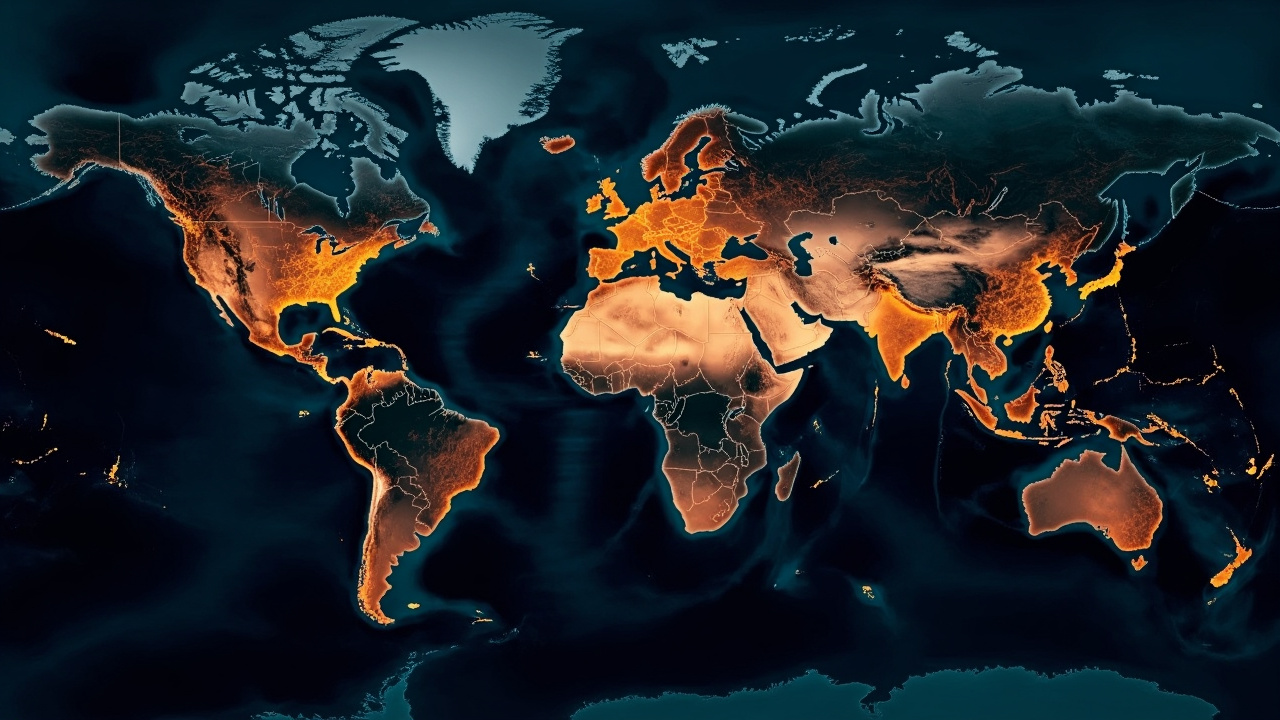
The strait, which separates the Persian Gulf from the Gulf of Oman, handles approximately 21 million barrels of oil per day—nearly a quarter of global oil consumption and a third of the world’s liquefied natural gas trade. A sustained disruption, even brief, sends shockwaves through every economy that depends on imported energy. In the second week of April 2026, as Iranian missiles targeted vessels in Kuwait’s territorial waters and a Qatari tanker burned in the gulf, oil prices surged past $140 per barrel. Malaysia announced remote work policies for government employees to reduce fuel consumption. Taiwan’s transport ministry authorized a 157 percent increase in international flight fuel surcharges. The chain reaction had only just begun.
A Chokepoint Under Siege
The geography of the strait is unforgiving. At its narrowest, the shipping channel narrows to just three nautical miles wide in each direction, leaving tankers funneled into a corridor closely flanked by Iranian territory. For years, Iran threatened to close the strait in moments of geopolitical tension—empty threats that the international community learned to discount. The difference in 2026 is that Iran is no longer making threats. It is demonstrating capability.
In addition to the April missile strikes, Iranian drone attacks hit a fuel storage facility at Kuwait International Airport, and Iranian-launched drones were intercepted over Fujairah in the United Arab Emirates. The combination of ballistic missiles, drones, and naval assets gives Iran a layered anti-access, area-denial posture that is genuinely difficult to counter without significant military escalation.
“The strait is not just a shipping lane. It is the jugular vein of the global economy. When it is threatened, every consumer on earth pays a price at the pump, every manufacturer faces higher input costs, and every central bank confronts a fresh inflation shock.” — International Energy Agency, April 2026
The United States Responds—Cautiously
President Donald Trump, in his first primetime address since the outbreak of hostilities, struck a tone deliberately calibrated between resolve and restraint. “We will finish the job,” Trump said, referring to U.S. objectives in the region. He added that Washington would strike “extremely hard” within two to three weeks if a diplomatic resolution was not reached. The measured language reflected a strategic dilemma: a full-scale military campaign to clear the strait would be enormously costly and carry significant risk of broader regional escalation, yet allowing Iranian forces to operate with impunity risks emboldening further aggression.
U.S. forces have deployed additional MQ-9 Reaper drones over Iranian territory, two of which have been shot down in recent weeks, according to the Pentagon. Israeli Air Force strikes have targeted Iranian military and nuclear facilities, though Iran’s nuclear program remains intact and operating. The multi-front nature of the conflict—involving the United States, Israel, Iran, and various Gulf state actors—makes diplomatic resolution extraordinarily complex.
Global Economic Ripple Effects
The Hormuz crisis arrives at an inflection point for the global economy. Forecasts from the International Monetary Fund had already been revised downward in early 2026 due to trade fragmentation and geopolitical uncertainty. The addition of a sustained energy supply shock has dramatically worsened the outlook for import-dependent economies across Asia and Europe.
Malaysian Prime Minister Anwar Ibrahim’s government, facing fuel costs climbing sharply as global oil markets priced in a Persian Gulf risk premium, announced that all federal employees and workers in state-owned enterprises would shift to remote or hybrid arrangements effective mid-April. The move was framed as an energy conservation measure but reflected the severity of the supply pressure. Singapore, Japan, and South Korea—all heavily dependent on Gulf oil—are understood to be drawing down strategic petroleum reserves, though officials have declined to confirm the pace or volume of withdrawals.
New Alliances in the Shadow of the Strait
Perhaps the most consequential long-term effect of the Hormuz crisis may not be the immediate energy disruption but the realignment it is forcing among nations. The United States’ willingness to engage diplomatically with Venezuela—lifting sanctions on Acting President Delcy Rodriguez in April—signals a broader recalibration of U.S. foreign policy priorities, one in which traditional adversaries are being assessed for their utility in a multipolar world. Meanwhile, talks between Afghanistan and Pakistan, hosted in Beijing, suggest China is positioning itself as a diplomatic broker in conflicts the United States no longer wishes to own.
Within the Gulf itself, the crisis is creating unexpected partnerships. The UAE, Qatar, and Kuwait—each targeted in Iranian strikes—have accelerated long-stalled conversations about a unified air defense architecture. Saudi Arabia, historically cautious about direct entanglement, has opened emergency channels with Israeli military planners, according to regional sources. The Iran war, for all its destruction, may be inadvertently building bridges that normal peace negotiations never could.
The Road Ahead
For now, the Strait of Hormuz remains open. Tankers are moving, albeit with increased insurance premiums and military escort arrangements that have raised the cost of transport significantly. The immediate question is whether the Trump administration’s two-to-three-week timeline produces genuine diplomatic movement or becomes a precursor to a far more dangerous phase of the conflict.
What April 2026 has made plain is that the post-Cold War era’s assumptions about stable energy chokepoints and predictable geopolitical risk were always a kind of collective denial. The Hormuz strait was always a flashpoint. It simply took a full-scale regional war to make the world notice.
The next few weeks will determine whether diplomacy, military deterrence, or outright escalation defines the future of the waterway that keeps the global economy running. For billions of people who have never heard of the Strait of Hormuz, the answer may soon arrive at their local gas stations and grocery shelves.
Elena Rodriguez is an International Affairs Correspondent for Media Hook, covering global diplomacy, conflict, and the emerging world order.