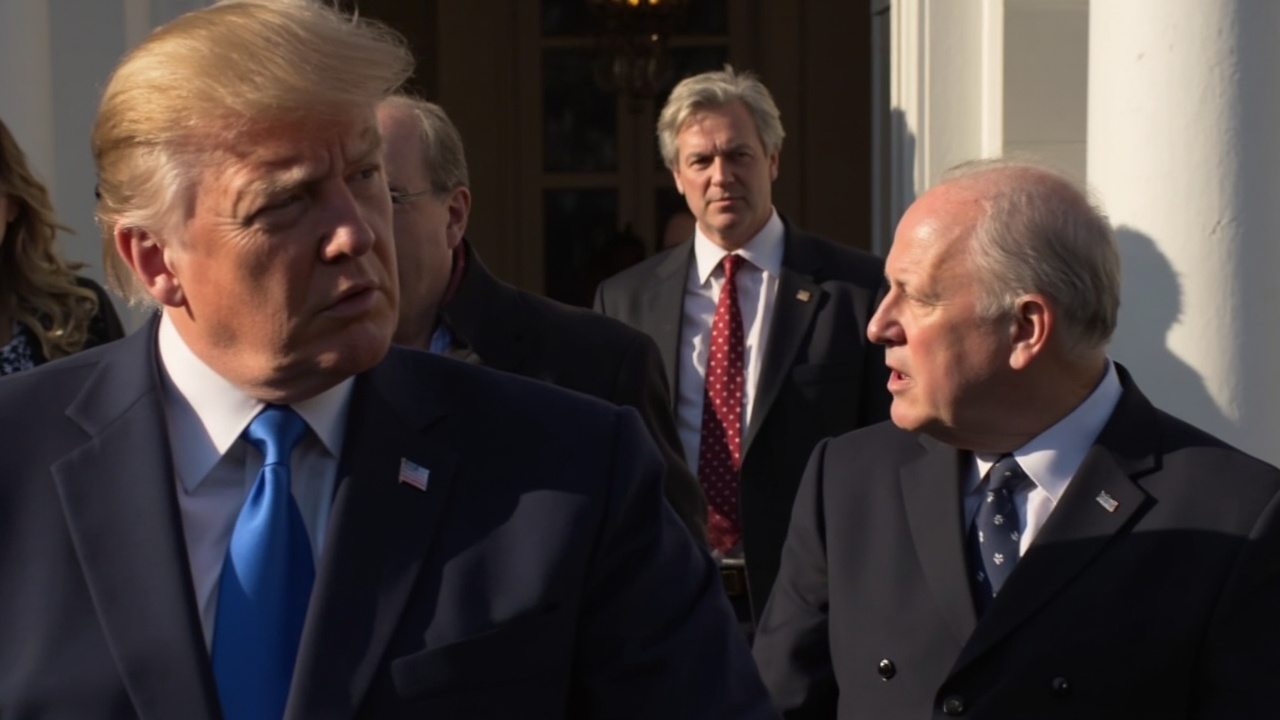
On April 18, 2026, President Donald Trump signed an executive order that few in Washington saw coming — a directive aimed at accelerating research into psychedelics like psilocybin, MDMA, and ibogaine for treating mental health conditions. The order does not legalize these substances, but it signals a profound shift in how the federal government approaches drug policy, with ripple effects that could reshape cannabis policy, mental health treatment, and the politics of personal freedom for a generation.
The Order Itself: What the White House Actually Did
The executive order directs multiple federal agencies — primarily the Food and Drug Administration and the National Institutes of Health — to expand clinical trials involving psychedelic compounds, streamline regulatory pathways for researchers, and strengthen “Right to Try” access for patients with serious mental health conditions who have exhausted conventional treatments. It does not reschedule any drug under the Controlled Substances Act, nor does it alter criminal penalties for possession or distribution.
However, the practical effects could be far-reaching. By ordering the FDA to prioritize review of Investigational New Drug applications involving psychedelics and directing the NIH to fund expanded clinical research, the administration is creating a regulatory tailwind for an industry that has operated at the margins of American medicine for decades. AtaiBeckley, Compass Pathways, and Cybin — three leading psychedelic drug developers — saw their share prices surge more than 25 percent in the trading session following the order.
The inclusion of ibogaine is particularly notable. A powerful psychoactive compound derived from the root bark of an African plant, ibogaine has shown remarkable promise in treating opioid addiction — a crisis that claims more than 80,000 American lives annually. But ibogaine also carries documented cardiac risks, and the order signals that the White House is willing to grapple with the most challenging substances rather than playing it safe with more politically palatable options.
The Cannabis Parallel: Why This Time Might Be Different
The executive order arrives against a backdrop of stalled cannabis reform. In December 2025, President Trump directed the DEA to initiate rescheduling of marijuana from Schedule I to Schedule III — a move that would have represented the most significant shift in federal cannabis policy in over 50 years. Four months later, that process remains mired in interagency review. The DEA evaluation is ongoing, and no final rule has been issued.
The delay is instructive. Drug scheduling decisions require the DEA to consult with the Department of Health and Human Services, consider scientific evidence, navigate international treaty obligations, and weigh law enforcement concerns — a process virtually designed to produce bureaucratic inertia. Cannabis advocates have spent decades fighting what attorney Shawn Hauser of Vicente LLP calls marijuana’s outrageous 1970s-era misclassification, only to watch the finish line recede with each passing month.
“The science-, patient-, health-care-first approach is winning in Washington right now. The psychedelic pathway — built on physician-led protocols, clinical research and compassionate use frameworks — is actually a model cannabis advocates should be studying and adopting more aggressively.”
The psychedelics order sidesteps the scheduling quagmire by focusing on research and compassionate use rather than commercial legalization. This approach has strategic advantages: it avoids the political lightning rod of legalizing drugs while building an evidence base that could ultimately support broader policy change. It is a medical-first framework — and its success or failure will provide a roadmap for how cannabis reform might finally break through the federal logjam.
The Political Calculus: Why Trump, Why Now
The politics of drug policy have shifted dramatically since the tough-on-crime era that defined American politics from the 1980s through the early 2000s. Veterans advocacy groups have been among the most vocal proponents of psychedelic therapy, particularly for treating PTSD and traumatic brain injury. With more than 17 veterans dying by suicide daily according to VA data, the moral case for accelerated research has become politically unassailable.
Trump’s embrace of psychedelic research also reflects a broader realignment in conservative politics. The Right to Try movement, which the president championed during his first term, established the principle that terminally and seriously ill patients should have access to experimental treatments without waiting for FDA approval. Extending this framework to psychedelics is a logical next step — one that appeals to both libertarian-leaning Republicans who prioritize personal freedom and populist conservatives drawn to anti-establishment positions that challenge conventional medical orthodoxies.
The timing also intersects with a growing mental health crisis. Suicide rates have risen nearly 30 percent over the past two decades, antidepressant efficacy has plateaued, and the opioid epidemic continues to devastate communities across rural and suburban America. Traditional pharmaceutical companies have largely abandoned psychiatric drug development due to high failure rates and enormous costs. Psychedelics offer a new frontier — and the White House has calculated that being seen as proactive on mental health treatment carries minimal political risk and substantial potential reward.
Congressional Response: Bipartisan Opportunity or Partisan Flashpoint?
Early congressional reaction has followed a familiar pattern. Progressive Democrats and libertarian Republicans have praised the order, while social conservatives and some law enforcement-aligned members have expressed concern about normalizing Schedule I substances. Senators Rand Paul and Cory Booker — an unlikely bipartisan pair — have separately introduced legislation that would go further than the executive order by creating permanent statutory frameworks for psychedelic research and access.
The House Veterans Affairs Committee has scheduled hearings on psychedelic therapy for PTSD, with testimony expected from clinical researchers at Johns Hopkins, NYU, and the VA’s own research division. These hearings represent the first serious congressional examination of psychedelics as therapeutic tools since the 1970s, and their outcome could determine whether the executive order becomes a lasting policy framework or a symbolic gesture that evaporates with the next administration.
Perhaps most significantly, the order has created space for a genuine bipartisan conversation about drug policy — something that has been nearly impossible in Washington for decades. If the clinical evidence continues to support psychedelic efficacy, the political dynamics could shift rapidly. Mental health does not respect party lines, and neither does the opioid crisis. The politicians who recognize this reality first may find themselves on the right side of a policy revolution.
The Industry Stakes: From Underground to Wall Street
The financial markets enthusiastic response to the executive order reflects more than speculative fervor. The psychedelic medicine industry, while still in its infancy, is projected to reach a market value of $10.75 billion by 2030 according to analysis from Data Bridge Market Research. The order removes several of the most significant barriers to entry: uncertain regulatory timelines, limited research funding, and institutional skepticism from the medical establishment.
But the path from executive order to commercial product remains long and uncertain. Clinical trials for psychedelic compounds face unique challenges that conventional drug trials do not. The subjective nature of psychedelic experiences complicates double-blind study designs. Set and setting — the psychological and environmental context in which the drug is administered — play crucial roles in outcomes, making standardization difficult. And the therapeutic model typically requires extensive therapist involvement across multiple sessions, creating cost and scalability concerns that traditional pharmaceutical models do not face.
There are also legitimate questions about whether Wall Street’s enthusiasm is premature. The biotech industry is littered with promising compounds that failed in Phase III trials after generating enormous early excitement. Psychedelic developers must still demonstrate safety and efficacy through the same rigorous FDA approval process that applies to all new drugs — a process that typically takes 10 to 15 years and costs over $2 billion. The executive order may accelerate aspects of this timeline, but it does not eliminate the fundamental scientific and regulatory hurdles.
Looking Ahead: What Comes Next
The most immediate consequence of the executive order will likely be a surge in NIH-funded clinical trials over the next 12 to 18 months. Multiple Phase II and Phase III studies for psilocybin-assisted therapy for treatment-resistant depression are already underway, and the order could accelerate their timelines. MDMA-assisted therapy for PTSD, which has shown remarkable results in early trials, may be among the first to reach FDA review.
For cannabis, the order creates both opportunity and anxiety. On one hand, the medical-first approach could provide a template for moving cannabis rescheduling forward in a way that satisfies regulatory requirements while addressing advocates’ concerns. On the other hand, the psychedelics industry’s embrace of clinical research and physician-led protocols highlights the relative lack of rigorous cannabis clinical data — a gap that has complicated rescheduling efforts.
The broader political question is whether this executive order represents the beginning of a fundamental rethinking of American drug policy, or a targeted intervention in a specific therapeutic area. The answer will depend on what the clinical research reveals, how Congress responds, and whether public opinion continues to shift in favor of evidence-based drug policy. One thing is certain: the conversation about psychedelics, cannabis, and drug reform in America has fundamentally changed, and there is no going back.
“We are witnessing the most significant rethink of federal drug policy in half a century. Whether you support it or oppose it, no one can deny that the old assumptions are being challenged — and the results will shape American medicine, politics, and culture for decades to come.”