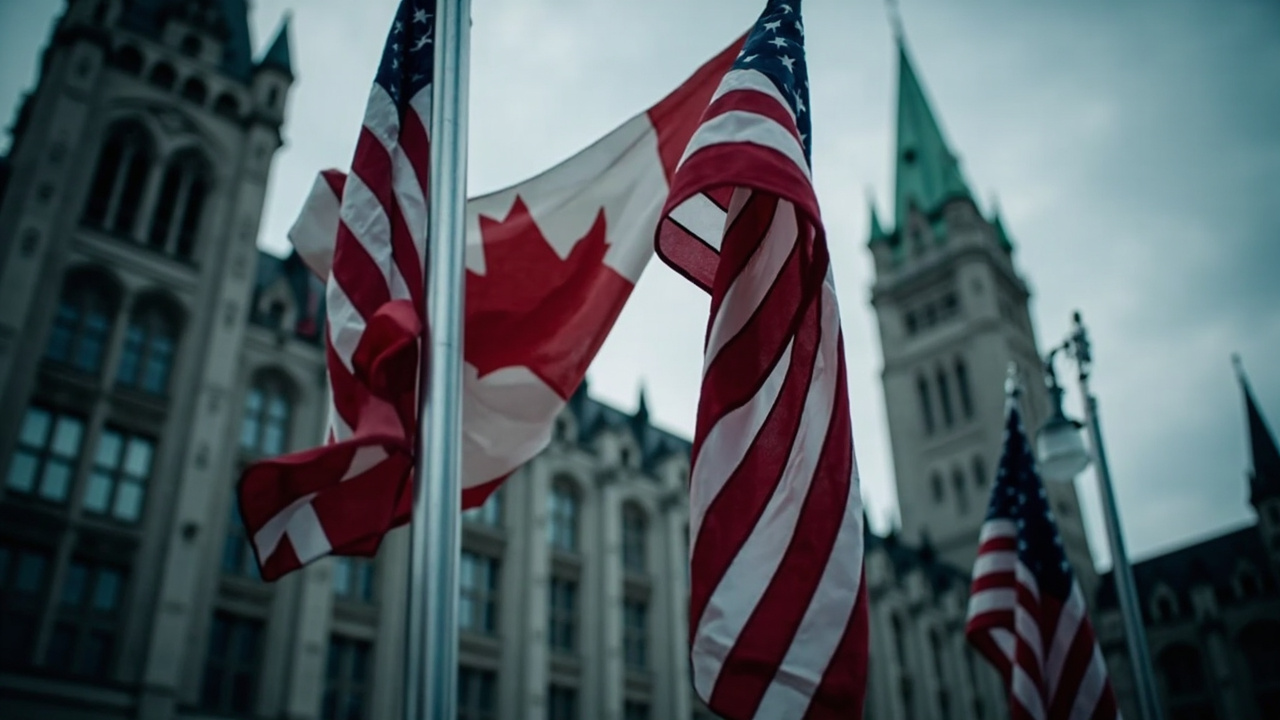
A Nation Divided but United in Resolve
Canada’s newly installed Prime Minister Mark Carney delivered a clear message to Washington on Friday: any renegotiation of the Canada-United States-Mexico Agreement will not happen on a rushed timetable dictated by the White House, and Canada will not accept terms that compromise its economic sovereignty.
Speaking from his office in Ottawa following a cabinet meeting, Carney dismissed Trump’s weekend threat to impose sweeping auto tariffs unless a deal was reached within days. The Prime Minister said Canada had already prepared counter-tariffs on US goods worth C$30 billion and was prepared to go further.
The Economics of a Trade War
The stakes could not be higher. The US exports approximately US$500 billion in goods to Canada annually, making Canada the largest foreign market for American manufacturers. For every dollar Canada sends south, it receives roughly 75 cents in US exports — a significant surplus that Trump has repeatedly weaponised in public statements.
Industry groups on both sides have urged calm. The Canadian Chamber of Commerce released modelling suggesting that a full-scale trade war could eliminate 300,000 Canadian jobs within 18 months, with mirror losses in US export-dependent states. Automakers in Michigan, Ohio and Indiana have been lobbying the White House quietly, warning that tariff escalation would be catastrophic for the American auto supply chain, which is deeply integrated with Canadian parts manufacturers.
“We are not asking for special treatment. We are asking for the rules-based trading system that has made both our economies the richest on earth to be respected. Canada will not be bullied into submission.” — Mark Carney, Prime Minister of Canada
The Political Dimension
Carney, a former governor of the Bank of England and Bank of Canada, has framed the confrontation as an existential question about Canada’s place in the world. His predecessor, Justin Trudeau, resigned in January after decade-low approval ratings, partially driven by public frustration over perceived weakness in dealing with the previous Trump administration.
Polls conducted in late April show Carney with a 12-point lead over Conservative leader Pierre Poilievre on the question of handling the US relationship, suggesting Canadians prefer his measured approach over any return to softer diplomacy.
The premiers, meanwhile, have formed a rare united front. Every provincial leader — regardless of political stripe — signed a joint letter this week affirming support for the federal government’s position. Quebec’s Premier François Legault offered a particularly pointed statement: “Canada was built by people who refused to be dictated to. That spirit is very much alive today.”
What Comes Next
The immediate trigger is Trump’s demand for a fast-track renegotiation of CUSMA’s automotive provisions, specifically rules of origin requirements that currently give Canadian manufacturers significant access to US markets. Washington wants those thresholds raised significantly — a change that Canadian auto-sector analysts say would effectively sever cross-border supply chains that took decades to build.
Carney’s counter-offer, submitted through official channels on Wednesday, proposes a joint technical review of CUSMA’s provisions over six months, with no preconditions on outcomes. The offer explicitly excludes any commitment to reduce Canadian tariffs on US dairy, a sensitive political topic in Ontario and Quebec that Carney has pledged to protect.
US trade officials are expected to respond formally early next week. In the meantime, financial markets have reacted with notable calm — the Canadian dollar has weakened modestly against the US dollar but remains within its 12-month range, suggesting investors believe neither side wants a full rupture.
The coming days will test whether Carney’s bet that economic interdependence is a stronger card than political pressure is correct. So far, at least, he has not blinked.