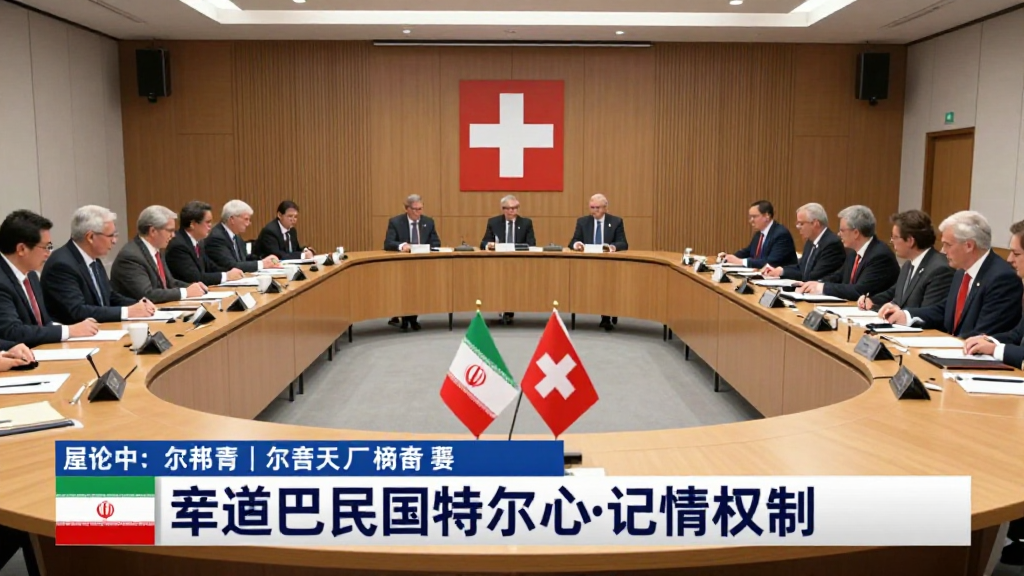
Diplomatic efforts to wind down the four-year-old US-Iran conflict entered a decisive and turbulent phase Thursday, as advance teams from Washington and Tehran arrived in Switzerland to map out a 60-day technical negotiation period after the ceremony to formalize a broader peace framework was quietly called off. The reversal, confirmed by three people briefed on the matter, underscored how far the two sides remain from a durable agreement despite months of shuttle diplomacy mediated by Qatar and Pakistan.
Senior administration officials told the Washington Post that a signing ceremony planned for June 19 at Bürgenstock was deemed “premature” after Iranian officials and the US failed to agree on the precise wording of a sanctions suspension clause. The officials said the next 60 days would be used to resolve the remaining differences before any formal ceremony is rescheduled. Iranian Foreign Minister Abbas Araghchi, speaking in Tehran before his departure for Geneva, offered a more cautious assessment. “We have made progress, but the distance between us and the Americans on several key points is still considerable,” he said. “The next two months will determine whether this process ends in a real peace or another false dawn.”
Diplomatic Pivot to Technical Talks
The cancellation of the Swiss ceremony marks the second time a major diplomatic milestone has been postponed in less than a month, reflecting the fragility of the behind-the-scenes negotiations. US special envoy Steve Witkoff, who has led the American delegation alongside Qatar’s foreign minister, acknowledged the setback in a brief statement released to reporters in Doha. “The process is ongoing,” he said. “We will regroup, return to the table, and work through the remaining issues with our Iranian counterparts in the weeks ahead.”
According to a joint readout issued by the Qatari and Pakistani foreign ministries, the technical talks will focus on four core issues: the sequencing of sanctions relief, the scope of Iran’s civilian nuclear programme under IAEA monitoring, the future status of the Revolutionary Guard Corps, and the mechanism for verifying the destruction of advanced centrifuge infrastructure. A senior Pakistani official close to the mediation effort told the Financial Times that the most contentious issue remains the sanctions sequence. “The Americans want a full accounting of centrifuge destruction before any primary sanctions are lifted,” the official said. “Iran wants a phased approach with early relief as a goodwill gesture.”
Lebanon Ceasefire Under Strain
Compounding the diplomatic complexity, a fragile ceasefire governing Israel’s border with Hezbollah in Lebanon came under fresh pressure Thursday after the Israeli military said it had intercepted a drone launched from Lebanese territory. The Israel Defense Forces said the drone was shot down over the Galilee and that it held Hezbollah responsible for the violation. Lebanese army commanders, who have been coordinating with a US-established deconfliction cell as part of the ceasefire framework, confirmed they had opened an investigation. The incident follows two previous ceasefire violations in the past ten days that drew informal warnings from Washington to both parties.
Diplomatic sources in Beirut told the Associated Press that the ceasefire architecture remains intact but that both sides are probing for weaknesses. “This is not a breakdown,” a senior Lebanese official said. “It is a stress test, and right now the structure is holding, but only just.” The US state department issued a statement calling on all parties to respect the ceasefire terms and to route any complaints through the established deconfliction channels. European allies, who helped broker the original November 2025 ceasefire agreement, have privately warned Washington that a collapse in Lebanon would undermine the broader regional diplomatic momentum.
What Comes Next
US and Iranian technical teams are expected to convene in Geneva starting Monday for the first formal round of negotiations under the new 60-day framework. US officials said they anticipate three to four rounds of talks before any agreement can be presented to both governments for final approval. President Trump, speaking at a campaign rally in the western United States on Thursday, struck an optimistic note, saying he believed a deal was “very close” and that his administration had accomplished more in six months on the Iran file than “any president in history.” The president’s comments drew a sharp response from Iranian parliament speaker Mohammad Bagher Ghalibaf, who told state media that such claims were “unhelpful and premature.”
International oil markets, which have been closely watching the negotiations given the strategic importance of the Strait of Hormuz, showed limited reaction to the latest developments. Brent crude edged up 0.3 percent in early Asian trading Friday, as analysts said investors remained focused on whether the 60-day technical talks produce a credible roadmap rather than on diplomatic ceremony. The next major deadline to watch is a July 15 meeting of the UN nuclear watchdog’s board of governors, where the IAEA’s latest assessment of Iran’s enrichment activities will be formally presented. That report is expected to be a pivotal data point in determining whether the technical negotiations can stay on track.