Introduction: The End of Efficient Global Supply Chains
Global value chains have entered an era of structural volatility that is forcing a fundamental rethink of how companies and governments approach production, investment, and trade. For more than three decades, businesses built supply chains around efficiency and cost minimization, shipping components across borders to take advantage of cheap labor and specialized expertise wherever it could be found. That model is now being dismantled by a collision of forces: geopolitical rivalry between the United States and China, the pandemic disruptions that exposed the fragility of just-in-time manufacturing, the accelerating energy transition, and a surge in industrial policy that has governments actively subsidizing domestic production. The result is a rewiring of global commerce that is creating winners and losers across every continent, reshaping inflation dynamics, and complicating the outlook for interest rates and growth worldwide.
For most of the 2010s, global supply chains expanded steadily as companies chased lower costs and new markets. The COVID-19 pandemic briefly interrupted that trajectory, but the deeper break came from geopolitics. The escalation of U.S.-China trade tensions and the imposition of broad tariff regimes on both sides have shuffled more than $400 billion in global trade flows, according to the World Economic Forum. That is not a temporary disruption: it represents a structural reorientation of where goods are made, shipped, and sold that is likely to persist for years.
Key Drivers and Trends Reshaping Global Trade
Three interlocking forces are driving the transformation of global supply chains in 2026. First, the proliferation of trade and industrial policy interventions has reached a scale without modern precedent. In 2025 alone, more than 3,000 new trade and industrial policy measures were introduced globally, according to the WEF report — more than three times the annual level recorded a decade ago. Governments are no longer content to let markets determine where production happens. They are actively using subsidies, tariffs, and regulatory barriers to reshore manufacturing, secure strategic industries, and build domestic resilience, regardless of the cost to consumers or the efficiency losses that come from duplicating global supply chains in dozens of separate national silos.
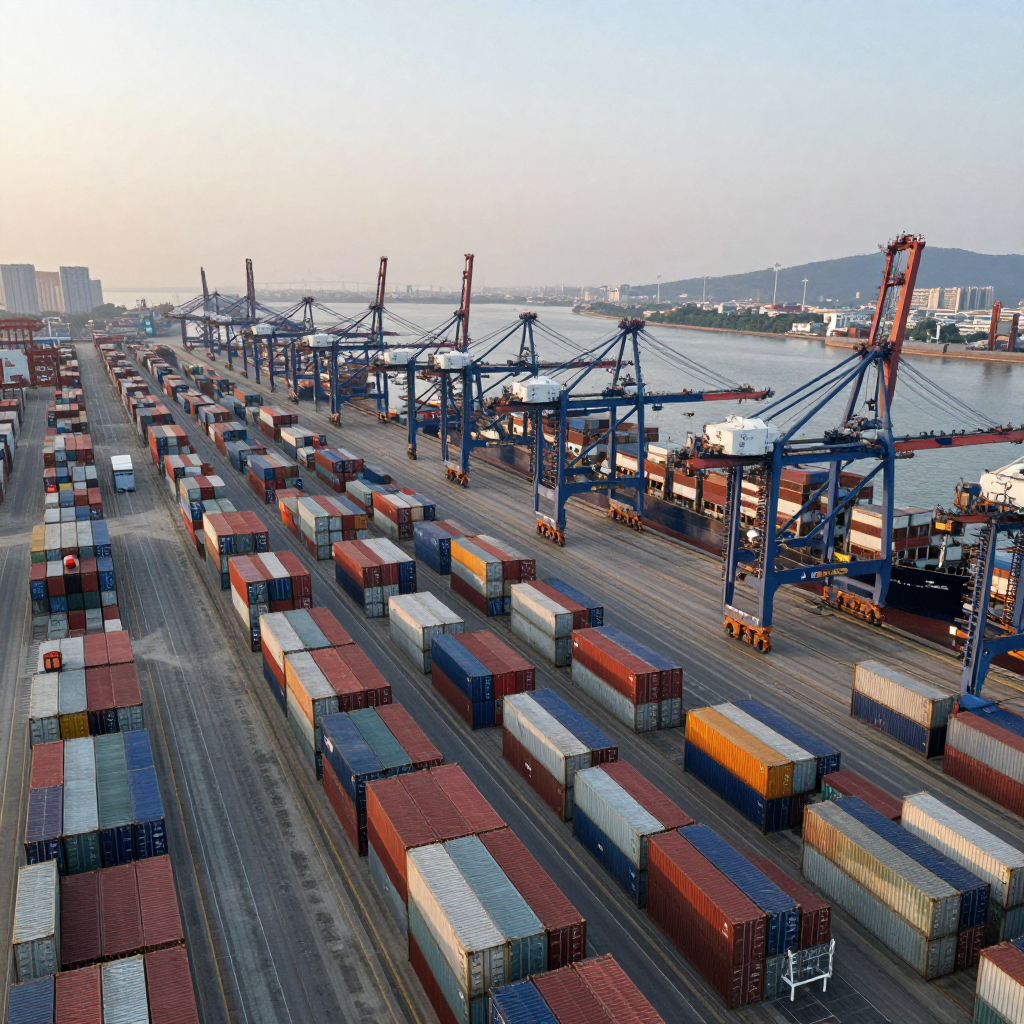
Second, the physical movement of goods has become significantly more expensive and less reliable. Container shipping costs surged 40 percent year on year in 2025 as disruptions across major shipping routes compounded existing capacity constraints. The blockage of the Strait of Hormuz added a geopolitical premium to energy prices that rippled through manufacturing input costs worldwide. These are not isolated shocks but symptoms of a system under structural stress, where the smooth logistics that underpinned decades of globalization can no longer be taken for granted.
Third, manufacturing output across advanced economies is growing at its weakest pace since 2009, reflecting both the retreat from global integration and the capital intensity of the green transition. Building a semiconductor fab or a battery gigafactory takes years and tens of billions of dollars, and the industries that are growing fastest are capital-light in ways that do not replicate the employment or spillover effects of traditional export-oriented manufacturing.
Expert Analysis and Institutional Findings
The World Economic Forum report, Global Value Chains Outlook 2026, draws on consultations with more than 100 leaders from industry, government, and academia, alongside survey data from over 300 senior executives. Its central finding is stark: nearly three in four business leaders now prioritize resilience investments over cost minimization. “Volatility is no longer a temporary disruption; it is a structural condition leaders must plan for,” said Kiva Allgood, Managing Director at the World Economic Forum. “Competitive advantage now comes from foresight, optionality and ecosystem coordination. Companies and countries that build these capabilities together will be best positioned to attract investment, secure supply and sustain growth in an increasingly fragmented global economy.” That shift in corporate mindset is translating into concrete capital allocation decisions: reshoring, friend-shoring to politically reliable trading partners, and building redundant supplier relationships that deliberately accept higher unit costs in exchange for continuity of supply.
The World Bank January 2026 Global Economic Prospects report reinforces the message from a macroeconomic angle. Global growth is projected to ease to 2.6 percent in 2026 before rising to 2.7 percent in 2027, an upward revision from June forecasts, but the composition of that growth is changing. Yet the report warns that if these forecasts hold, the 2020s are on track to be the weakest decade for global growth since the 1960s, and at the end of 2025 nearly one in four developing economies had lower per capita incomes than they did in 2019. “With each passing year, the global economy has become less capable of generating growth and seemingly more resilient to policy uncertainty,” said Indermit Gill, the World Bank Group Chief Economist. “Economic dynamism and resilience cannot diverge for long without fracturing public finance and credit markets.”
Outlook and Conclusion
The implications of this supply chain restructuring extend well beyond trade statistics. Companies that have spent years optimizing inventory and reducing headcounts in logistics are now being forced to rebuild buffer stocks, diversify suppliers, and accept higher operating costs as the price of resilience. For central banks, the shift complicates the inflation outlook: supply chain bottlenecks have proven to be a persistent source of price pressure that interest rate hikes cannot easily address, since the problem is not too much demand but too little reliable supply. For emerging market economies, the picture is particularly sobering. Developing economies face a narrowing window to attract the investment that could lift living standards, as the capital that once flowed to low-cost manufacturing hubs is increasingly redirected toward politically aligned supply chains in advanced economies.
Per Kristian Hong, a partner at the consulting firm Kearney, captured the new operating reality with precision. “Supply chain disruption in 2026 will be constant and structural,” Hong said. “For supply leaders, the priority is no longer forecasting disruption, but redesigning operating models to function under permanent uncertainty.” That is the defining economic challenge of this decade: not managing a return to the stable, low-inflation, highly integrated global economy of the 2010s, but building institutions and strategies that can thrive in one that is more fragmented, more volatile, and more political by design.