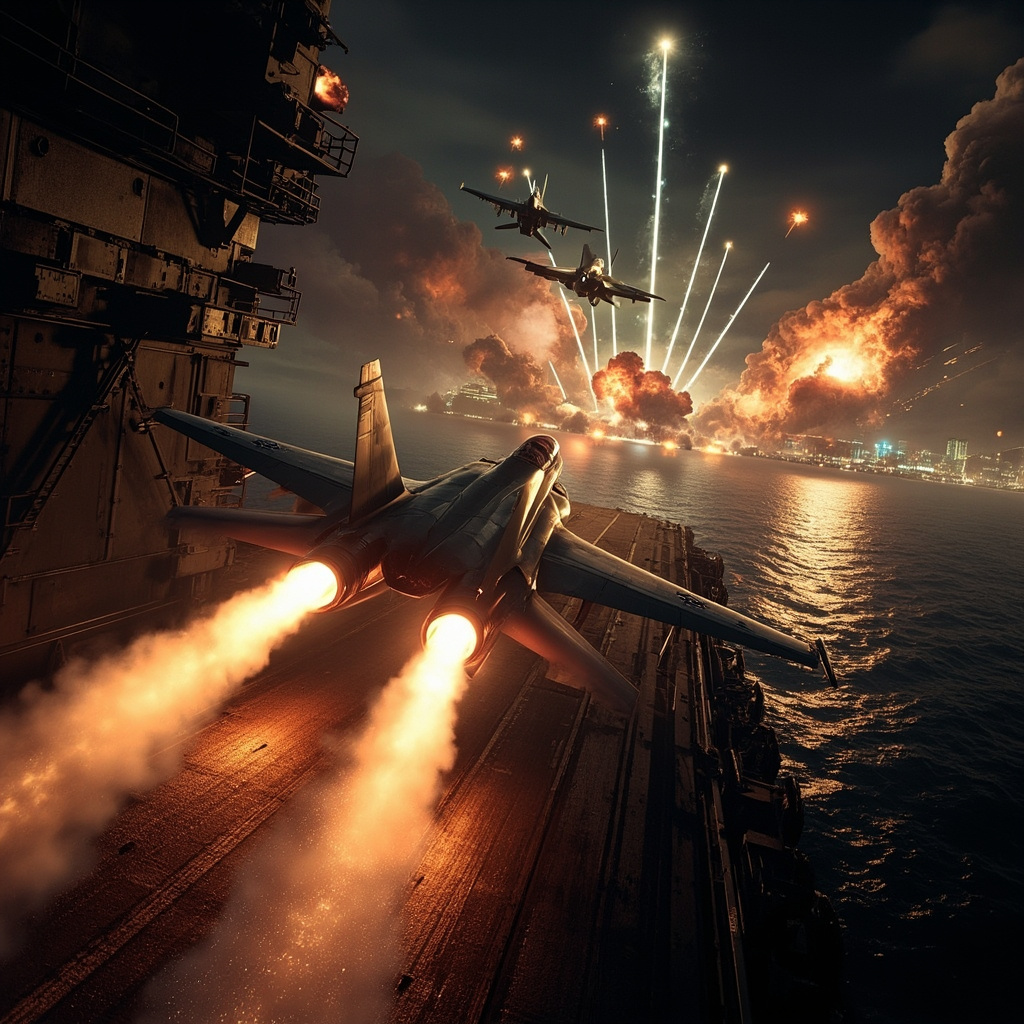
President Donald Trump ordered U.S. military strikes Friday against Iranian military targets near the Strait of Hormuz, a direct response to Tehran’s drone attack on a commercial cargo vessel that Washington said violated a fragile ceasefire agreement. U.S. Central Command confirmed that aircraft struck Iranian missile and drone storage locations and coastal radar sites, marking the most significant U.S. military action against Iran since the two sides declared an end to hostilities last week.
US Military Launches Precision Strikes Against Iranian Targets
The strikes, codenamed Operation Epic Fury, were authorized after an Iranian drone struck a commercial cargo ship near the Strait of Hormuz on Thursday, the Pentagon said. U.S. Central Command said the operation targeted infrastructure used to launch the drones and missiles that threatened international shipping in one of the world’s most critical oil shipping lanes. “US aircraft struck Iranian missile and drone storage locations and coastal radar sites,” CENTCOM said in a statement. “The unwarranted aggression against commercial shipping by Iranian forces clearly violated the ceasefire.” CENTCOM released video of the strikes Friday night showing explosions at what it described as an Iranian military facility.
The Pentagon said no U.S. personnel were harmed. Iran immediately threatened retaliation. The Islamic Revolutionary Guard Corps said it targeted U.S. military positions in the region, though U.S. officials had not confirmed those strikes as of Saturday morning. Vice President JD Vance, who helped negotiate the original ceasefire agreement with Iran, posted a stark warning on social media Friday evening: “Iran signed a ceasefire agreement. We have honored it. If they have disagreements about how the MOU is being applied, they can pick up the phone. But violence will be met with violence.”
Regional Tensions Escalate Across the Persian Gulf
The situation deteriorated rapidly across the Persian Gulf on Saturday. Bahrain’s Foreign Affairs Ministry condemned what it called Iranian drone attacks on its territory early that morning, calling them “a flagrant violation of Bahrain’s sovereignty.” The target of the Bahrain strikes was not immediately clear, and Tehran did not comment. Meanwhile, the United Kingdom Maritime Trade Operations agency reported that a tanker in the Strait of Hormuz was struck by an “unidentified projectile” on Saturday, sustaining damage though all crew members escaped injury.
The Joint Maritime Information Center, overseen by the U.S. Navy, raised the threat level in the strait to “substantial” following the attacks on merchant vessels. President Trump, speaking to reporters in the Oval Office on Friday, called the Iranian drone strike on the cargo ship a “foolish violation” of the ceasefire but offered no clear indication whether the episode would spiral into broader hostilities. “You’ll find out,” Trump told reporters when asked what consequences Iran would face. The president had previously declared a ceasefire with Iran last week following months of escalating tensions and military exchanges.
Fragile Ceasefire Undermined as Global Shipping Routes Jeopardized
The strikes represent a serious setback to efforts by Secretary of State Marco Rubio and Vice President Vance to broker a lasting halt to U.S.-Iranian hostilities. The ceasefire, announced just days earlier, had opened a narrow diplomatic window after a period in which both sides exchanged significant military strikes. Iran has defended its actions, with state media quoting officials who insisted Tehran retains the right to control shipping through what it considers its territorial waters. The Strait of Hormuz handles roughly one-fifth of the world’s oil consumption, making any sustained disruption a matter of global economic concern.
The U.S.-Iran ceasefire was itself fragile from the outset, with hardliners in Tehran and Washington both questioning the terms. Regional allies of the United States, including Bahrain, which hosts the U.S. Navy’s Fifth Fleet, have grown increasingly alarmed as Iranian drones have targeted not just military assets but civilian shipping in recent days. The strikes raise fresh questions about whether the ceasefire can hold and whether the two sides are sliding back toward open conflict.
What happens next will depend on Iran’s response. The IRGC’s statement suggesting retaliation has not yet been matched by confirmed strikes, and U.S. officials said Saturday they were monitoring the situation closely. The State Department said it remains open to diplomacy but made clear that further Iranian attacks would be met with additional military force. International oil markets are watching closely; even a modest disruption to tanker traffic through the Strait of Hormuz could push crude prices sharply higher in the coming days.