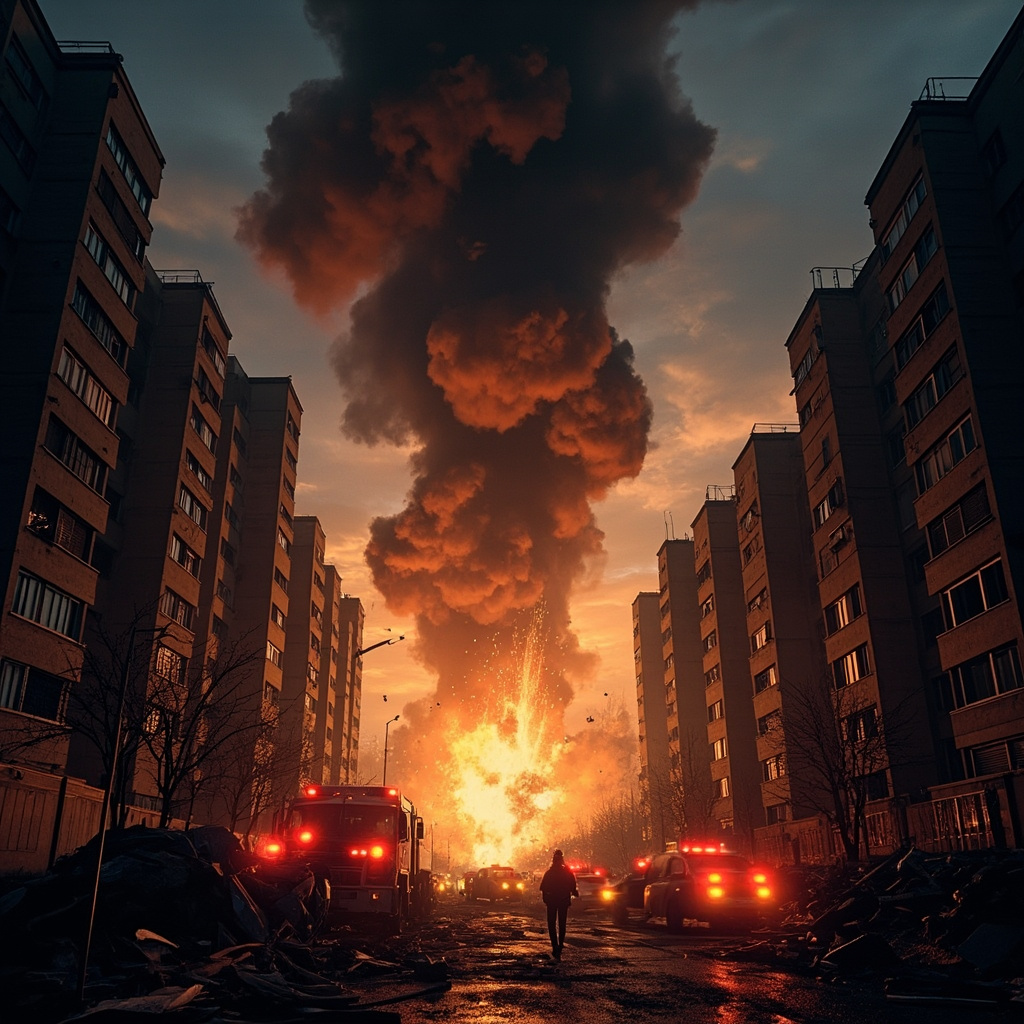
Russian forces struck the Ukrainian capital of Kyiv with ballistic missiles on Sunday morning, June 28, forcing residents into shelters as explosions echoed across the city. The attack came as cross-border strikes on both sides of the conflict intensified, marking day 1,585 of the full-scale invasion and the deadliest single exchange of civilian casualties in weeks. Ukraine’s air raid alerts sounded across the capital in the early hours, and residents reported multiple explosions in central and eastern districts.
Ballistic Missiles Hit Kyiv, Mayor Warns Residents to Shelter
A Russian ballistic missile attack on Kyiv early Sunday wounded at least two people, the city’s administration confirmed, hours after it had warned residents to take cover. Mayor Vitali Klitschko issued an urgent appeal on the Telegram messaging app: “Air defence forces are operating in the capital. Remain in shelters!” Tymur Tkachenko, head of the Kyiv city military administration, later confirmed the casualty toll. “As of now, the number of wounded in the overnight attack has risen to two,” Tkachenko wrote on Telegram. Several fires broke out in the Darnytsky district as a direct result of the strikes, officials said. Kyiv’s metro system continued operating throughout the morning, with stations serving as underground shelters for residents who chose not to return home.
Civilian Deaths Reported on Both Sides of the Border
The attack follows a grim night of civilian casualties across the Russia-Ukraine front line. Russian strikes in Dnipropetrovsk, in central-eastern Ukraine, and the northern Sumy region killed two people, Ukrainian regional authorities said. More than 40 drone strikes and artillery rounds also targeted Nikopol, a city on the opposite bank of the Dnipro River from the Russian-occupied Zaporizhzhia nuclear power plant — a facility that has repeatedly drawn international concern over its proximity to active combat. The town’s governor, Oleksandr Hanzha, confirmed one person was killed and one injured in those attacks.
In the Russian border region of Bryansk, a Ukrainian drone strike on Saturday killed two people in their car in a village near the border, the region’s acting governor, Yegor Kovalchuk, said on Telegram. Ukraine separately launched attacks targeting Volgograd and Belgorod in Russia’s southwest, and Horlivka in the Moscow-controlled Donetsk region. Three people were killed in those attacks, regional authorities confirmed. A “massive” Ukrainian drone strike also hit the Krasnodar region in southern Russia, killing one person, wounding another, and causing a fire at an oil refinery, regional governor Veniamin Kondratyev said. “Krasnodar region came under a massive enemy drone attack… Sadly, one person was killed,” Kondratyev wrote on Telegram, adding that a power line and gas pipeline were also damaged. Russia’s defence ministry said 124 Ukrainian drones had been intercepted over Russian territory during a 12-hour window from 8 a.m. to 8 p.m. Saturday.
Diplomatic Moves Amid Escalation
Serbian President Aleksandar Vucic announced Saturday he would resign within weeks and called early presidential and parliamentary elections, following 18 months of anti-government protests over corruption and media censorship. The announcement carries implications beyond Belgrade: Serbia, an EU candidate country, faces sustained Western pressure to align with EU sanctions on Russia — a step Belgrade has so far declined to take. Meanwhile, Russian President Vladimir Putin and Belarusian President Alexander Lukashenko met Friday at Putin’s Valdai residence in northwestern Russia. The Kremlin said discussions focused on trade, economic cooperation, and regional security, a meeting that follows a Ukrainian warning to Lukashenko to remove Belarusian equipment used in strikes on Ukraine.
What Happens Next
The surge in strikes on both sides sharpens questions about the trajectory of a conflict that has shown no sign of resolution. Ukrainian President Volodymyr Zelenskyy is expected to press Western allies for accelerated weapons deliveries as Kyiv sustains near-daily Russian strikes on population centres. The UN Security Council and G7 nations are under mounting pressure to respond, though both bodies have been largely paralysed on Ukraine-related resolutions since Russia’s 2022 invasion. Whether the escalating cross-border drone campaign changes the calculus for renewed ceasefire negotiations — an outcome both sides have so far rejected — remains the central open question heading into the coming week.