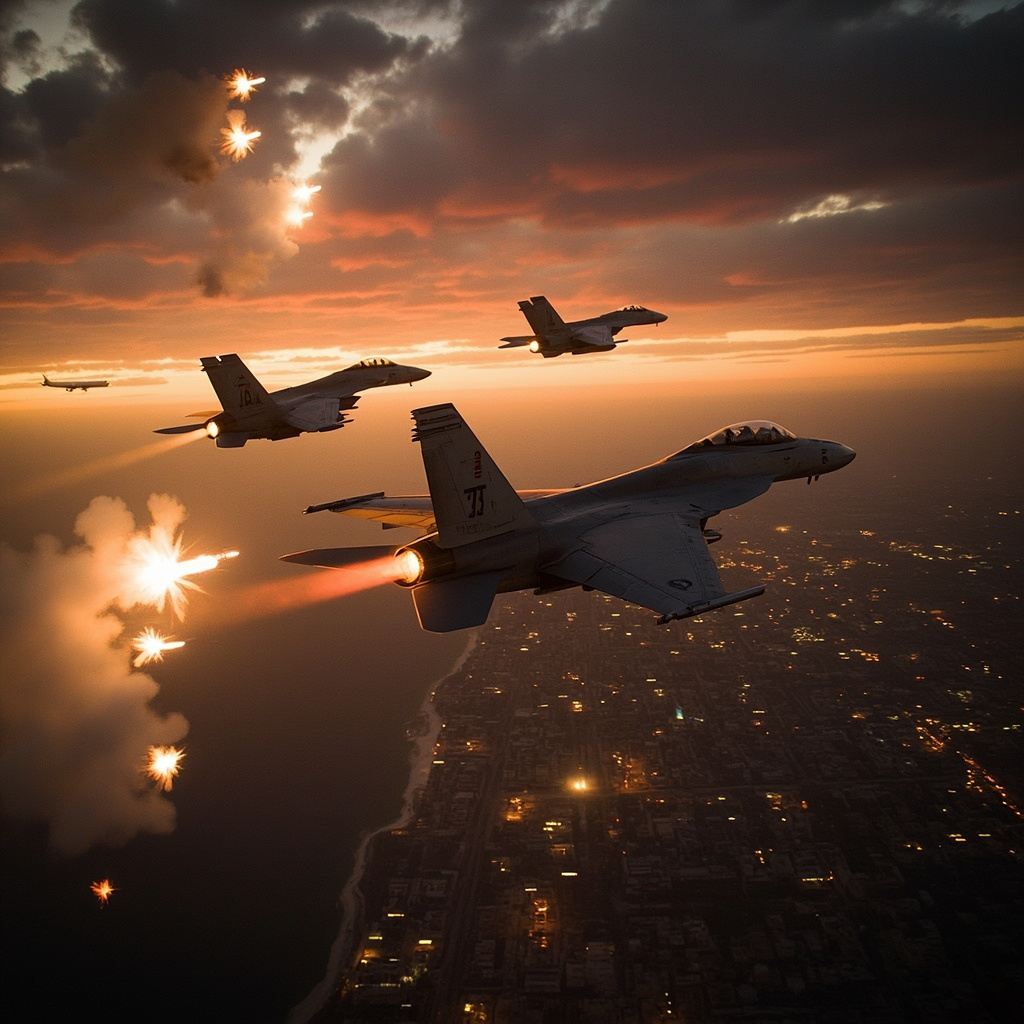
American officials said Monday that every Iranian missile and drone launched against Kuwait and Bahrain over the weekend was either shot down, intercepted mid-flight, or failed to reach its intended target — a clean miss that leaves Tehran’s latest show of force without a single confirmed casualty on the American side.
The disclosure came hours after Iran acknowledged carrying out the attacks and claimed sole responsibility for restoring freedom of navigation in the Strait of Hormuz, in what analysts described as a face-saving narrative pivot following the failed salvo.
Iran Admits Strikes on Gulf Allies
Iran’s Islamic Revolutionary Guard Corps announced Sunday that its naval and aerospace forces had launched a joint missile and drone operation targeting American military infrastructure in Kuwait and Bahrain. The strikes were framed by Tehran as retaliation for what it described as a fourth consecutive day of American bombardment of Iranian military installations — itself a response to Iran’s alleged violation of a 60-day interim ceasefire agreement.
The attack marked a significant escalation in the four-month conflict between the United States and Iran, which began when President Donald Trump launched what he called “major combat operations” against Tehran on February 28. The ceasefire announced on April 7 collapsed last week after both sides accused each other of breaches related to Hormuz shipping and sanctions relief.
All Projectiles Intercepted or Failed, US Says
A senior Trump administration official told ABC News that all Iranian projectiles launched at the two Gulf states were neutralised before causing harm. “All drones and missiles launched by Iran at Kuwait and Bahrain were shot down, intercepted, or failed to reach their intended targets,” the official said. “There were no U.S. injuries or impacts to American locations.”
The official stressed that Iran’s assault had failed in its entirety. Bahrain’s civil defence and rescue personnel had responded to a residential building in Muharraq struck by a downed Iranian drone, according to the Bahraini Interior Ministry, but no deaths or serious injuries were reported.
The failed strikes stand in sharp contrast to Iran’s opening salvos in the conflict, which killed 13 American soldiers in early exchanges and sparked the direct U.S. combat operations. Military analysts said the interception rate reflected both the hardened air defence architecture the United States has built across Gulf bases over decades and the strain on Iran’s own weapons inventory after four months of sustained combat.
Tehran Claims Victory in Hormuz Dispute
Despite the failed attacks, Iranian state media carried a statement from the IRGC Aerospace Force asserting that Iran bore “sole responsibility” for restoring safe passage of commercial vessels through the Strait of Hormuz. The claim appeared designed to counter American narratives that U.S. naval operations had secured the waterway and to present Iran as a stabilising force rather than a disruptor.
The Pentagon has rejected that framing. U.S. Central Command said its strikes launched “in direct response to continued Iranian aggression against commercial shipping” would continue as long as threats to the waterway persisted. The Strait of Hormuz carries roughly 20 percent of the world’s oil shipments daily.
The failed Iranian strikes came as technical talks between Washington and Tehran, mediated through deconfliction channels, remained nominally active. A senior administration official told ABC News that discussions on implementing the memorandum of understanding were still planned for the coming days. “Nothing has been cancelled,” the official said, though both sides acknowledged that direct negotiations had been suspended following the exchange of strikes.
What Happens Next
Both Washington and Tehran face mounting pressure to prevent the Hormuz dispute from spiralling into a wider regional conflict. Kuwait has summoned the Iranian charge d’affaires to protest the strikes, and Bahrain’s government issued a formal condemnation. Qatar, which had hosted earlier rounds of indirect talks, said one of its citizens was killed by shrapnel from nearby military operations.
The next round of technical talks is expected to take place in Doha on Tuesday, according to Axios, which cited a senior U.S. official. Whether those talks can produce a durable agreement on Hormuz oversight and sanctions relief — the two central sticking points in the interim deal — remains deeply uncertain as both sides appear unwilling to accept verifiable limits on their military posture.
Trump told reporters at the White House on Sunday that Iran had demonstrated it was “not serious” about peace, adding that further violations would bring consequences “the world has never seen.” He did not specify what military options his administration was considering.
Fuel prices, which surged nearly 50 pence per litre in the UK following the initial outbreak of hostilities in February, have stabilised in recent days but remain near historic highs as traders watch the Hormuz situation closely. Any sustained disruption to the waterway would immediately reverse that stabilisation.