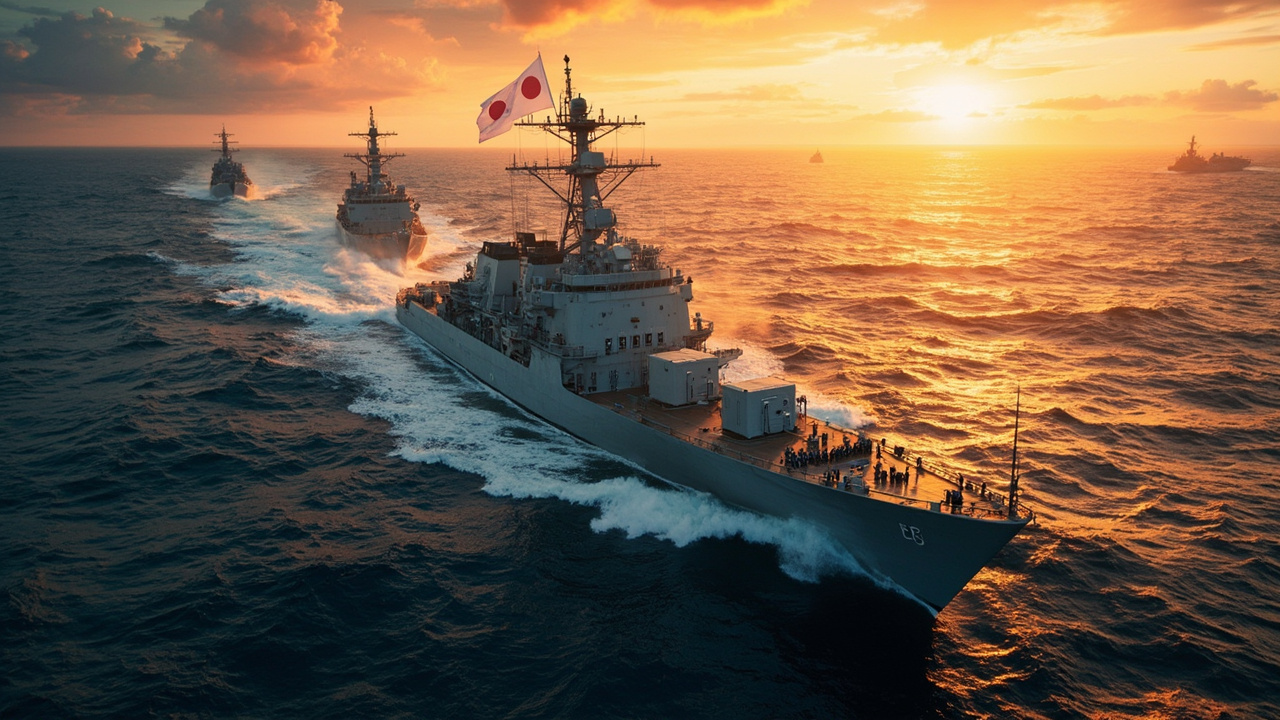
SEOUL, South Korea — South Korea and Japan have resumed their joint maritime search-and-rescue exercises for the first time in nine years, marking a significant thaw in bilateral relations that had long been strained by historical grievances and military disputes. The drills, known as SAREX, took place in international waters southeast of Jeju Island on June 7, 2026.
The South Korean navy deployed the 4,900-ton landing ship ROKS Cheon Ja Bong, while Japan contributed the 7,250-ton Aegis-equipped destroyer Kongo and a maritime patrol helicopter to the exercises. The training included the rescue of a distressed vessel, shipboard firefighting, emergency medical treatment, and coordinated helicopter operations between the two naval forces.
A Decade of Diplomatic Silence Ends
The biennial SAREX exercises began in 1999 to improve coordination between the neighboring countries during at-sea incidents near the Korean Peninsula. The drills were suspended after 2017 as relations deteriorated sharply over historical disputes stemming from Japan’s 1910-1945 colonization of Korea, a series of military disagreements, and lingering wartime grievances that have never fully healed.
Sunday’s announcement from the South Korean navy on May 30 confirmed that the Japan Maritime Self-Defense Force would participate in the exercise, representing the first such engagement in nearly a decade. The resumption signals a concerted diplomatic effort by both nations to rebuild trust and enhance regional security cooperation amid growing geopolitical pressures in the Indo-Pacific.
Broader Regional Implications
The timing of the exercises is notable. Both South Korea and Japan have been deepening their security ties with the United States as regional threats from North Korea’s nuclear and missile programs continue to grow. The exercises also come as China maintains an increasingly assertive military posture in the East China Sea and South China Sea, prompting Washington and its allies to strengthen their strategic coordination.
“This is a concrete step forward for security cooperation among our three countries,” said a South Korean defense ministry official who spoke on background. “The ability to work seamlessly with Japan’s maritime forces strengthens our overall deterrent posture.”
Japan’s participation was also framed as a signal of its broader commitment to regional stability. Japanese Prime Minister Fumio Kishida’s government has sought to expand Tokyo’s security footprint beyond its post-war self-defense-only posture, a shift that has been welcomed in Seoul and Washington but watched cautiously in Beijing.
Historical Baggage Remains
Despite the breakthrough, analysts caution that the wounds of history are far from healed. Public opinion in South Korea remains deeply divided over Japan’s wartime actions, and protests over historical issues have erupted repeatedly over the years, particularly when new details emerge about forced labor during the colonial period or comfort women systems. Any perception in Tokyo that Seoul is using history as leverage could quickly reverse the current momentum.
The exercises were described by both governments as purely humanitarian and non-combat in nature, but their symbolic weight extends far beyond search-and-rescue protocols. They represent the kind of military-to-military dialogue that diplomats say is essential for preventing miscalculation in a region where naval incidents between Japan, South Korea, and China have grown more frequent in recent years.
Looking ahead, both sides have signaled openness to expanding the scope of future exercises, potentially to include additional vessels and more complex scenarios. Whether that momentum can be sustained will depend on whether political leaders in both capitals can manage domestic pressures while pursuing a pragmatism-first approach to shared security challenges in the region.