Supreme Court Strikes Down Coordinated Spending Limits, Unlocking Unlimited Party-Candidate Funds
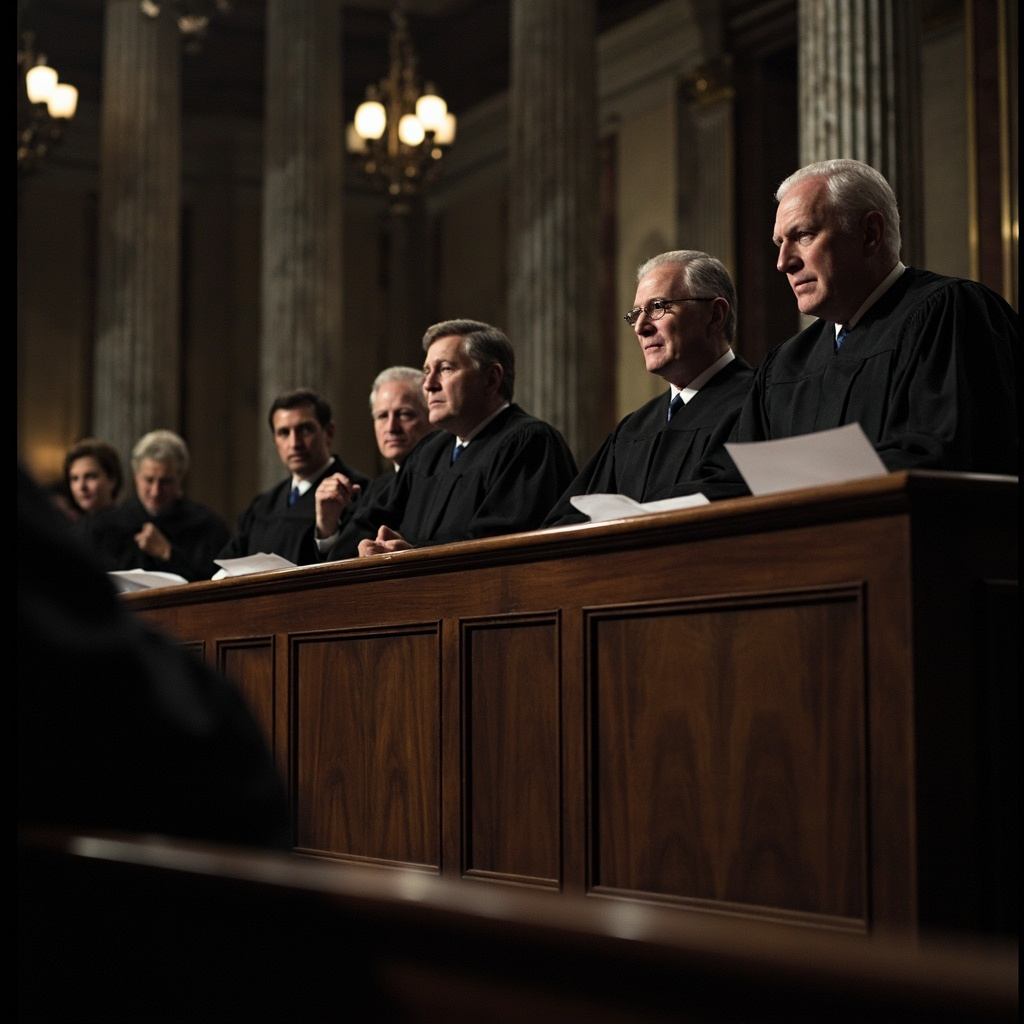
The Supreme Court struck down the last major legal barrier restricting political parties from spending unlimited coordinated funds in support of their candidates on Tuesday, delivering a landmark 6-3 ideological split ruling that reshapes the American campaign finance landscape in the final days of its most consequential term in recent memory.
The justices, in National Republican Senatorial Committee v. Federal Election Commission, ruled 6-3 that provisions of the Federal Election Campaign Act passed in the wake of Watergate unconstitutionally restricted how much political parties could spend in coordination with their candidates. Justice Brett Kavanaugh wrote the majority opinion, finding that the restrictions violated political parties’ First Amendment rights to free speech and political association.
A Decades-Old Restriction Falls
At the center of the case was a post-Watergate law passed in 1974 that capped how much money individuals could give to political parties and how much parties could spend coordinating with their candidates. The law was designed to prevent wealthy donors from using political parties as conduits to funnel unlimited contributions to federal candidates while technically remaining within the letter of contribution limits.
Former Vice President JD Vance, who was a Republican congressman from Ohio at the time the lawsuit was filed, led the challenge alongside the National Republican Senatorial Committee and the National Republican Congressional Committee. The groups argued that the restrictions placed an unconstitutional burden on parties’ First Amendment rights to raise and spend money in support of their preferred candidates. The Trump Justice Department backed the challenge, arguing there was no evidence the law had prevented corruption.
“Whether the Democratic Party, the Republican Party or other parties, all political parties and candidates going forward can compete equally under the same rules regarding coordinated expenditures and can structure their fund-raising, spending and political speech on a level playing field as they see fit within the law,” Kavanaugh wrote in the majority opinion.
Kagan’s Dissent: Parties as ‘Checking Accounts’
Justice Elena Kagan wrote a scathing dissent, warning the ruling would fundamentally transform American elections. “With no limits on coordinated expenditures, the party can serve as the candidate’s checking account,” she wrote. “The potential for actual or apparent corruption is obvious.” Kagan noted that the ruling overturns a 2001 Supreme Court precedent and represents the culmination of a decade-long campaign to dismantle campaign finance regulations, warning it would create “a legal regime increasingly unable to stop political corruption, and thus to preserve our institutions’ democratic legitimacy.”
The practical implications are staggering. Unlike political action committees and Super PACs — which have no spending limits but cannot legally coordinate with candidates — parties will now be able to both raise and spend unlimited sums in direct coordination with their nominees. Critics warn this effectively eliminates the distinction between a candidate’s campaign and the party apparatus supporting it.
Former President Donald Trump, whose administration backed the challenge, celebrated the ruling. “A BIG WIN FOR REPUBLICANS and, more importantly, The First Amendment!” Trump wrote in a post on Truth Social. The decision is expected to benefit Republican candidates heading into the 2026 midterm elections, as both major parties had sought the ruling but Republicans brought the case.
The ruling is the latest in a series of decisions dismantling campaign finance restrictions, following Citizens United v. FEC in 2010, McCutcheon v. FEC in 2014, and a series of smaller rulings that progressively loosened restrictions on political spending. In each case, the court’s six conservative justices formed the majority against its three liberal members.
Democrats who intervened in the case to defend the restrictions argued they were essential to preventing quid pro quo corruption, warning that authorizing unlimited coordinated expenditures would “fundamentally reshape the campaign finance regime.” Campaign finance reformers say the ruling effectively legalizes a return to the era of “soft money” that existed before the Bipartisan Campaign Reform Act of 2002, and called on Congress to respond with legislation to close the loophole — though such a bill would almost certainly face a presidential veto.
The ruling comes as both parties are already adapting to a political environment transformed by decades of loosened restrictions, and as the 2026 midterm election cycle intensifies across the country. Legal experts say the decision will face immediate challenges in lower courts as the FEC and Congress scramble to implement new rules governing coordinated spending.