House Conservatives Rebuke Johnson, Block NDAA Over SAVE Act Standoff as Trump Eyes Congressional Birthright Fix
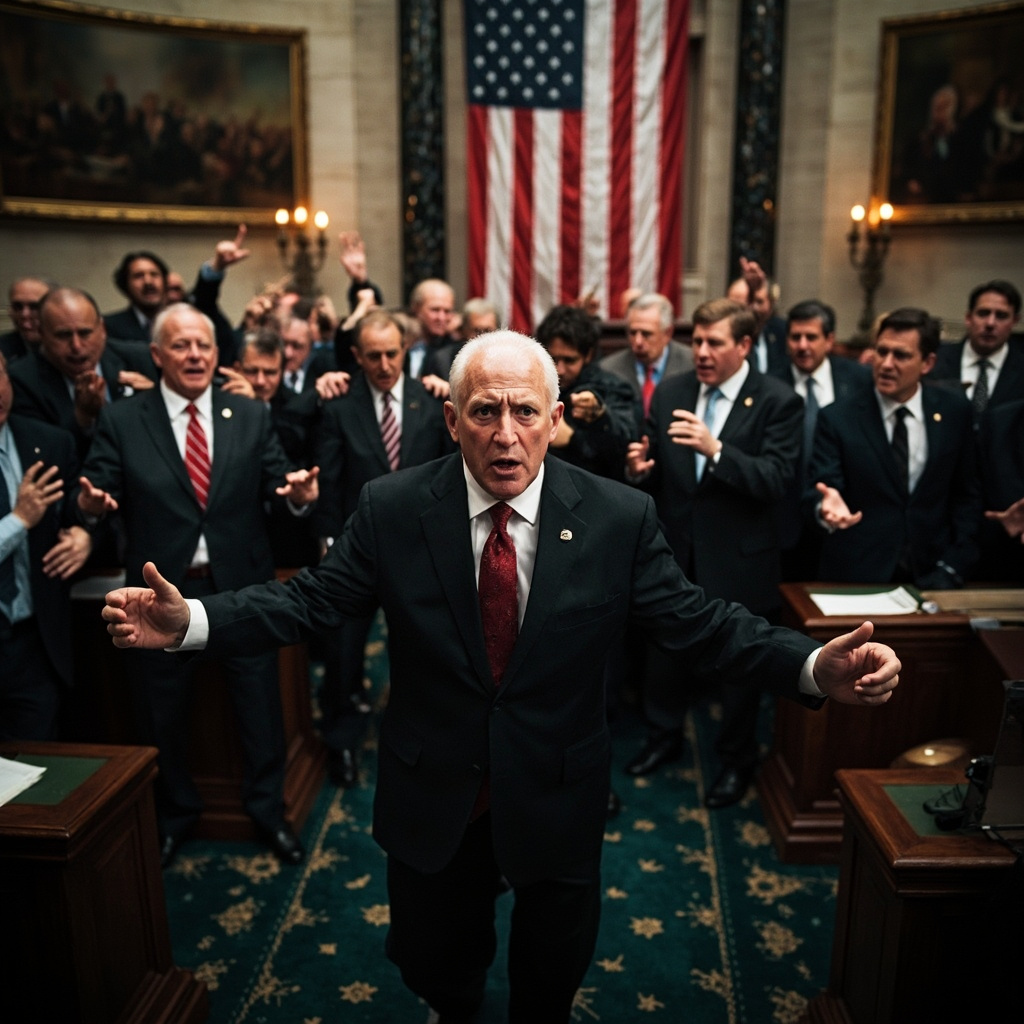
The House of Representatives fell into familiar chaos Tuesday as conservative hardliners blocked a procedural rule that would have advanced the annual defense authorization bill, dealing a sharp rebuke to Speaker Mike Johnson and leaving the chamber unable to move the National Defense Authorization Act before week's end. The chamber voted 198-224 to reject the rule, with 14 Republicans breaking ranks alongside Democrats over objections tied to the SAVE America Act — a priority backed by the Trump administration that has become a flashpoint in the party's ongoing internal war over election security and federal spending.
Fourteen Republicans Defect as SAVE Act Becomes the Breaking Point
The procedural vote was supposed to be routine — a rule setting terms for floor debate on the NDAA and a package of other bills. Instead, it became a referendum on the SAVE America Act, which would require proof of citizenship to register to vote in federal elections. Opponents argued the SAVE Act was improperly bundled with defense priorities, while others objected to a pension provision said to harm rural constituents.
GOP Reps. Tim Burchett of Tennessee, Eric Burlison of Missouri, Eli Crane of Arizona, Randy Fine of Florida, Andy Harris of Maryland, and Ralph Norman of South Carolina were among the confirmed defectors. The group has leveraged procedural votes throughout the session to extract concessions from Johnson on spending and immigration.
“We are not going to rubber-stamp a rule that forces us to vote on a SAVE Act we have not had time to read, let alone markup,” Burchett told reporters outside the chamber. Spokesperson Karoline Leavitt said the administration was “deeply disappointed” and called on Republicans to “get back to work and pass the NDAA with the SAVE America Act included,” stopping short of threatening primary challenges but signaling political consequences could follow.
Trump Pushes Congress to Override SCOTUS on Birthright, Complicating the Agenda
The paralysis comes as President Donald Trump pushes an even more ambitious agenda — one that could deepen Republican fractures. Hours before the vote, Trump took to Truth Social calling on Congress to legislate an end to birthright citizenship after the Supreme Court struck down his executive order restricting the policy by a 6-3 margin earlier Tuesday.
“The Supreme Court upheld Birthright Citizenship, which is too bad for our Country, but we can easily make it up in Congress through Legislation, with the support of the President,” Trump wrote. “No long and unwieldy Constitutional Amendment is necessary!”
Legal experts were skeptical. “Congress cannot pass a law that contradicts the Constitution, and the 14th Amendment is explicit,” said Professor Priya Nair of Georgetown Law Center. She noted any bill would face the same constitutional challenge and likely a Senate filibuster requiring 60 votes — a high bar for Republicans holding 52 seats. Vice President JD Vance called the ruling a “major mistake” and said the administration would explore every available avenue, while Senate Majority Leader John Thune declined to commit to a floor vote.
Defense Authorization Standoff Leaves Hawkish Republicans Furious
Defense hawks in both parties blamed the standstill on the SAVE Act fight. Rep. Mike Rogers of Alabama, chairman of the House Armed Services Committee, called the failed vote “unacceptable” and warned that delays could jeopardize pay and benefits for service members. “The SAVE Act belongs in a separate bill,” Rogers told The Hill. “Defense should not be a bargaining chip.” The NDAA has passed Congress for more than six consecutive decades without fail — a distinction now at risk.
Johnson aides said another procedural vote was being planned as early as Wednesday, potentially after separating the SAVE Act into a standalone measure. But with 14 defections already confirmed, it was unclear whether a revised rule could pass without Democratic votes — a scenario that would mark an embarrassing departure from traditional Republican governance. The broader stakes are high: with the NDAA stalled, a tax and spending reconciliation bill still in committee, and a birthright citizenship fight looming in the Senate, Johnson faces the prospect of a summer legislative deadlock that his predecessor Kevin McCarthy never fully resolved.

More from News



House Conservatives Rebuke Johnson, Block NDAA Over SAVE Act Standoff as Trump Eyes Congressional Birthright Fix
The House of Representatives descended into familiar chaos Tuesday as a faction of conservative hardliners blocked a procedural rule that would have teed up debate and final votes on the annual defense authorization bill, dealing a sharp rebuke to Speaker Mike Johnson and leaving the chamber unable to advance the National Defense Authorization Act before the week's end. The lower chamber voted 198-224 to reject the rule, with 14 Republicans breaking ranks to side with Democrats over objections tied to the SAVE America Act, a priority item backed by the Trump administration that has become a flashpoint for intra-party warfare over election security and federal spending.
Fourteen Republicans Defect as SAVE Act Becomes the Breaking Point
The procedural vote was supposed to be a routine step — a rule setting the terms for floor debate on the NDAA and a package of other bills. Instead, it became a referendum on the SAVE America Act, a proposal championed by the White House that would require proof of citizenship to register to vote in federal elections. Opponents of the rule argued the SAVE Act was improperly bundled with defense priorities, while others objected to a separate pension provision they said would harm rural constituents.
GOP Reps. Tim Burchett of Tennessee, Eric Burlison of Missouri, Eli Crane of Arizona, Randy Fine of Florida, Andy Harris of Maryland, and Ralph Norman of South Carolina were among the confirmed defectors. The group has formed a consistent bloc of Johnson critics throughout the session, frequently leveraging procedural votes to extract concessions from the speaker on spending and immigration policy.
“We are not going to rubber-stamp a rule that forces us to vote on a SAVE Act we haven't had time to read, let alone markup,” said Rep. Burchett in a statement to reporters outside the House chamber. The Tennessee Republican has been among the most vocal opponents of perceived earmark-style spending in the NDAA and has repeatedly demanded that Johnson separate controversial non-defense items into standalone legislation.
The White House wasted no time weighing in. Spokesperson Karoline Leavitt said the administration was “deeply disappointed” by the outcome and called on House Republicans to “get back to work and pass the NDAA with the SAVE America Act included.” Leavitt stopped short of threatening to primary any of the defectors, but allies of the administration signaled that political consequences could follow.
Trump Calls on Congress to Override SCOTUS on Birthright, Complicating the Agenda
The procedural paralysis comes as President Donald Trump is pushing a separate and even more ambitious legislative agenda — one that could further strain Republican unity. Hours before the House vote, Trump took to Truth Social to call on Congress to pass legislation curtailing birthright citizenship after the Supreme Court struck down his executive order restricting the policy by a 6-3 margin earlier Tuesday.
“The Supreme Court upheld Birthright Citizenship, which is too bad for our Country, but we can easily make it up in Congress through Legislation, with the support of the President, that has now been determined during this process,” Trump wrote. “No long and unwieldy Constitutional Amendment is necessary!”
Legal experts poured cold water on the administration's optimism. Birthright citizenship advocates argue that the 14th Amendment's guarantee of citizenship to all persons born on U.S. soil is unambiguous, and that statutory legislation — rather than a constitutional amendment — would almost certainly face the same constitutional challenge that defeated the executive order.
“Congress cannot pass a law that contradicts the Constitution, and the 14th Amendment is explicit,” said Professor Priya Nair of Georgetown Law Center. “If the SAVE America Act is at least theoretically defensible as a regulation of federal elections, a birthright citizenship repeal would be on far shakier ground.” She added that any legislative path would likely face a Senate filibuster, requiring 60 votes in a chamber where Republicans hold 52 seats.
Vice President JD Vance was more blunt in his assessment of the Supreme Court ruling. Speaking to reporters at the White House, Vance called the majority opinion “a major mistake” and said the administration would explore every available legal and legislative avenue. “The court got this one wrong, and the American people know it,” he said. Senate Majority Leader John Thune declined to commit to a floor vote on birthright legislation, saying the Senate would “take up the issue when it comes to us” while noting that the upper chamber had its own crowded calendar.
Defense Authorization Hangar Leaves Hawkish Republicans Furious
Whatever the legal merits of Trump's birthright push, the immediate political damage was felt on the House floor Tuesday over the NDAA. Defense hawks in both parties expressed frustration that the annual defense bill — which has passed Congress for more than six consecutive decades without fail — was being held hostage to a fight over the SAVE Act.
Rep. Mike Rogers of Alabama, the Republican chairman of the House Armed Services Committee, called the failed vote “unacceptable” and warned that any further delay to the NDAA could jeopardize pay and benefits for service members. “We are playing with the lives of men and women who serve this country,” Rogers told The Hill. “The SAVE Act belongs in a separate bill. Defense should not be a bargaining chip.”
Johnson aides said the speaker was working to schedule another procedural vote as early as Wednesday, potentially after separating the SAVE Act into a standalone measure. But with conservative defections running at 14 and counting, it was unclear whether a revised rule could attract the votes needed to pass the House without Democratic support — a scenario that would mark an embarrassing retreat from traditional Republican governance norms.
The broader implications for the Republican legislative agenda are significant. With the NDAA stalled, a massive tax and spending reconciliation bill still in committee negotiations, and a separate birthright citizenship fight looming in the Senate, Johnson faces the prospect of a summer legislative gridlock that his predecessor Kevin McCarthy never fully resolved. For a party that campaigned on efficiency and speed, the second session of the 119th Congress is off to a notably bumpy start.