Warsh Warns Inflation ‘Too High’ as Fed Holds Rates Amid ‘Higher-for-Longer’ Outlook
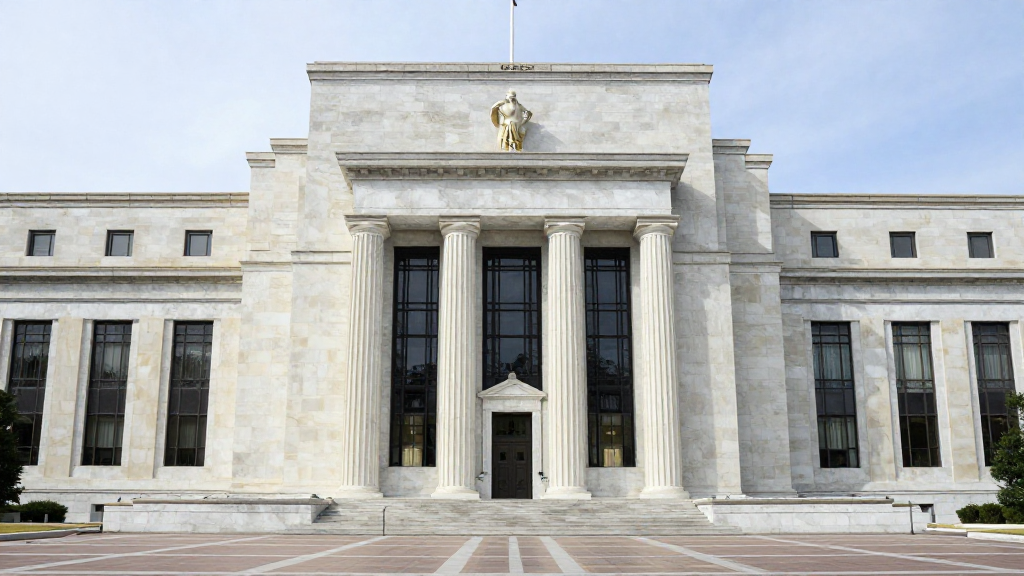
The Federal Reserve held its benchmark interest rate steady at 3.50-3.75 percent on Wednesday, a decision that arrived as new Fed Chair Kevin Warsh delivered some of his sharpest public warnings yet about the persistence of inflation, telling an audience at the ECB Forum in Sintra, Portugal that prices remain far too elevated and that the central bank is committed to restoring price stability no matter how long it takes.
Speaking alongside European Central Bank President Christine Lagarde, Bank of England Governor Andrew Bailey and Bank of Canada Governor Tiff Macklem, Warsh declined to signal what the Fed might do at its next meeting but left no doubt about his hawkish disposition. “We are all in the price stability business, that might not be our only business, but if there was a common thing I heard over the last couple of days, it was open-mindedness on these questions of AI, open-mindedness on productivity, but we have all looked around, and we have seen that prices are too high,” Warsh told CNBC’s Sara Eisen during the panel. The remarks reinforced the impression that the new Fed chair is in no hurry to cut rates and has staked his early chairmanship on the credibility of the central bank’s inflation-fighting mandate.
Core Inflation at 3.4 Percent, Well Above the Fed’s 2 Percent Target
The Fed’s preferred inflation gauge, the Personal Consumption Expenditures index, showed core inflation at 3.4 percent in May 2026, with the headline all-items index running even higher at 4.1 percent. Consumer Price Index data showed CPI climbing to 333.979 in May from 332.407 in April and 330.293 in March, a steady upward trend that has kept price pressures persistently above the central bank’s 2 percent target for more than two years running. The Federal Open Market Committee revised its PCE inflation forecasts sharply higher for both 2026 and 2027 in its latest Summary of Economic Projections, a signal that policymakers see the fight against inflation as far from over.
“If there were people in the household or the business sector, in the financial markets, who thought that this central bank was going to be comfortable with an inflation objective above 2 percent, well, I guess they would be disappointed,” Warsh said at the ECB Forum. “We are going to deliver price stability in the United States.” The directness of that commitment underscored the degree to which Warsh has broken from the more equivocating communication style of his predecessor and placed his credibility squarely behind the inflation mandate.
Markets Reprice Rate Expectations as Yield Curve Steepens
The bond market’s reaction to the combination of a Fed hold and Warsh’s hawkish commentary was swift and telling. The 10-year Treasury yield climbed to 4.44 percent on June 30 from 4.38 percent late the prior day, reflecting investor expectations of a steeper path for monetary policy ahead. Futures contracts are now pricing the fed funds rate near 3.8 percent by September and approaching 4 percent by mid-2027, a repricing that implies markets have abandoned any hope of near-term rate cuts and are now bracing for further tightening if inflation data continues to disappoint. The shift was visible across asset classes, with the Japanese yen weakening to near 40-year lows against the U.S. dollar as higher American rates attract capital flows.
Equity markets managed to advance on the day, with the S&P 500 gaining 0.8 percent, the Dow Jones Industrial Average rising 0.3 percent and the Nasdaq Composite surging 1.5 percent, but analysts cautioned against reading too much strength into the move. The gains came during a holiday-shortened week with thinner liquidity, and they were concentrated heavily in artificial-intelligence-related technology stocks rather than reflecting broad-based economic optimism. Rising bond yields increase borrowing costs for businesses and consumers, applying downward pressure on equity valuations — meaning the equity rally could prove fragile if yields continue climbing.
Labor Market Holds Steady as Consumer Confidence Shows Cracks
On the labor front, the unemployment rate held steady at 4.3 percent in May 2026, a reading that historically would signal full employment but now looks more ambiguous given the softening in broader labor market perceptions. Consumer sentiment data from The Conference Board, released on June 30, showed that 22.5 percent of consumers now say jobs are “hard to get,” the highest level since January 2021, a troubling signal that households are growing more anxious about their employment prospects even as the headline unemployment number remains unchanged. Chief Economist Dana M. Peterson of The Conference Board noted that “consumer confidence inched up in June as falling oil prices in recent weeks provided some relief to consumer inflation fears,” but she also emphasized the measurable deterioration in labor market expectations.
The mixed labor market picture adds another layer of complexity to the Fed’s policy calculus. A genuinely strong job market would give the central bank more room to keep rates elevated in pursuit of price stability, but signs of softening suggest the economy may not be able to absorb significantly higher rates without triggering a sharper slowdown. Economists at Goldman Sachs and JPMorgan both revised their 2026 GDP growth forecasts downward in recent weeks, citing the compounding drag from restrictive monetary policy, elevated energy costs and the lingering uncertainty created by the Trump administration’s escalating tariff regime. The combination of slower growth and persistent inflation is precisely the stagflationary scenario that central bankers fear most.
Warsh’s Five Task Forces Signal a Fundamental Overhaul of Fed Operations
Beyond the immediate interest rate decision, Warsh used his ECB Forum appearance to preview what amounts to the most ambitious internal restructuring of the Federal Reserve in decades. He announced that the leaders of his five task forces, charged with examining everything from the Fed’s data infrastructure to its communication strategy and its approach to financial stability surveillance, would be announced shortly, with several names likely to be released the following week. The task forces represent a direct repudiation of the conventional data tools and analytical frameworks that guided policy under his predecessor.
“My hope, my aspiration, is that nine to twelve months from now we are going to be using new technologies to understand what is happening in the real economy in a contemporaneous real-time way that positions us as central bankers to make better decisions,” Warsh told the panel. He also made clear that he has little patience for the conventional wisdom offered by government statistical agencies, calling it “my least favorite data point” in remarks that will likely draw scrutiny from career statisticians at the Bureau of Labor Statistics. The Fed chair’s willingness to publicly disparage official data, even as he promises to replace it with something better, adds an element of institutional risk to an already delicate situation. Markets will be watching closely for the first round of task force appointments, which Warsh suggested would offer an early window into his vision for the Fed’s future direction.