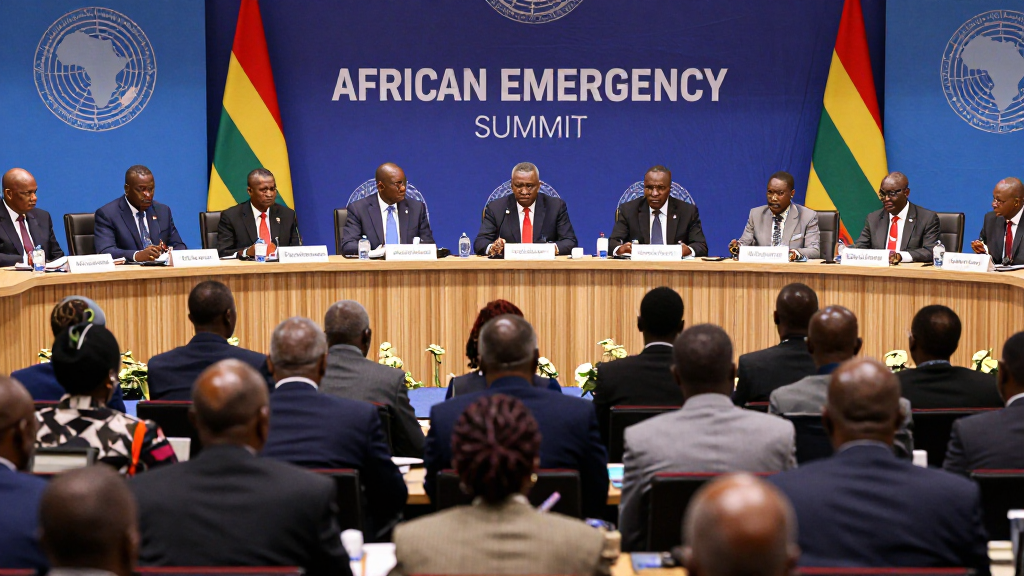
Five African regions are simultaneously gripped by diplomatic ruptures, armed conflicts, and political crises, as Burkina Faso cuts diplomatic ties with France, the Democratic Republic of Congo files suit against Rwanda at the World Court, Uganda silences its leading independent media group, Washington sanctions Sudan war factions, and South Africa reels from a targeted shooting of a senior crime intelligence officer. In a compressed 48-hour window across late June 2026, the continent witnessed more upheaval than in the preceding six months combined.
Burkina Faso Severs Diplomatic Ties With France
Burkina Faso military junta announced it was formally cutting diplomatic relations with France, expelling the French ambassador, and ordering French troops to leave the country within 72 hours. The decision marks the most dramatic rupture in France African security relationships since Mali break with Paris in 2022. The junta cited France failure to confront jihadist insurgencies effectively and perceived interference in internal political affairs. French officials rejected the accusation, saying France had consistently supported Burkina Faso counter-terrorism operations. “We categorically reject these false accusations,” a French foreign ministry spokesperson said. The withdrawal leaves a significant security vacuum in a country where jihadist groups linked to al-Qaeda and the Islamic State control roughly half the national territory.
Russia presence in Ouagadougou has expanded rapidly since the break with France. Military advisors linked to the Kremlin have been photographed at junta planning meetings, and Russian military equipment has been flowing into the capital. Analysts say the speed of the realignment reflects both Burkina Faso calculation that Moscow offers better strategic terms, and the broader pattern of Sahel states pivoting away from former colonial powers toward alternative security partners.
DRC Takes Rwanda to the International Court of Justice
The Democratic Republic of Congo filed a landmark case at the International Court of Justice accusing Rwanda of sponsoring the M23 rebel group, facilitating the illegal exploitation of Congolese natural resources, and deliberately obstructing humanitarian access to conflict zones. Kinshasa has presented satellite imagery, intercepted communications, and testimony from captured M23 commanders as irrefutable evidence of Rwandan military involvement in eastern Congo. Rwanda has denied all accusations and called the ICJ filing “a political stunt designed to distract from the DRC governance failures.”
The legal dispute compounds an already catastrophic humanitarian situation. The M23 offensive has displaced more than 2.5 million people since January, and the outbreak of Ebola in three new provinces has added a public health emergency to an overwhelmed aid response. Africa CDC director Jean Kaseya described the convergence as “a crisis within a crisis within a crisis.”
Uganda Shuts Independent Media as Kainerugaba Tightens Grip
Uganda military chief, General Muhoozi Kainerugaba, ordered the immediate shutdown of the Nation Media Group, one of East Africa oldest independent news organizations, deploying military personnel directly to its Kampala offices. The closure came without prior notice, judicial order, or formal explanation. Within hours, military personnel had also raided the offices of the Daily Monitor and NTV Uganda, confiscating equipment and ordering staff to cease operations. Kainerugaba told journalists directly: “There is no press freedom in Uganda. Journalists are not safe in this country.”
The Committee to Protect Journalists called the action “an unprecedented attack on press freedom that demands immediate reversal.” The timing has fueled speculation that the closures are connected to NTV Uganda recent investigation into the financial interests of the military chief and his family network.
US Targets Sudan War Factions With New Sanctions
The United States Treasury Department imposed sanctions on three commanders from Sudan Rapid Support Forces and two associated economic networks for orchestrating systematic sexual violence as a weapon of war and blocking humanitarian corridors into besieged civilian areas. The measures are the most targeted action taken by Washington since the war between Sudan military and the RSF began in April 2023. The conflict has killed an estimated 150,000 people and created the world largest displacement crisis, with more than 11 million people now displaced.
South Africa Targeted Killing Deepens National Security Crisis
In South Africa, a targeted shooting that killed a senior crime intelligence officer in Johannesburg has intensified scrutiny of the country security establishment. The officer had been investigating organized crime networks with suspected links to illegal mining operations and was shot dead outside his home in broad daylight. Police have not identified suspects, but investigators believe the killing may be connected to his work exposing criminal economies worth hundreds of millions of dollars. The government estimates illegal mining costs South Africa roughly 7 billion rand per year in lost revenue and security costs.
Across all five regions, the common thread is institutional strain: states are being pushed to their limits by overlapping security, health, and diplomatic crises that individually would tax any government, and collectively represent a challenge to the continent stability not seen in a generation. Regional bodies and sub-Saharan leadership networks are under mounting pressure to convene an emergency response as aid agencies warn that their capacity to deliver humanitarian assistance is being outpaced by the scale of need.