US-Iran Doha Talks End in Stalemate as Tehran Demands Verified Compliance With Initial Agreement
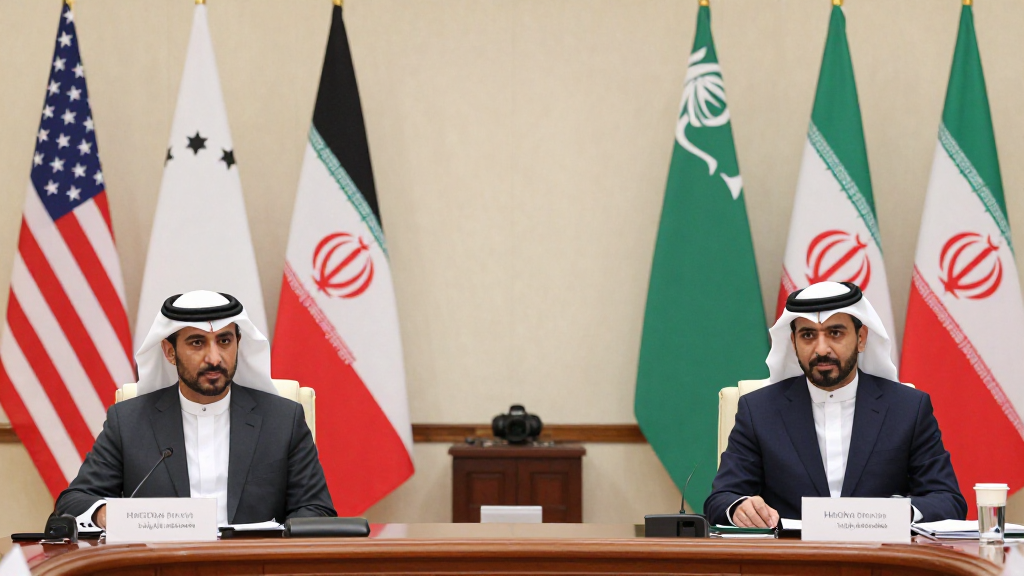
DOHA — Indirect diplomatic talks between the United States and Iran concluded in Doha on Wednesday without a breakthrough, with Tehran insisting it will not move forward on remaining clauses of a memorandum of understanding until five previously agreed provisions are fully implemented and verified, according to two people familiar with the matter.
President Donald Trump, speaking from the White House, struck a notably different tone. “The denuclearisation of Iran is moving along well,” Trump told reporters. “Very good meetings were held.” Vice President JD Vance, during a visit with US troops, accused critics of the negotiations of wanting the conflict “to just keep going and keep going.”
The diverging accounts underscored the fragility of an interim agreement that has largely held since the cessation of direct hostilities between the two countries began earlier this year, but has repeatedly struggled to advance toward a comprehensive and lasting peace.
Stalled at the Five-Clause Threshold
US envoys Steve Witkoff and Jared Kushner arrived in Qatar on Tuesday for what Qatar’s foreign ministry described as a technical round of talks focused on reopening the Strait of Hormuz to international shipping. Qatar, which has served as the primary diplomatic intermediary between Washington and Tehran since the outbreak of hostilities, hosted the two delegations separately on Tuesday and Wednesday.
Qatar’s foreign ministry issued a statement saying the discussions had made “positive progress” on issues related to the interim agreement and were “building on the outcomes” of a previous summit in Switzerland. The statement did not specify which clauses remained contested or what verification mechanisms were under discussion.
According to three people with knowledge of the Iranian delegation’s internal deliberations, Tehran’s core objection is procedural: Iranian officials argue that Washington has yet to certify full compliance with the initial five clauses of the memorandum of understanding, which cover sanctions relief, asset unfreezing, and the establishment of a joint monitoring mechanism for Hormuz shipping lanes.
“We will not initiate the remaining clauses until the first five are fully stabilised and finalised,” one of the people said, speaking on condition of anonymity because the talks are ongoing. “Words on paper are not enough. We require verified, irreversible steps.”
Iran’s Leadership Succession Deepens Uncertainty
The Doha stalemate arrives against the backdrop of heightened political turbulence in Tehran. Iranian Parliament Speaker Mohammad Bagher Ghalibaf used a nationally broadcast session on Thursday to urge Iranians to attend the funeral of Supreme Leader Ali Khamenei, describing the ceremony as an opportunity to demonstrate to the world what he called the nation’s demand for blood vengeance.
“People should show that they would not remain silent in the face of arrogance and would not forget the blood of their imam,” Ghalibaf said, in remarks translated by Iran’s official state news agency IRNA. The funeral, scheduled for this weekend, is expected to draw hundreds of thousands of Iranians and could serve as a focal point for hardliners seeking to demonstrate resistance to any accommodation with Washington.
Iranian Foreign Minister Abbas Araqchi, writing on the social media platform X on Wednesday, delivered a sharper warning. “POTUS has committed the US to muzzling its pets in Tel Aviv,” Araqchi wrote. “If they ignore their master, Iran will school them.” The post drew a sharp response from Israeli officials, who rejected the characterisation and reiterated that Israel retains an independent right to respond to any threat to its security.
The succession question following Khamenei’s death has added an additional layer of complexity to the negotiations, with analysts noting that any incoming supreme leader may feel compelled to take a harder line than the outgoing administration in order to consolidate authority, potentially undermining concessions that negotiators in Doha may have believed were already secured.
Regional Fallout and American Footprint
The diplomatic friction in Doha has already begun to reverberate across the Gulf region. The Wall Street Journal reported Thursday that the Trump administration is considering reducing its military footprint in Saudi Arabia, a shift that would represent a significant break from decades of US security arrangements in the kingdom and one that US officials have discussed in the context of broader realignment following the Iran ceasefire.
The prospect of a smaller US military presence in Saudi Arabia has alarmed some Gulf allies who view American forces as a counterweight to Iranian regional influence. Saudi Arabia earlier this year temporarily blocked US forces from using its airspace to guide vessels through the Strait of Hormuz, an act that irritated the Trump administration and contributed to frayed relations between the two countries.
Oil markets showed cautious optimism on Thursday as prices continued to fall following the Hormuz shipping recovery. Brent crude dropped to $71.16 per barrel, while West Texas Intermediate fell to around $68.00, reflecting growing confidence that the world’s most critical oil transit chokepoint is no longer subject to direct military disruption. The declines extended steep losses from the previous session.
What happens next in Doha will depend heavily on whether mediators can persuade both sides to accept a provisional verification framework for the initial five clauses. A senior Qatari official told reporters that a further round of talks would be scheduled after the Khamenei funeral, with the hope that the succession process would produce a clear interlocutor authorised to make binding commitments on Iran’s behalf.