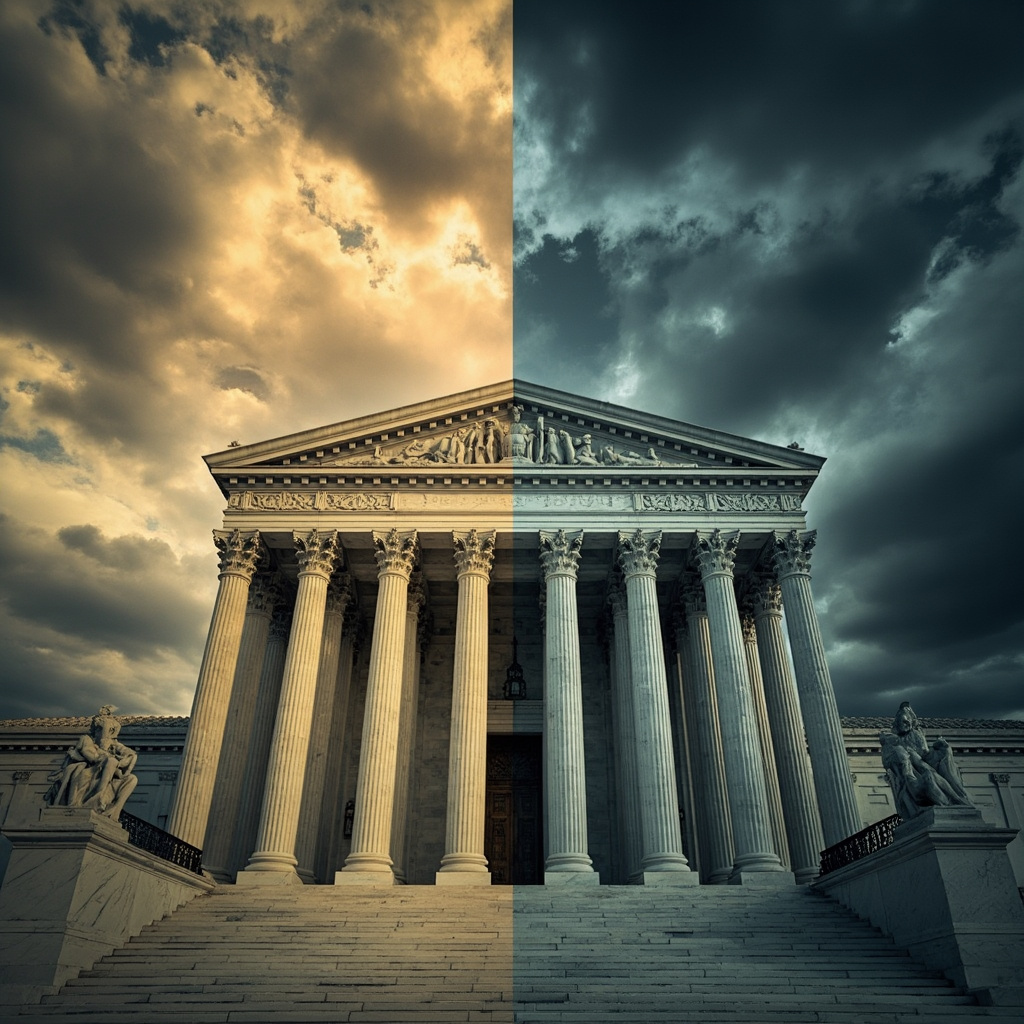
President Donald Trump secured a sweeping expansion of his authority to remove leaders of independent federal agencies on Monday, as the Supreme Court upheld his firing of a Democratic-appointed commissioner at the Federal Trade Commission while simultaneously blocking his attempt to remove Federal Reserve Governor Lisa Cook in a split decision that underscored the court’s deep ideological fractures on executive power.
The dual rulings represent the most consequential week for presidential authority since the court reshaped the administrative state in West Virginia v. EPA two years ago. Together, they hand Trump near-unilateral power over consumer protection, antitrust, and financial regulators while preserving a narrow but symbolically important barrier around the nation’s central bank.
FTC Ruling Reverses 90 Years of Precedent
In the more dramatic of the two decisions, a 6-3 majority reversed a New York-based federal appeals court and ruled that presidents can fire leaders of independent agencies for any reason they deem sufficient. Chief Justice John Roberts wrote the majority opinion, joined by Trump’s three other high-court appointees and two Democratic-nominated justices in a coalition that defied the court’s usual ideological lines.
The decision upends a 1935 precedent that had insulated agency commissioners from political retaliation, allowing them to serve out fixed terms regardless of White House preferences. Roberts framed the ruling as a restoration of democratic accountability.
“A President who is dissatisfied with the performance of an officer would normally remove that officer,” Roberts wrote. “The President must have the assistance of officers he can trust, so that the President can be held accountable for their actions.”
Trump celebrated the ruling on social media, calling it “a BIG WIN” and “one of the most important ever given with respect to Presidential Powers.” He later told reporters in the Oval Office. “It is such an Honor to be the sitting President who won this Historic and Unprecedented Ruling,” he wrote on social media.
Former Federal Election Commission chairman Trevor Potter, who now leads the Campaign Legal Center, warned that the ruling fundamentally alters the constitutional balance between Congress and the executive branch. “Today’s Supreme Court decision is a direct attack on the constitutional authority of Congress to establish such independent agencies and thus on our system of checks and balances,” Potter said.
The Fed Exception: Cook Survives, But Only on Technical Grounds
In the companion case, a 5-4 majority blocked Trump’s attempt to fire Cook, but explicitly declined to rule on the broader question of whether presidents have constitutional authority to remove Fed governors. The majority opinion, also written by Roberts, held that the president must follow basic due process procedures before removing a sitting Fed governor and that his first attempt failed because Cook was denied the opportunity to respond to the mortgage fraud allegations cited as grounds for her termination.
“Not only the fact of independence but also the appearance of independence is key to the Federal Reserve’s design,” Roberts wrote. He noted that Congress deliberately structured the Fed to operate outside direct presidential control and that any change to that arrangement must come from lawmakers, not the courts.
“Any change in that scheme must come from Congress, not the courts,” Roberts wrote. “That is why we cannot accept the Government’s contentions in this case. To do so would allow the President to remove a member of the Federal Reserve at any time, for any reason, without any notice before, and without any judicial check after.”
Trump responded on Truth Social, arguing the court had sent the case back on strictly procedural grounds and vowing renewed action. “We will take appropriate action immediately to make sure that someone who has committed wrongdoing will not be making vital decisions concerning the Welfare of the United States of America,” he wrote.
The dissenters were withering in their rejection of the majority’s framework. Justice Clarence Thomas wrote that the majority was making policy arguments for an independent central bank that he said were ultimately arguments against the Constitution. “Today’s decision is an unprecedented incursion on the Executive Branch,” Thomas wrote. Justice Samuel Alito, joined by Neil Gorsuch, argued the court should not have issued such a sweeping opinion at such an early stage of Cook’s lawsuit.
With Cook’s case still working through the courts and the FTC commissioner case now settled law, the immediate battleground shifts to the dozens of other independent agency heads who now serve at presidential pleasure. The precedent will shape how aggressively Trump can restructure the regulatory apparatus of the federal government in the months ahead.