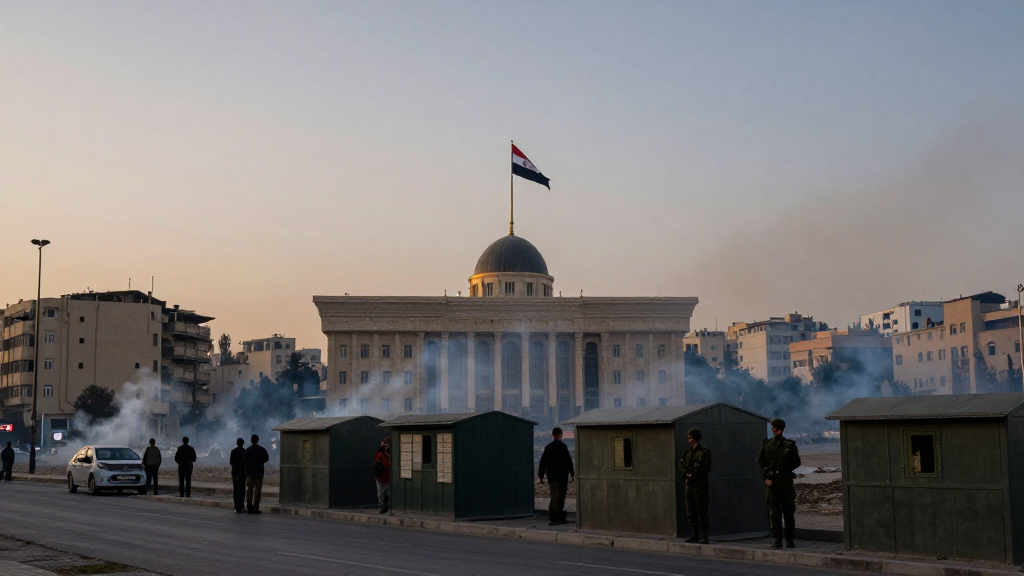
DAMASCUS — A bomb blast ripped through a busy cafe in central Damascus on Wednesday, killing at least five people and wounding 16 others, according to Syrian state media and a statement from the country’s interim security authority. The attack, which occurred in the Mazraa district during the morning rush, sent shockwaves through a capital still grappling with the aftermath of the December 2024 regime change.
Security Forces Launch Investigation
Syria’s interim security authority said in a statement that investigators were examining the blast site and reviewing security camera footage. It did not name any suspects. Civilians gathered near the rubble-strewn entrance of the building, which housed several government ministries. Medics from the Syrian Red Crescent worked alongside civil defence teams to search for survivors beneath collapsed masonry.
The United Nations assistance mission in Syria confirmed it was monitoring the situation. A spokesperson said UN officials were in close contact with the transitional government in Damascus. The EU’s foreign policy chief, Kaja Kallas, said the bloc condemned the attack and called for those responsible to be brought to justice. “We stand firmly with the Syrian people at this difficult moment,” Kallas said in a statement.
The French Foreign Ministry said it was following events closely. An official said France was in contact with partners in the region to assess the implications for Syria’s fragile transition. Several Western governments issued travel advisories urging citizens to avoid the affected area.
Regional Powers Express Concern
Iran’s foreign ministry issued a statement expressing solidarity with Syria and offering condolences to the families of the victims. A ministry spokesperson said Tehran was ready to provide assistance if requested by Damascus. “Iran condemns all acts of violence targeting civilians,” the spokesperson said. The statement underscored the sensitivity of the attack at a moment when Iran and Syria are working to consolidate post-conflict arrangements.
Lebanon’s caretaker government also issued a statement of support. Security sources in Beirut said Lebanese intelligence services had heightened surveillance along the shared border in response to the blast, though no direct link had been established. Israeli officials declined to comment on the attack when approached by reporters.
Regional analysts said the timing and location of the blast pointed to a possible attempt to destabilise the transitional government ahead of international donor meetings. A security analyst based in Beirut said the targeting of a civilian area near ministries was designed to undermine confidence in the government’s ability to maintain basic public safety.
Transitional Government Faces Pressure
The attack comes as the transitional government, installed after the December 2024 offensive that ended the Assads’ 54-year rule, has been working to present a stable image to international donors and creditors. An International Monetary Fund team was in Damascus last week for technical discussions about economic reform and debt relief. Those talks were described as constructive by both sides.
The Syrian Pound weakened slightly against the dollar on foreign exchange markets following news of the blast, reflecting investor nervousness. Analysts said the immediate economic impact would depend on whether the attack was an isolated incident or the opening salvo of a coordinated campaign.
The assault also complicates engagement with the Arab League, which suspended Syria’s membership during the civil war and has been weighing conditions for its readmission. A senior Arab League official said the organisation was watching developments carefully but had no immediate comment on whether the blast would affect deliberations.
Human rights groups called for an independent investigation. The Syrian Observatory for Human Rights, based in London, said the death toll could rise as rescue workers continued their search through the wreckage. The UN High Commissioner for Human Rights said his office was preparing a fact-finding mission to the scene.
Foreign governments with embassies in Damascus said they were reviewing security arrangements. A diplomatic source said envoys from several EU member states held an emergency conference call on Wednesday afternoon to share assessments. The source said there was broad agreement that the attack should not derail international engagement with the transitional process.
What happens next will depend largely on the findings of the investigation. If the attack is linked to a named group, the transitional government will face pressure to respond militarily. If no group claims responsibility, analysts say the episode is likely to deepen existing fractures within Syria’s security establishment, complicating efforts to present a stable face to the outside world. A donor conference for Syrian reconstruction, tentatively scheduled for the autumn, may now be in doubt.