US Strikes Iran After Trump Accuses Tehran of Ceasefire Violation
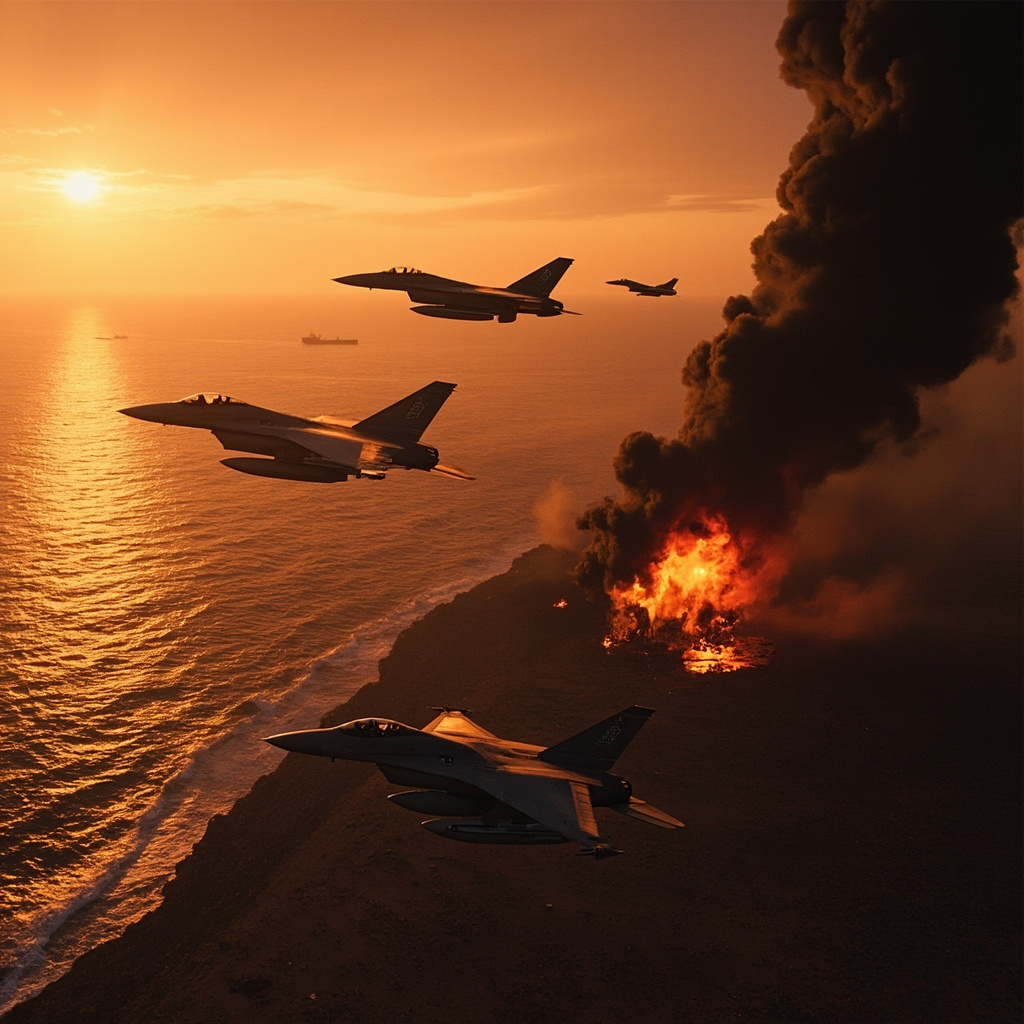
American forces launched a wave of precision strikes against Iranian military infrastructure Friday after President Donald Trump accused Tehran of a “foolish violation” of a 60-day ceasefire agreement, triggering a fresh escalation in the Strait of Hormuz. U.S. Central Command said its aircraft struck Iranian missile and drone storage locations and coastal radar sites along the Persian Gulf shoreline. Iran immediately fired back, claiming its forces struck American-linked targets in the region, including a drone attack on Bahrain.
Ceasefire Collapses Within Weeks of Deal
The strikes mark the most serious breakdown yet in a fragile peace process that began just 12 days earlier, when Trump and Iranian President Masoud Pezeshkian signed a memorandum of understanding in Oman aimed at ending the open-ended war between the two nations. That deal, negotiated under Omani mediation, reopened the Strait of Hormuz to commercial shipping and paused Iran’s enrichment of weapons-grade uranium in exchange for partial sanctions relief. Within 48 hours of the signing, the two sides accused each other of violations, and the strikes have now occurred on multiple consecutive days.
According to Central Command, an Iranian one-way attack drone launched Thursday struck the Singapore-flagged cargo ship Ever Lovely as it transited the strait off the coast of Oman. The vessel sustained damage but continued on its journey. Iranian state media acknowledged the strike, framing it as retaliation for what Tehran described as an American attack on an Iranian facility. U.S. officials have disputed that account, saying Iranian drones struck first.
Bahrain Hit as Regional Tensions Spread
The scope of Iran’s response widened Friday when Bahrain’s government formally condemned an Iranian drone attack on its territory, marking the first time the conflict has directly affected a Gulf Cooperation Council member state. Bahrain hosts the U.S. Fifth Fleet, and the attack raised alarm among regional allies about the potential for the conflict to expand beyond the Iranian shoreline. “We hold Iran accountable for this act of aggression,” Bahrain’s foreign ministry said in a statement.
Trump, speaking from the White House, accused Iran of using the ceasefire talks as cover to regroup and reposition forces. “Iran has once again demonstrated its bad faith,” the president said in a post on social media. “The foolish violation of the ceasefire will be met with overwhelming force.”
Oil Markets React as Hormuz Shipping Slows
Brent crude surged more than 4 percent Friday following news of the strikes, as traders braced for potential disruption to the roughly 20 million barrels of oil that transit the Strait of Hormuz daily. Lloyd’s of London, the world’s largest marine insurance market, said it was reviewing war risk designations for vessels operating in the Persian Gulf. Shipping sources told Reuters that several tanker operators were rerouting vessels away from the strait as a precautionary measure, adding days to voyage times via the Cape of Good Hope alternative route.
The International Monetary Fund had warned in a June 20 report that a sustained closure of the Strait of Hormuz could wipe 1.2 percent off global GDP within 90 days, with oil prices potentially spiking to above $150 per barrel. Markets are now testing whether that scenario remains hypothetical or is becoming imminent.
Diplomatic Path Narrows as Military Action Dominates
Omani intermediaries who brokered the original deal have remained in contact with both delegations, according to a person familiar with the negotiations, though no formal diplomatic channel has produced a breakthrough. The White House has not ruled out further military action. “All options are on the table,” a senior administration official told reporters Friday, speaking on condition of anonymity. Iran’s ambassador to the United Nations called for an emergency Security Council session, which was scheduled for Saturday.
The Pentagon said additional forces, including a second carrier strike group, were being repositioned in the Arabian Sea. The conflict, which began with U.S. strikes on Iranian nuclear facilities in April, has killed an estimated 2,800 people on both sides and displaced more than 180,000 civilians in southern Iraq and along Iran’s coast.