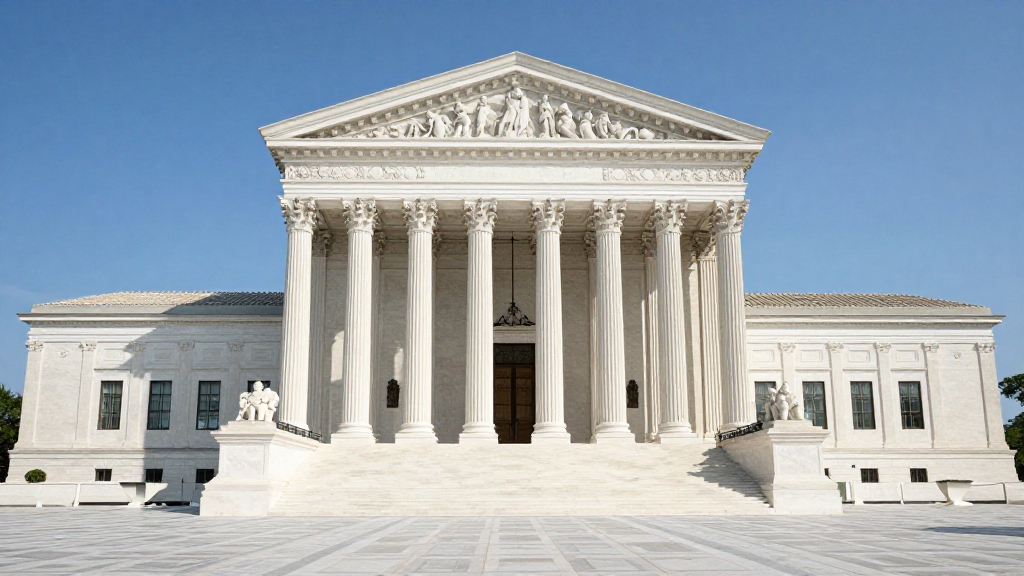
In a sweeping 5-to-4 decision released Monday, the United States Supreme Court upheld the constitutional guarantee of birthright citizenship, striking down a core executive order issued by President Donald Trump on the first day of his second term. The ruling affirmed that nearly every child born on American soil — regardless of their parents’ immigration status — is automatically a citizen, dealing a significant legal and political blow to the administration’s hardline immigration agenda and raising profound questions about the limits of executive power over constitutional rights.
A Decisive Rebuke From the Bench
The majority opinion, authored by Chief Justice John Roberts, held that Trump’s January executive order violated the 14th Amendment of the Constitution, which grants citizenship to “all persons born or naturalized in the United States.” Roberts was joined by the court’s four liberal justices — Sonia Sotomayor, Elena Kagan, and Ketanji Brown Jackson — as well as conservative Justice Amy Coney Barrett, a rare alignment across the ideological spectrum that reflected the gravity of the constitutional question at stake.
“Citizenship, then and now, was the right to have rights — to freely participate in our political community,” Roberts wrote. “The Framers of the Fourteenth Amendment extended that promise to ‘every free-born person in this land.’ We keep that promise today.”
Justice Brett Kavanaugh concurred with the judgment but broke with the majority on constitutional grounds, arguing that the executive order violated federal statute rather than the Constitution itself. The three most conservative justices — Clarence Thomas, Samuel Alito, and Neil Gorsuch — filed dissenting opinions. Thomas’s dissent alone spanned nearly 90 pages, making it the longest of his tenure on the court and an extraordinary document of legal disagreement.
Trump’s Response and the Political Fallout
The ruling drew immediate and sharp reaction from the White House. Trump, who had championed the birthright citizenship order as a centerpiece of his second-term immigration platform, called the decision “bad for our Country” while leaving the door open to further legal and legislative action. “No long and unwieldy Constitutional Amendment is necessary!” Trump wrote on his Truth Social platform. “Congress should start TODAY to work on ending expensive and unfair Birthright Citizenship for those who sneak into our Country illegally.”
The decision represents one of the most consequential Supreme Court rulings in recent memory, limiting the scope of executive power over immigration policy while setting a precedent that future administrations cannot unilaterally revoke birthright citizenship without a constitutional amendment or an act of Congress. Legal scholars said the ruling’s breadth — 194 pages of combined opinions — signals the court’s intent to foreclose future executive branch maneuvers around the 14th Amendment and to settle the question unambiguously for generations to come.
Immigration rights advocates celebrated outside the Supreme Court building following the ruling, calling it a vindication of decades of settled law and a defense of core constitutional principles. “The court has affirmed what we have always known: that birthright citizenship is not a privilege to be revoked at presidential discretion,” said Laura Diaz, executive director of the National Immigration Law Center. “It is a fundamental right written into the Constitution, and no executive order can erase it.”
What Comes Next
While the ruling is final at the Supreme Court level, the political battle over birthright citizenship is far from over. Trump’s call for congressional action puts pressure on Republican lawmakers to pursue legislation that could narrow the application of the 14th Amendment — an effort that constitutional scholars say would face steep legal and political hurdles but could energize the GOP base heading into midterm elections. Several Republican senators signaled openness to the proposal, though any legislative path would require overcoming a Democratic filibuster in the Senate.
Administration officials have not ruled out further executive action, though legal experts warn that any new order would be vulnerable to immediate court challenges given Monday’s precedent. The ruling is expected to strengthen Democratic messaging on immigration rights heading into the 2026 election cycle, as the decision underscores the limits of executive authority in an area traditionally governed by constitutional and statutory frameworks. For immigration advocates and constitutional scholars alike, the decision marks a defining moment in the ongoing struggle over the boundaries of presidential power in the United States.