NATO Launches Largest Baltic Naval Exercise in Alliance History as Russia Conducts Parallel Drills
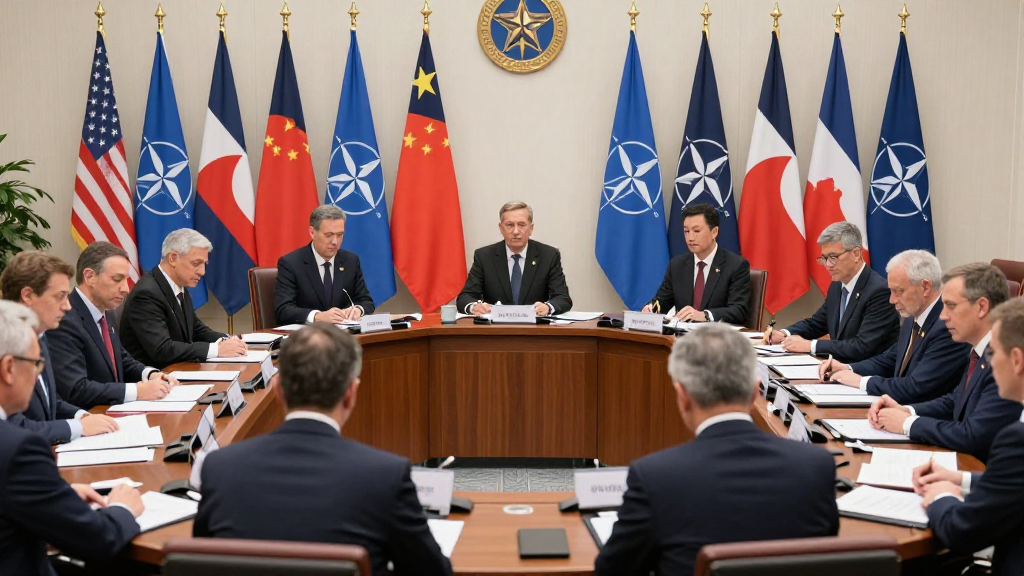
WARSAW — Fifteen NATO nations launched the largest annual Baltic naval exercise in the alliance’s history this week, deploying more than 50 warships and thousands of personnel across the Baltic Sea in a demonstration of unified deterrence against Russia, according to NATO officials and defence ministries across participating countries.
The exercise, named BALTOPS 2026, began on Thursday in Gdynia, Poland, and will conclude on June 19 in Kiel, Germany, the Pentagon confirmed. The operation is commanded by the United States Sixth Fleet in cooperation with STRIKFORNATO, NATO’s rapid reaction naval headquarters. The command ship is USS Mount Whitney (LCC-20), the flagship of the US Sixth Fleet, marking a continued American commitment to European maritime security.
Poland Takes Central Role in Landmark Exercise
Poland hosted the opening phase in Gdynia on the Bay of Gdansk, a symbolic recognition of Warsaw’s position as a frontline NATO state on the alliance’s eastern flank. The operational area spans the western, southern, and central Baltic, stretching from Skagen in Denmark to the Gulf of Riga. Polish Defence Minister Wladyslaw Kosiniak-Kamysz said during the opening ceremony that the scale of the exercise reflected the gravity of the security situation in the region.
“BALTOPS has been a cornerstone of NATO’s collective defence on the north-eastern flank for more than five decades,” the Finnish Naval Command said in a statement. “Since Russia’s full-scale aggression against Ukraine, the Baltic Sea region has moved from the periphery of strategic thinking to its very core.”
Thirteen NATO member states contributed naval assets, including aircraft carriers, destroyers, frigates, submarines, and amphibious assault vessels. Non-NATO partner nations also deployed personnel and equipment, underscoring the alliance’s ability to integrate allies and partners into complex joint operations.
Russia Conducts Parallel Naval Drills
Russia announced that its Baltic Fleet had begun simultaneous naval exercises in the same waters. The Kremlin’s defence ministry said the drills involved frigates, missile boats, and maritime patrol aircraft operating near the Gulf of Finland. The parallel exercises raised the operational tempo across the Baltic theatre, with NATO monitoring stations tracking both alliance and Russian movements in real time.
NATO’s Supreme Allied Commander Europe, General Christopher Cavoli, said during a briefing in Brussels that the alliance was closely monitoring Russian movements and maintained constant communication with allied naval commanders. “Our exercises are open, announced, and conducted in accordance with the United Nations Convention on the Law of the Sea,” Cavoli said. “Any implication that they represent a provocation is a distortion of the facts.”
Military analysts noted that the simultaneous exercises carried a risk of unintended escalation. The Baltic Sea is one of the most congested maritime theatres in the world, with commercial shipping lanes, fishing zones, and military transit routes overlapping in relatively confined waters. The International Maritime Organization has urged all parties to maintain deconfliction channels.
Sweden contributed corvettes and coastal artillery units to BALTOPS, one of Stockholm’s most substantial integrations into NATO naval operations since formally joining the alliance in March 2024. Swedish Defence Minister Pal Jonson said the exercises were essential for regional security. “The protection of free sea lanes in the Baltic is not a theoretical exercise for Sweden,” Jonson said. “It is an existential imperative, and we train accordingly.”
Finland, which joined NATO in April 2023, deployed maritime patrol aircraft and mine countermeasure vessels, reflecting the accession of both Nordic nations and the extension of NATO’s strategic depth in the Baltic region.
Deepening Nordic-Baltic Coordination
The NB8 format — comprising Denmark, Estonia, Finland, Germany, Iceland, Latvia, Lithuania, Norway, Poland, and Sweden — with Estonia holding the 2026 presidency, pledged to deepen intelligence sharing and operational coordination through the Joint Expeditionary Force. NB8 foreign ministers jointly declared that Russia remains the most serious, immediate, and long-term threat to Euro-Atlantic security across all domains.
The exercises serve as a platform for interoperability testing between European NATO members and the United States. Analysts at the International Institute for Strategic Studies in London noted that the presence of USS Mount Whitney signals continued American commitment to Baltic security amid ongoing debates in Washington about burden sharing within the alliance.
“The scale of BALTOPS sends a clear signal that the European theatre remains a priority for the United States despite competing strategic demands in the Indo-Pacific,” said Dr. Nina Silk, a senior research fellow at the IISS. “What we are seeing is not a contradiction but a calibration — Washington is demonstrating that it can walk and chew gum at the same time.”
Estonian Defence Minister Hanno Pevkur said the exercises reinforced the credibility of NATO’s Article 5 commitments. “When we train together, we fight together,” Pevkur said. “BALTOPS is not just about tactics. It is about demonstrating that the alliance’s collective defence pledge is real and ready.”
The Baltic Sea has become the focal point of NATO’s eastern deterrence posture since Russia’s 2022 invasion of Ukraine. The alliance has doubled its maritime presence in the region and established new standing naval groups. BALTOPS 2026 is expected to conclude with a multinational amphibious landing exercise on the coast of Germany, demonstrating the alliance’s ability to project power across the full spectrum of naval operations.