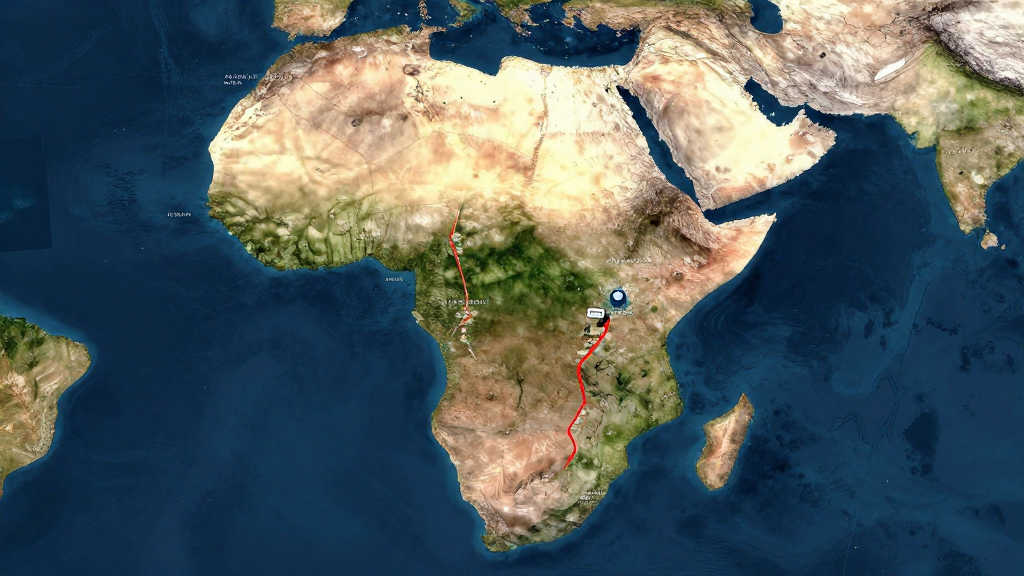
DAKAR, Senegal — Africa is facing an unprecedented convergence of crises spanning all five of its major regions, as diplomatic ruptures, armed conflicts, public health emergencies, and xenophobic violence unfold simultaneously across the continent. From the Sahel to the Horn of Africa, from the Congo basin to the southern tip, the past ten days have delivered a cascade of emergencies testing regional institutions and stretching humanitarian response capacity to its limit.
West Africa: Burkina Faso Severs Diplomatic Ties with France
Burkina Faso officially severed diplomatic relations with France on June 27, ending decades of close cooperation with its former colonial ruler and accusing Paris of “neo-colonial ambitions” and systematic interference in internal affairs. The announcement was broadcast on state television by Communications Minister Jean Emmanuel Ouedraogo.
“The government of Burkina Faso has decided, effective immediately, to cut all diplomatic ties with the French Republic,” Ouedraogo said in a nationally televised address. “France has consistently chosen to prioritise its own interests over the sovereignty and aspirations of the Burkinabe people.”
France, which withdrew its troops following the 2024 coup, called the move “regrettable.” Russia, expanding its Africa Corps footprint across the Sahel, has signalled readiness to deepen security cooperation with Ouagadougou. The rupture leaves France increasingly marginalised in a region where it once held unchallenged influence.
Central Africa: DRC Takes Rwanda to the International Court of Justice
The Democratic Republic of Congo filed a landmark case at the International Court of Justice on June 26, accusing Rwanda of complicity in genocide through its alleged support for M23 rebel forces in eastern Congo. The filing, supported by documentation from Congolese rights groups and international investigators, marks the most significant legal action Kinshasa has taken against Kigali in decades.
As the ICJ case proceeded, M23 fighters consolidated control over large areas of North Kivu province, with the United Nations documenting mass killings, systematic sexual violence, and the forced displacement of more than 1.5 million civilians since early 2025. Rwanda has denied all allegations and dismissed the filing as “a political manoeuvre designed to distract from Kinshasa’s own governance failures.” The DRC is simultaneously battling a new Ebola outbreak that has spread to three provinces, overwhelming a fragile health system.
North Africa: Sudan War Claims 470 Lives in a Single Week
Sudan’s civil war entered its seventeenth month with no end in sight. The UN Office for the Coordination of Humanitarian Affairs reported at least 470 civilians killed in violence across Darfur, Khartoum, and South Kordofan between June 20 and June 27 alone — one of the deadliest weeks since the conflict began in April 2023. Famine conditions are now present in five Sudanese states, with the healthcare system having effectively collapsed in conflict zones. More than 25 million Sudanese, roughly half the country’s population, now require urgent humanitarian assistance.
Meanwhile, Libya has emerged as a critical pressure point in North Africa’s migration crisis. The International Organization for Migration recorded a 34 percent rise in arrivals across the central Mediterranean route compared to the same period last year, with thousands of Sudanese and sub-Saharan African migrants transiting through Libya under increasingly dangerous conditions.
East Africa: Kenya’s Political Crisis Deepens as Regional Tensions Rise
In East Africa, Kenya is facing a convergence of security and political challenges. The government of President William Ruto has cracked down on opposition figures and independent media outlets following contested elections, drawing warnings from Human Rights Watch that the country is experiencing an erosion of democratic freedoms not seen since the post-election violence of 2007-2008. Simultaneously, Al-Shabaab militants have intensified cross-border attacks from Somalia, overrunning Kenyan Defence Force positions in Lamu and Garissa counties and displacing thousands of civilians from frontier communities.
The dual pressures of internal political repression and a grinding insurgency have combined with rising food and fuel prices to push millions of Kenyans into poverty, straining an already fragile social contract. Regional monitors warn that without credible political dialogue and a reinforced security posture, Kenya risks becoming a destabilising factor across the wider Horn of Africa region.
Southern Africa: Xenophobic Violence Forces Mass Evacuations Across South Africa
In Southern Africa, South Africa is confronting its most severe outbreak of anti-immigrant violence since 2019. Coordinated attacks on foreign-owned businesses and residences have spread from Gauteng to Durban and Cape Town, burning shops and homes and forcing hundreds of families to flee. The violence has drawn sharp condemnation from the African Union and the United Nations, which called on Pretoria to uphold its constitutional obligations to protect all residents regardless of nationality.
President Cyril Ramaphosa condemned the attacks as “an affront to our values and our identity as a nation,” but critics argue his government’s response has been inadequate and that law enforcement has failed to protect documented victims in several cases. The violence has reignited debate over South Africa’s broader economic desperation, with 35 percent unemployment fuelling resentment toward vulnerable minority communities. Nigeria has evacuations underway for its nationals, while Zimbabwe, Malawi, and Mozambique have all repatriated citizens in recent days.
The simultaneous emergence of armed conflicts, public health emergencies, and displacement crises across all five of Africa’s regions represents a defining moment for the continent. Regional organisations, member states, and the international humanitarian system face a stress test whose outcome will shape Africa’s trajectory for years to come.