Test Fires Over Pacific Island Nations Exclusive Economic Zones
The missile traveled over the exclusive economic zones of the Federated States of Micronesia, Nauru, Kiribati and Tuvalu before landing near the EEZ border of Kiribati or Tuvalu, according to a regional source familiar with the matter. The test marked one of the most significant Chinese military demonstrations in the Pacific in recent years and drew swift condemnation from multiple governments.
“Beijing’s rapid and opaque nuclear weapons buildup is of great concern to the region and the world,” the US State Department said in a statement, adding that it urged China “to engage in meaningful arms control discussions.”
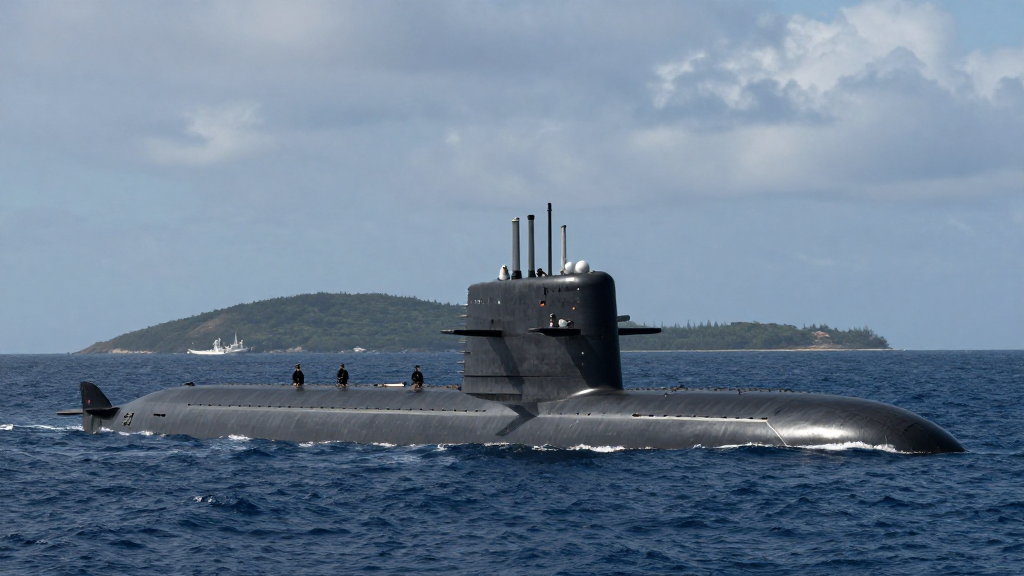
China’s PLA Navy operates two types of submarine-launched ballistic missiles, the JL-2 and the JL-3. The JL-3 has sufficient range to reach the continental United States from waters off the coast of China, including the South China Sea, according to missile experts. Beijing’s primary ballistic-missile submarine is the Type 094, also known as the Jin class, with six vessels in service.
Regional Leaders React With Sharp Criticism
New Zealand’s Minister of Foreign Affairs Winston Peters said the launch was a direct breach of the South Pacific Nuclear Free Zone, established in 1986 by the Treaty of Rarotonga, to which China is a signatory. “We, like our neighbors in other Pacific countries, have no interest in China using the South Pacific as a testing site for missile capability,” Peters said. “We as a region should not sit by and allow such tests to become normalized or routine.”
Australian Foreign Minister Penny Wong called the test “destabilizing to the region” and said it must be viewed “in the context of a rapid military build-up by China, which is lacking in the transparency and reassurance as to intent that the region expects.”
A Japanese government statement expressed “serious concerns regarding China’s increasingly active military activities” and urged Beijing to reconsider its approach to ballistic missile testing. Taiwan’s presidential office said Beijing’s actions had “caused unease” across the region and further highlighted “China’s increasingly obvious ambitions for expansion in the Western Pacific.”
China Defends Test as Routine, Lawful
A PLA Navy spokesperson said the missile launch was a routine part of China’s annual military training schedule and that relevant nations had been informed in advance. “This test launch was a routine part of China’s annual military training schedule,” the spokesperson said. “The operation was in accordance with international law and practice, targeting no specific country or objective.”
China has been expanding its nuclear-powered submarine fleet as part of a broader acceleration of its strategic nuclear forces. According to the Missile Defense Project at the Center for Strategic and International Studies, the JL-3 was first tested in 2018 and subsequently once more the following year. The latest test represents a significant increase in the pace of Chinese strategic weapons demonstrations.
The test comes as the United States and its regional allies have sought to deepen security partnerships across the Pacific, with the US-Philippines mutual defense treaty entering its second year under an expanded interpretation and Australia finalizing a new intelligence-sharing agreement with Japan covering undersea domain awareness in the Pacific.